Header graphic for print

China Law Blog

China Law for Business

Think You Have A China Trademark Or China Company? Check Again.

Posted in China Business

A loyal reader sent me an article this morning regarding a Chinese citizen who had fabricated his ownership in a US bank and used that fabrication to gain power in his hometown. This happened about a year ago so not sure why it was sent to me today, but the reader sent it with a request that we highlight “the fake service businesses that are all over China.”

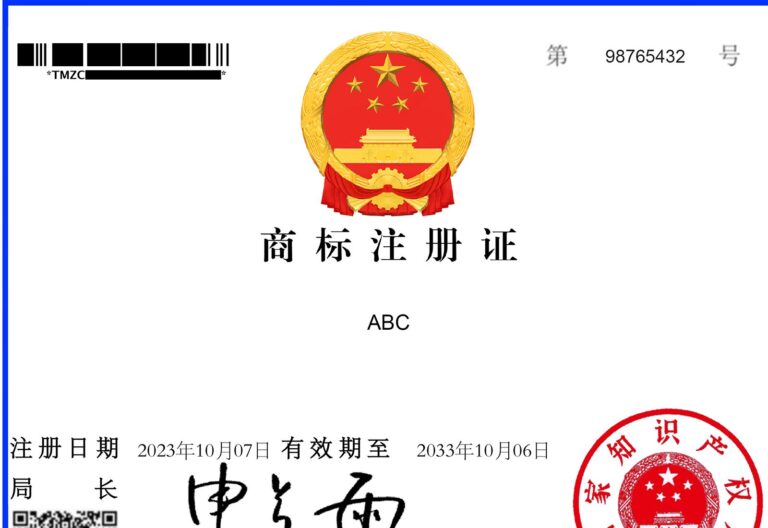
I am not even sure what the reader means by fake service businesses all over China and I have an email out to him to clarify.  In the meantime though, I will write about the two fake service companies we see most often in our China law practice: the fake entity registration company and the fake trademark registration company.

Every few months or so we are retained by a foreign company (almost always a US-based company) to have us figure out what they have in in terms of a China company and about half the time, we have to go back to them and tell them that they don’t have a thing.  The big problem with most of the fake company registration services we have encountered is that they not only fail to register the company, as promised, they also run off with the registered capital. We also are sometimes asked to check on China trademarks and we are finding that about half the time the registration that was paid for was never done.  Our numbers are no doubt high because those who come to us already have suspicions, but if you have any doubts about what was done for you, it would certainly behoove you to find out.

Do you-all have any good stories to add?

Your China Contract Should Be In Chinese. Here’s Why.

Posted in Basics of China Business Law, Legal News

It is widely believed by American lawyers that their clients should do whatever they can to avoid finding themselves in a Chinese court.  This widespread belief is usually wrong.  It is usually wrong because most of the time it is the American company that will want to sue the Chinese company, not vice-versa. That being the case, the best place to sue a Chinese company is in China.  Is suing a Chinese company in China a great thing? No.  Obviously not.  But if you sue a Chinese company in China and you win, you have at least a decent chance of collecting on your judgment.  If you sue a Chinese company in the United States and win, you have almost no chance of ever collecting.  Chinese courts do not enforce US judgments.  Ever.  So unless the Chinese company against whom you get your judgment has assets in the United States (or in some third country that enforces US judgments), your US judgment is of zero value. Zero. For more on this, check out the following:

So if suing Chinese companies in China usually makes the most sense, your contract with that Chinese company should be written in such a way as to maximize your chances of prevailing in China at the lowest cost.  How do you do that?

Well the most important thing is to put that contract in Chinese.  We have always done this and we have done it because if it is in English the Chinese court will translate it into Chinese itself.  This effectively means that you will not know the exact contract on which you are suing until after the court comes back to you with the Chinese version.  Certainly it makes better sense to have your lawyers dictate what your contract says as opposed to some Chinese court.  But lately I have been hearing that a number of Chinese courts will not enforce English language contracts at all.  There is no law that says no enforcement, but various courts have taken it upon themselves to hold English language contracts void.  I have heard this from two “China people” I greatly respect but I have no personal experience to back this up.  One of these people told me that a number of Chinese lawyers had told him that “English language contracts are only admissible only IF the court so chooses. They also have the right to dictate how and who translates the contract.”  Another person told me that he had his English language contract rejected by a court in Chengdu as invalid.

Would love to hear other experiences with trying to enforce an English language contract in a China court.  In the meantime though, do your China contract in Chinese.  Okay?

China Importation 101

Posted in China Business, Legal News

China is evolving and certain things that were “no big deal” five years ago are a big deal now.  Dealing with China customs law is a prime example of that.  My law firm does not generally handle routine customs matters, believing that they are better left to non-lawyers who specialize in that; it just usually does not make economic sense to pay lawyers rates to have someone figure out custom codes and tariffs.  This is true for China as elsewhere around the world.  However, we gladly represent foreign companies that are being asked to explain something to China customs at risk of a major fine or going to jail.  In fact, we pretty much think any company that fails to use an attorney for that ought to have their collective heads examined.  Until a few years ago, we averaged maybe one or two such matters a year, but in the last couple years, our average is closer to one a month and we attribute that change solely to stepped up enforcement by China customs.

So if you are a foreign company doing business in China that involves importing products into China (or exporting, but less so), it behooves you now more than ever to get things right.  You can make sure to get things right regarding China customs and avoid having to pay for a lawyer or you can get into trouble with China and have to deal with the attendant risks that go along with that and pay a lawyer to try to fix your problem.  I know some lawyers don’t like my analogy here, but it really is no different from changing the oil in your car’s engine.  You can do that regularly at a relatively low cost or you can fix the engine every few years when it blows.

This is part one of a four part series of posts on import trade compliance in China that is designed to help you figure out how to avoid the huge cost of having to fix your China “engine.”  I asked my friend Shawn Mahoney to write this series of posts because Shawn (a non-lawyer) just flat out knows China trade compliance because he has been living and breathing it for nearly a decade.  Here’s part I of Shawn’s series:


There are thousands of stories, many of which we’ve read here at China Law Blog, of companies attempting to sell into China before understanding the legal and regulatory environment for their product. Importing into China is one of these often-overlooked areas, specifically, the rules and regulations as they apply to individual products. In my experience, the importation process creates more issues and lost revenue over time than any other day-to-day activity involved with selling into China.

From the inception of your idea to enter the China market, to the daily grind of fulfillment and sales, there are three keys to getting your goods into the commerce of the PRC.

First, understand the importation process and how it should be performed for your specific product before you ship anything (even samples). DUE DILIGENCE.

Second, if you are importing your own products into China, your relationship with China’s importation regulatory institutions is vital to your success. If you are not the importer of record for your product, see point one.

Third, always make sure your paperwork is correct before you ship, especially with samples and new products. This includes keeping up to date with new laws, regulations and enforcement rules for your industry.

The rest of this post will focus on the core concepts vital to understanding the Chinese importation regime. The next post will concentrate on understanding the ins and outs of the actual importation process, with the final two posts looking at the why and how of creating strong relationships with The General Administration of Customs (GACC) and The General Administration of Quality Supervision, Inspection and Quarantine (AQSIQ).

When first selling your products to China there are a few core concepts, that if understood, will make speed bumps out of potential mountains.

1)    All products brought into China require an import license. The importer of record is not necessarily your customer, but the entity that has the import license (like a trading company).

2)    Many products require additional paperwork or special licenses to be imported.

3)    There is an actual list of products that require compulsory inspection (Import and Export Commodity Compulsory Inspection Catalogue).

4)    You cannot abdicate your responsibility to understand import regulations to the importer of record. Even if you have no operations in China and sell Inco Terms this side of the Water (or even CFR/CIF China port), your company is still liable and can be punished if your products are imported illegally or incorrectly.

5)    The law in China is always written to allow extensive leeway for Ministries and departments to enact their own regulations and enforcement mechanisms.

6)    There is an assumption behind all enforcement that you must prove your stated content or claims. For example, you cannot simply send an MSDS sheet with no testing to verify your claim of content.

7)    GACC and AQSIQ are the front lines of enforcement, many other agencies, departments and Ministries allow these two entities considerable freedom in how they enforce specific regulations at the border.

Drafting China Contracts Using Ken Adams’ “A Manual Of Style For Contract Drafting”

Posted in Legal News, Recommended Reading

Though most of the contracts my law firm writes for our China clients are in Chinese, the first draft is virtually always in English (though sometimes they are in Spanish, Russian, German or Korean).  We draft the contract in English and provide that draft to the client for their review.  Once the client has given their assent to the English language version, one of our lawyers fluent in Mandarin translates it into Mandarin. Then a new lawyer makes sure the English and the Chinese completely match up. Our firm has always favored clear language for our contracts, as opposed to legalese.  Just by way of a quick example, let’s say you are selling an item of personal property for $500.  We would write the contract to say “Bill will sell x personal property to Robert for $500.”  The old way of writing this might be something like the following:  Robert agrees to forever convey, sell, assign and demise said item of personal property to Bill for the amount of $500, with Robert paying said amount to Bill….

So why does this matter for China contracts that end up being in Chinese anyway?  Three reasons.  First off, do you want your lawyers charging you to draft and translate a fifteen-page contract when a five-page contract will do just as well? A fifteen-page contract will not cost three times more than the five page one, but it is likely to cost more, especially when it needs to be translated.  Many years ago, a company came to us with questions regarding complicated international IP issues, involving mostly Russia, but China and Korea as well.  The company provided us with a 25-page memorandum their Russian law firm had given them on the IP issues.  I asked the client if they understood the memorandum and they said no.  I then told them that I did not understand it either.  I then told them that if they retained my law firm, I would make two guarantees. One, that our memorandum would be five pages or less and, two, that they would understand it. We got the project and we gave them a five-page memorandum that they understood.

Which gets us to reason number two.  There is a lot to be said about a clear contract.  If we give our clients an easy to understand contract we are increasing their ability to provide us with constructive feedback, especially as relating to the aspects of their business that they know far better than us.  The better the client feedback, the better the contract.  It is that simple.

Reason number three.  Chinese contracts are generally not nearly as long-winded and legalistic as American or British contracts.  So if we start with a clear language English language contract and put that into Chinese, the Chinese language contract will match what Chinese companies expect and this likely means faster and thus cheaper negotiations.  Our new clients often ask us to try to keep their contracts with their Chinese counter-parties short so as not to scare them away.  We see this as a perfectly reasonable request and we tell them that we always seek to keep our contracts short.

This is all my rather long-winded and less than clear language way of leading into a review of a great book that I recently received.  The book is called A Manual of Style for Contract Drafting, and it is written by Kenneth A. Adams.  I have known Ken for many years and he is the real deal.  The guy just flat out knows contract drafting and does an amazing job writing about it.  I am going to pull a small portion from a chapter on the term “reasonable efforts,” a term which by the way, should pretty much never be used at all in any contract that is going to be enforced in China:

8.67   Ensuring that reasonable efforts provisions are clear and effective requires that you pay attention not only to how the term reasonable efforts is defined — if you do define it — but also to how you word any provisions that use the phrase reasonable efforts.

8.68  Have a party undertake to use reasonable efforts, as opposed to  use its reasonable efforts or use all reasonable efforts.

8.69 Because it’s the simplest and clearest option, have a party use reasonable efforts as opposed to making, exerting, or exercising reasonable efforts.  If contracts filed with the U.S. Securities and Exchange Commission are at all representative, use is also the most popular option.

8.70 In efforts provisions, effort is generally used in the plural rather than the singular, although some contracts require a party to use every reasonable effort or make a reasonable effort.  Use the plural, if only for consistency.

8.71 It’s commonplace for a contract to require a party to use efforts to accomplish something “to the extent possible” (or words to that effect).  That notion is redundant, as it’s implicit in an efforts provision that the party under the obligation might be unable to perform it, even after making the required effort.

8.72 Using best efforts instead of reasonable efforts is bad enough — don’t make matters worse by using two or more different efforts standards in one contract.  Doing so only invites a court to ascribe a different meaning to each.

8.73 Don’t refer to good faith or diligence in a reasonable efforts provision, as in Each party shall use reasonable efforts, undertaken diligently and in good faith, to obtain all Consents before Closing. Mixing different standards would only muddy the waters.

Which brings me to a fourth reason why clear contracts matter for China, just as they matter for anywhere else.  As you can see from the above, one of the main reasons for clarity in a contract is to avoid a lack of clarity later.  If you have a clear, understandable contract (in any language), the likelihood of a dispute decreases and the cost of any dispute will decrease as well.  The fewer things on which lawyers can argue at trial or arbitration, the less you will need to pay your lawyers. For more on this, check out Chinese Contracts. Because They Really Do Make A Huge Difference.

I know it’s geeky, but we lawyers live for this stuff and I even had to grab back my copy of the book from another attorney who is already addicted. We need to order multiple copies.

Adams book is simply the best.  The best. And it works for drafting China contracts too.


Is China Really Innovating? The China Licensing Numbers Say No.

Posted in China Business

Those who say China is innovating often cite to the massive numbers of IP filings being made by Chinese companies in China.  I use those numbers to counter those who allege that filing trademarks, copyrights and patents in China is a waste of time, but I do not think they show much regarding innovation.

The numbers show that Chinese companies are willing to spend money to protect their IP and I just do not think they would be spending on anything that was not perceived to have value.  And if Chinese companies think filing for IP in China has value, then it is fair to think that it does.

But on the innovation side, the reality is that a lot of IP gets filed that isn’t terribly innovative.  This is true of patents as well.  So how what can we use that relates to IP filings to show innovation or a lack of it?

The Financial Times/BeyondBrics just did an article, entitled Chart of the week: China’s patent / royalty disconnect, use patent licensing as a measure of innovation.  The article starts out noting how the “number of patent applications from China has overtaken those from the US “and then asks whether  this means “China will soon be exporting ideas in the way it has exported manufactured goods.  It then notes that China is ranked only 7th in the number of patents granted in the US in 2012, behind “smaller trading partners such as Japan, Germany, South Korea and Taiwan.”

But the new (to me anyway) numbers that I found most salient are those relating to patent licensing.  In 2012, “China had a record deficit in royalties and license fees of nearly $17bn — compared with an $82bn surplus for the US.”  China’s $17bn deficit is a result of China paying out $18bn in royalties and license fees and collecting only $1bn in such fees.  I see these numbers as extremely meaningful and what they say is that China is having to pay huge sums to other countries for innovations created outside of China and substantially less is being paid to China for innovations created there.  Indeed, it is quite possible that a large chunk of the $1bn going into China for licensing and royalty payments is for innovations created by foreign subsidiaries doing research and development work within China.

Clearly though, these numbers reflect two very important things.  One, China cannot yet be deemed to be an innovation economy.  Two — as we have been saying for years — there is a lot of money to be made by Western companies in licensing to China.

For more on China licensing, check out the following:

Have A Problem With Your China Counterparty? DO NOT Go Visit Them.

Posted in China Business

A few weeks ago, a China risk consultancy contacted us regarding their own China legal matter.  During our conversation, the caller went off and said that he really liked our posts on how to avoid getting kidnapped in China.  He then told me that so far this year, not a single week had passed without his company having been called in to deal with a “hostage or hostage-like situation.”  He told me that such incidents are way up this year from 2012 and that 2012 had double the incidents of 2011.  He said that nobody seems to believe how prevelant this incidents are but that we should keep writing about them because they are “happening like crazy and with China’s economy continuing to soften, they will only increase.”

I forget about that phone call until today, when I received my second “hostage” call in two days.  Both are very similar to each other and both are very similar to those we have handled in the past.  I am going to merge the facts surrounding these two recent ones and throw in a bit of the previous ones so that nobody can be recognized.  Those two and pretty much all of them go as follows:

  1. US company gets into some sort of dispute with Chinese company involving money the Chinese company claims it is owed by the US company.  Usually this “debt” has arisen after the Chinese company has provided the US company with terrible quality product and for which the US company refuses to pay.
  2. The Chinese company makes all sorts of threats against the American company, typically including the threat that the Chinese company will make is so that the American company will no longer be able to do business in China ever again.
  3. The American company becomes convinced that the Chinese company is acting unreasonably (because it is) and that if it can simply meet with the Chinese company, reasonableness will prevail and a compromise can be reached.  This is somewhat encouraged by the Chinese company, who goes along with the plan of at least having a meeting.
  4. The American company agrees to go to the Chinese company’s hometown for a meeting.
  5. One person from the American company goes to the Chinese company’s hometown for a meeting, at which point the Chinese company (usually with local police right there) makes clear that it is not willing to compromise in any way and angerly demands that the American company pay the Chinese company every single dollar the Chinese company claims to be owed (and sometimes even more than that). The representative for the American company refuses, at which time the “quasi-kidnapping” begins.
  6. The Chinese company/local police will then seize the American’s passport, tell the American that they have already sued their American company for the alleged debt and alerted the border police not to allow them to leave China.
  7. The “partner” of the person being held hostage in China then calls us to assist, always letting us know that they wished they had read our blog posts on this subject before their partner had left for China.

So I am writing about this yet again in an effort to reach as many as possible before they go over to China.  What should you do if you have a problem with your China counterparty?  What should you not do?  How can you avoid being held hostage in China?

In How Not To Get Kidnapped In China, we set out the following three rules to follow if you or your company are alleged to owe money to a Chinese company:

  1. If you are in a debt dispute with a Chinese company, think about not going to China at all.
  2. If you must go to China, think about using a bodyguard or two and think very carefully about where you stay and where you go. Most importantly, be very careful with whom you meet.
  3. Consider preemptively suing the alleged creditor somewhere so that you can very plausibly claim that you have been seized not because you owe a debt, but out of retaliation for having sued someone. If you are going to sue, carry proof of your lawsuit with you at all times while you are in China.

We really should have added a fourth rule, which rule we discussed in “Shanghai Thugs Forcibly Remove Shanghai Residents. Why This Matters For YOUR Business”:

Though China is relatively safe, one should absolutely not write off the possibility of violence in one’s business dealings in China. My law firm has been called in at least a half dozen times where violence was either threatened or occurred. We tell our clients that if they owe money to a Chinese company or are involved in any sort of dispute with anyone in China (partner, employee, etc.), they should avoid meeting to discuss the dispute/problem anywhere other than in a neutral, very public place in the day time. A high end hotel lobby in Shanghai or Beijing is a good choice. Singapore or Tokyo or Seoul are an even better choice.

In other words, if you really think it necessary for you to go to China to try to resolve your company’s debt issues, at least seek to have the meeting in a hotel lobby in Beijing or in Shanghai, rather than in Xiamen in the conference room of the company to whom the debt is allegedly owed.

In “Bo Xilai’s Lessons For Your China Business,” we wrote of how arguing that the hostage does not personally owe the debt is usually not the fastest/best way to resolve these sorts of situations:

I say this because we have been involved in at least two cases where this was the case. U.S. company owes money to Chinese company. U.S. company ceases to do business and so its key figures assume the issue is resolved in that the company has no assets to pay any debt.  They then get on a plane to a foreign country (one was a China case, the other was a Russia case) and they both get seized and “held hostage” until we negotiate out their release. They wanted us to argue that they personally did not owe the debt; their companies did. Our response was to tell them “that would be an excellent argument if we had the luxury of filing court briefs and waiting months for a judge’s decision, but our goal here is to get you released as quickly as possible.”

We deal with this issue in its nascent stages all the time when we work with our clients to shut down their Chinese entities (which for some reason has been happening like crazy of late). We always instruct our clients never to reveal that they will be shutting down their China operations while anyone from the home office is in China. We also tell them that if they or their company ever wish to return to China, they should pay off all their debts and usually the best way to do that is to announce from outside of China the plan to gradually shut down the China office and then, using that as leverage, negotiate down all of the debts. We always stress that once a reduced debt is agreed upon, there should be a written agreement on that and there should be proof of payment on that agreement as well.

All of this is necessary if you want to formally close your China entity, which is, in turn, necessary, if you want to be able to return.

For more on hostage situations in China, check out the following:

I cannot emphasize enough how serious this is and how little the US Embassy and Consulates can do to help Americans being held.  China law actually allows for keeping people in China for the debts of their companies.  And trust me when I tell you that accomodation quality can vary.

What are you seeing out there?

China Has Become So Popular, Nobody Goes There Anymore.

Posted in China Business

I spent much of last week in Chicago meeting with “China people” and “talking China” and I left there with one inescapable conclusion:  China is changing.  No drum roll please.

Of course China is changing you are saying, but how?  The conclusion is that China is getting more difficult for foreign companies, but why and how?  The following was the consensus:

  • China’s government does not like large private companies, be they American (Apple and Yum Brands spring to mind) or even Chinese.  China likes State Owned Entities that operate as much to advance the interest of the state as to make a profit.  Worries about the economy stop the government from going much beyond putting big companies in their place.
  • China wages keep rising and China’s government is fine with this.  But this has and will continue to have repercussions.  It means that production costs are rising in China and that is leading to its own set of changes.  Really large companies (the Intels, Canons, Toyotas of the world) that are able to build or maintain essentially self-contained operations in a country like Vietnam are doing exactly that. Companies that need substantial outside assistance are just starting to look more seriously at other countries for their manufacturing.  On the flip side, many SMEs have little choice but to stick with China for their manufacturing because only China has the infrastructure to make what they need at anything approaching a reasonable price.  Also, many companies are looking to move into China or to expand their China operations so as to capture the China market.  If you think this sounds contradictory, you are right.  On May 1, the Wall Street Journal did a story entitled, “Not Made in China: As Labor Costs Keep Rising, More Factories Flee To Vietnam” on one page, and a story on another page, entitled, “Welcome To General Tso’s Motors,” on how “China is becoming GM’s global export base.”  In other words, China is no longer an “automatic” for American companies, not that it ever should have been.
  • In addition to increasing wages, China is becoming more difficult because of its legal enforcement.  I hesitate to use the word “difficult” here because whenever I do so, someone usually writes to complain about how China has every right to enforce its laws and we as foreigners should not be complaining.  China does have every right to enforce its laws and it is definitely doing so against foreigners, particularly its tax and customs laws.  This stepped-up enforcement is increasing legal and tax costs for virtually all foreign firms doing business in China.
  • Countries like Bangladesh are not going to replace China.  Certainly not in the short run and probably not ever. We all know Bangladesh is not even close to being big enough or populated enough or with sufficient logistics to replace China.  I have always thought Bangladesh is a bad idea for American companies.  I thought this before the fire and before the building collapse and before the killings in the streets by Islamic extremists.  I have thought it because I just do not think it worth it to a company to locate in a place like Bangladesh, where the safety risks, both for Americans and for workers is so high. Even before the fallen building and the riots, I was sensing that more American companies are coming round to this view. It is also clear that even better functioning China alternatives like Vietnam or Thailand or even Indonesia are all far more difficult (at least right now) for SMEs than is China. Many are improving though and it the number of SMEs realizing this is definitely increasing.

What do you think? What are you seeing out there?


How To Negotiate With Chinese Companies. You Are The Cow And Here’s How To Avoid Getting Milked.

Posted in China Business

I see it all the time and there is very little I can do about it beyond suggesting that maybe they be tougher.

The “they” are my law firm’s clients and the “it” is entering into a service contract with a Chinese company based on the belief that “it will all work out in the end, once we start working together.”  That “it” rarely if every happens.

Let me explain a bit more.

My law firm has written a large number of service contracts for American companies providing services to Chinese companies.  In the past, most had been for for technology or architectural services, but in the last few years, we have been writing quite a number for media and film and luxury service companies.  What nearly all of these service companies and the contracts we write have in common is that there has to be some degree of trust between the service seller (the American or European company) and the service buyer (the Chinese company) for the contract to work.  Take IT outsourcing.  I have had many a sophisticated in-house lawyer for an IT outsourcing company tell me that there really is no way to write a contract that covers every situation that will come up in a massive, complicated, multi-year outsourcing contract.  In IT outsourcing contracts between American companies, the two parties figure out how to handle any unforeseen situation. Typically, if it turns out more work is required, the vendor/seller gets paid more than contracted — which is what the contract very generally provides.  There is a huge element of trust in these sorts of agreements but the trust is usually warranted because for the project to succeed, the buyer cannot “squeeze” the vendor too hard.

In our experience, Chinese companies will squeeze and they will keep squeezing, without any regard for “the relationship.”  I know personally to the extent that I always check in with our clients 6-10 months after the contract has been signed and the project has commenced and pretty much invariably, I hear something along the lines of the following:

Not well.  Not well at all.  We did a great job for them but they keep asking for more.  Things that clearly were not part of the contract they are demanding of us and claiming that if we don’t provide those things, they will never use us again.  Frankly, I don’t care if they never use us again and I am not even sure if we will ever do a deal with China again and certainly not for what we charged this time.

So what is a service provider to do?  I tell our clients to charge at least 20% more than normal, so as to factor in for the invariable problems and always be careful not to let your work get too far ahead of payments.  Problem (advantage?) with this is that it likely will mean no project at all.

China negotiation expert, Andrew Hupert has his own spin on what to do.  His advice, set forth in Chinese Business Negotiation – Guarding Your Virtue, is that you need to stop bargaining like an American and give away nothing for free:

You’re the Cow.

Are you a withholding, passive-aggressive manipulator who makes promises he can’t or won’t keep? Well, maybe it is time to start — at least in China. No one buys the cow when they can get the milk for free. In China, technology, IP and business methodology is the milk of profitable transactions. If you’re giving it away too early or too cheaply, then you are the expensive cow no one buys. Sorry.

Good Will is not a Bank in China
Americans new to Chinese negotiation think that they can build up a bank of good will and trust by “front loading” their benefit package. Novices think that doing business in China is about having Chinese partners owe them favors. They are kidding themselves — and forcing conflict. If the Chinese side of the deal feels that it is ahead of the game, their best move is to terminate the partnership and lock in their gains — not wait around for you to collect on what you feel is owed to you.

He is 100% correct.  According to Hupert, Americans seek to demonstrate their good will be over-delivering, hoping to build up a goodwill bank that will be reciprocated by the Chinese side.  The Chinese side often encourages this by talking up the importance of the relationship.  I have found that Korean and Japanese companies value “the relationship” considerably more than the typical Chinese companies, but far too many Americans think China and Korea and Japan are pretty much the same on this, but they most certainly are not.  Hupert explains China “relationships” in the real world:

American Intent
Win-Win type negotiators often feel that the best way to approach a negotiation is to demonstrate their good will, trust and value by “over-delivering”. They feel that if they provide the Chinese side with what it wants now (technology, brand, product designs), that the Chinese side will feel obligated to reciprocate later (distribution, execution, quality control). The western side has read up on guanxi and harmony, and believes that this is the way to develop loyalty and respect.Chinese Reaction

Chinese Reaction
The Chinese side may lock in gains by ditching you as soon as they are ahead. You see profitable transactions as the main goal, but your Chinese counter-party may care more about acquiring technology, designs and know-how so that he can operate independently. He’s willing to put up with you and cooperate as a means to an end. If you start off by satisfying his long-term goal, then you are simply shortening the life-cycle of a deal that was always supposed to end with you going home alone.

Hupert sees the solution as ”understanding the value of your skills and technology — and being able to articulate and measure what you want them to deliver. Don’t let them set the agenda or determine benchmarks.”  He then sets out the following five ways to guard your assets in China:

1. Determine his real needs, and have a business response. Don’t project your desires on your Chinese partners. Find out what he really wants. Assume nothing.

2. Know what you want. Profiting from your IP, technology, brand and other Western super-powers depends on two things — having something he wants and knowing what you want from him. Withholding is easy. Knowing what you want from him is tougher. Good negotiators in China are able to articulate a graduated list of goals and demands. Prepare for a “YES” when you negotiate.

3. Deal with the “exclusivity” dilemma.The Chinese side will generally angle for some form of exclusivity or guarantee that restricts your access to his competition. DON’T address this with vague promises you don’t plan on honoring.  Instead, ask for a specific plan for your future together — and negotiate the specifics of what he is offering. Your position on exclusivity — it is the product of a strong relationship, not the prerequisite.

4. Grow your deal — tap into his ambition. What does he really want? Chinese negotiators often ask for assets and technologies that they don’t really know what to do with, while ignoring variables that might really benefit them. Does he plan on expanding to western markets, developing his own brand or climbing the technology ladder? It might be possible to enlarge the scope of your proposed deal — and thus get more in return. But to do that, you may have to help him develop his own business plan — particularly if it involves international expansion.

5. Walk away smiling — if you have to. Some Chinese negotiators are too grabby for your own good. If all he cares about is your technology and your benefit is obviously a secondary consideration, you may have to withdraw and reassess. Don’t stick around hoping things will magically get better on their own. They won’t. If a China deal is going to die, than quick & clean is the best way. Don’t hang around to get abused and battered, praying that they’ll eventually see what a great partner you could be. Get the hell out of there now.

I completely agree. What do you think?  China negotiation stories sought.

For more on how to negotiate with Chinese companies, check out the following:


China Non-Competes. The Basics Have Become Clearer.

Posted in Basics of China Business Law, Legal News

Earlier this year, China’s Supreme People’s Court of China promulgated various interpretations of various employment law issues.  These interpretations were intended to clarify and for the most part, they did.  In particular, what was once unclear about non-competes signed by China employees has now become much clearer.  I am not going to compare the old rules on China non-competes with the new rules, in large part because many of the old “rules” were less than clear.  This post is instead intended to set out what the new rules are so that you as a China employer can act accordingly.

Perhaps most importantly, the Supreme People’s Court has made clear the required compensation for a non-compete to be valid and to remain in effect.  If an employee agrees to a non-compete provision, but the labor contract or confidentiality agreement (signed by the employee) does not mention the compensation the employee must receive as consideration for not competing, and the employee has in fact not competed, the court can award the employee up to 30 percent of his or her average monthly salary. If a 30 percent award of the average monthly salary is less than the minimum salary standard in the city, the minimum salary must be paid instead. The Court also made clear that the employee is entitled to such compensation no matter what the reason is for the employee having not competed.  In other words, even if the employee’s not competing arises from the employee’s inability to find new employment, the employee is still entitled to compensation for not having competed.

The Court also clarified what it takes to terminate (or not) an employee non-compete:

  • An employer may terminate a non-compete agreement and thereby cease having to pay for that non-compete, so long as it pays the employee at least three additional months’ compensation for the non-compete.  In other words, three months notice is essentially required to terminate the compensation requirement
  • An employee may terminate a non-compete if he or she has not been paid for three the required non-compete compensation for at three months by requesting termination of the non-compete agreement. Note though that this non-payment has to be the fault of the employer; the employee cannot deliberately avoid payment in an effort to cancel a non-compete.

Certain aspects of non-compete agreements in China have not changed and remain important, including the following:

  • An employment agreement may include provisions intended to protect the trade secrets of the employer. A non-competition agreement may be included in support of such protections.
  • The employer must pay reasonable compensation on a monthly basis to the employee during the term of the non-competition period.
  • Non-competition agreements are limited to executives, technical personnel and other personnel who have access to trade secrets. Cases have held that senior sales staff are included in this category. On the other hand, blanket agreements that apply to all employees are invalid.
  • The terms of the non-compete restriction must be “reasonable” in length of restriction, business scope and geographic area. A term in excess of two years is prohibited. The scope requirement is strictly interpreted. It is not sufficient that the employee is working in the same general area as the former employer. Competition must be specific and direct.
  • If the employee violates the terms of the non-compete agreement, the employee can be held liable for a payment of contract damages to the employer. The amount of contract damages must be reasonable. Excessive damages that are clearly punitive will be rejected.

Just as is true of any contract that you will eventually seek to/need to enforce in China, your non-compete/trade secret/employee contract should be written in Chinese as the official language.

The How Comes Of China Law Blog

Posted in China Business

I have always hated book and movie reviews that focus on what the book or movie should have been about, but wasn’t.  For example, the movie Lincoln, which I loved, took heat from some critics for not focusing nearly enough on the conditions of slavery, as opposed to its abolition.  My thinking whenever I see something like that is always two-fold:

  1. A movie can only be so long, and
  2. Dude, write your own movie.

I am constantly getting emails asking me (often in an accusatory or conspiratorial tone) why we didn’t write about such and such.  For some unknown reason, the number of those has been picking up of late and so I am going to respond to a random bunch of them here, so I can simply link back to this post on the next ones.  Here goes, with the typical question in bold font and my typical answer in regular:

1.  Why do you never write anything bad about China?  Is it because you are concerned it will hurt your business?  What are you even talking about?  Would it surprise you to learn that I often get emails asking me why I never have anything nice to say about China?  Anyway, in answer to your question, I never think about whether my post is China-positive or China-negative, I simply write it and let the chips fall where they may.  In fact, I have been accused of being negative when I write what I see as a positive piece, and being a pollyanish China panda when I write what I see as a negative piece.  In other words, the spin is often in the eyes of the beholder.  I will say that my views of China are that I love the place and it is absolutely central to my business and because of that, I may be too critical of it sometimes and not critical enough of it other times, but I am trying.

2.  Why do you hate China?  Why do you only have bad things to say about China?  Is it because you know the United States is falling and China is rising?  See above.  You greatly over-estimate me if you think that I think so deeply as to be influenced in my day to day behaviors by something so abstract as countries rising and falling.  If you want to psychoanalyze my writing, you would probably be accurate using what I had for lunch that day as opposed to geopolitical positioning.

3.  Why didn’t you write about this or that murderous/horrible incident that happened in China today?  Why do you never examine China’s moral rot? My most recent email along these lines was about the kindergarten poisonings in Hebei.  There are many reasons we don’t cover stories like this, starting with the fact that we really don’t have anything to say about them beyond the trite and obvious.  We are not philosophers.  We are not journalists.  We are not ethicists.  We are not sociologists.  If I were to write about something like that, about all I would say is that I have two kids of my own and so I can at least imagine how awful the parents of the two kindergartners killed must feel and as a parent, I feel for them.  Since hundreds of millions feel the same way, my writing that wouldn’t contribute a thing.

4.  Why do you always criticize China and never criticize the United States?  Because this is a blog about China, not about the United States.  See the Lincoln movie example above.  If you want a forum for criticizing the United States, start your own blog and go ahead and call it USLawBlog.com. The funny thing about this criticism though is that in real life (to include Facebook, etc.), I am always harping on how civil rights in the United States have been in a constant state of decline since 2000.

5.  Why don’t you ever link to my blog?  Why isn’t my blog in your blogroll?  We have one criteria for what we write about, what we link over to and what goes into our blogroll.  What we as the blog czars think would best serve our readers.  Yes, I know we are sometimes wrong on that, no doubt, but we do the best we can and that’s all we can do.

6.  Why do you never link over to any foreign blogs/foreign sites?  Why don’t you do anything to counter the Western bias of your blog?  Two reasons.  One, I admit a strong preference for good writing, and, let’s face it, native English speakers generally write in English better than non-native speakers.  Two, this blog does have its own viewpoints on China and on everything else and that viewpoint is a Western one.  See the Lincoln example if you want another viewpoint. Having said this, however, we are always seeking pieces from contributors from outside my law firm and one of the reasons we seek those people is to bring divergent views to our site.  Admittedly, however, we are more focused on getting the views of someone who really knows China retail (just by way of example) than someone who really knows how to examine China’s social structure from a non-western perspective. And that is simply because of how we see our mission and our audience.

7.  Why do you never talk about such and such a blog/website?  Why is this website not on your blogroll?   No big plan here.  We just try to write something every day and if some blog or website doesn’t get covered, it’s because we didn’t choose to cover them on that particular day.  Our blogroll is for blogs, not websites.

8.  Why do you never mention China news/web aggregators? Is it because you know they will put your blog out of business?  I actually got this email today regarding China AllTop, from someone who accused us of ignoring it because it never links over to us because it knows we inflate our readership by using proxies and because it is based on quality, not quantity.  What?  We do just fine on China AllTop, which by the way I absolutely love (along with Hao Hao Report) as a super-quick way to get an overview on China’s trending stories.

9.  Why do you always do posts linking to stories/posts/articles written by your friends?  If I see another post about _______, can I shoot you?  I plead guilty to this one and I can’t help it.  I have biases like everyone else.  Also, my friends often bring their stories/posts/articles to my attention so some of this is just a top of mind thing.  No, you can’t shoot me.

10.  Why do you write about things other than China law?  Why do you write only about China law?  Our focus is and will always be on China law issues as they relate to foriegn companies doing business in China.  We sometimes stray from that just because we feel like it.

11.  Why do you always end your posts by asking “What do you think?”  Don’t you think that is a little bit stupid because everyone knows they can leave a comment without your asking that question?  I do that because I want to emphasize how important I find it for there to be discussion.  I do that because I want everyone to know that no matter how confident we may seem in whatever points we make in our posts, we are not 100% certain of much at all. We do that because I am convinced that when we do that we do get more discussion.  I do that because it is one of our signatures.  And I do it even though I know it is a little bit stupid.

What do you think?