Header graphic for print
China Law Blog China Law for Business

Protecting Hollywood Films In China Makes Sense For China.

Posted in China Business, Events, Legal News

I was fortunate enough to have been invited to attend a recent session in Beijing convened by Nancy E. Kremers, the Senior IP Attaché to the US Embassy here.

The purpose of the session was for intellectual property lawyers from US firms, together with representatives of IP-dependent US companies, to brief the Attaché on current IP issues in China. It was also a chance for the attendees to get up to speed on the many US Government initiatives in this area.

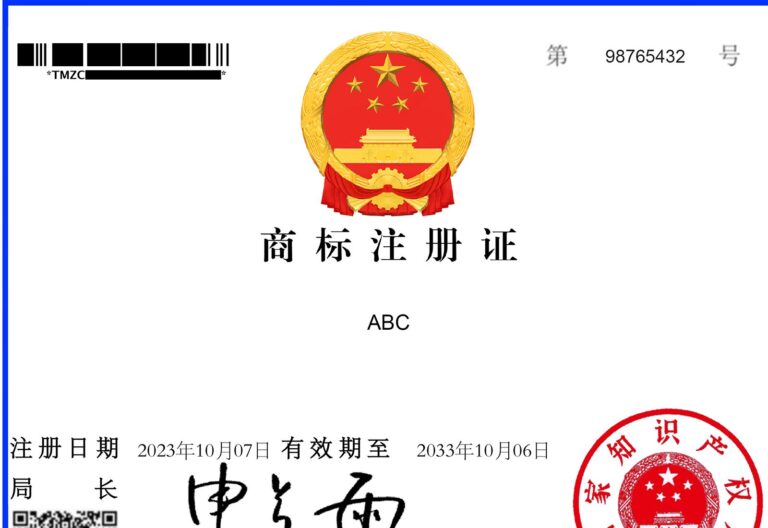
One of the biggest concerns voiced at the session was the ongoing problem of “bad faith” in Chinese trademark law. I am not going to get into that too much here because others have already covered it adequately. Suffice it to say that there is a big problem in China with “pirates” or “squatters” who register in China a brand they have simply ripped off from the West. Restrictions against this sort of thing are tougher in most other countries, but in China it is extremely difficult, if not impossible, to get rid of someone who registers first, even if they do it in bad faith. This is what we were referring to in our earlier post on Chinese trademark law, entitled, Do you Feel Lucky? Do You?

One of the challenges faced by the U.S. and by other Western countries that try to plug the “bad faith” loophole or simply push to improve IP protection in China generally, is that many Chinese perceive this is being done for essentially selfish reasons, with little or no benefit for China. The fact that the Chinese are, at least during their current stage of economic development, net importers, or even copiers, of Western IP tends to underlie this perception. This state of affairs provides little incentive for improving protection on the part of the Chinese.

Anyway, the point I tried to make at the Attaché’s session was not about trademarks. What I conveyed was that the argument for improved copyright protection in China might be easier to get across in the context of the film industry. I brought this up because China’s domestic film industry suffers from piracy just as much as, if not more than, Hollywood.  Couple that with the abundance of Chinese producers, cast and crew wanting to work more with foreigners and you have a pretty good argument for lifting the barriers to foreign films as well.

In other words, not only would the local Chinese film industry benefit from better protection against piracy in China, it would also benefit from the general increase in local production that is likely to occur if the market opened up to foreigners.  Sure, strictly speaking that is also a trade issue, but it certainly is an IP-related trade issue nonetheless.

It is not the local Chinese film industry that wants to stop foreign films. Far from it. Barriers to entry such as China’s twenty foreign film quota, and the requirement that foreigners shoot their films in China as Chinese co-productions, are there to stem the invasion of Hollywood’s “corrupting” influences, which the  Chinese government sees as US propaganda or soft power. These barriers really have more to do with the government’s desire to preserve what it deems important than in protecting the local Chinese film industry.

All of this means that the foreign and the Chinese film industry should be able to work together to advance the film industry in China by expanding those who can make the films and by blocking those who seek to copy them.

For more on the legal issues foreign filmmakers confront in China, check out the following:

What do you think?

  • Piotr

    I think you make a good point. Just not sure it is going to lead to anything though.

  • http://www.politicomix.net Roberto

    What’s important to China is not only “corrupting influences” (which they can and do block by refusing permission to release, but which also leak into the market easily via pirated DVDs and streams), but also the desire to maintain the dominance of Chinese cultural products. Many countries that have a domestic film industry keep careful track of the percentage of local film in the market each year. China has a tradition of ending the run of successful Hollywood films when they start to look too successful, and look likely to upset the year-end league tables, which are carefully plotted by the state (as is everything). And when the state controls not only production but also distribution and exhibition of films, it’s not that hard to manipulate the year-end result.
    You may be interested to research the annual film quota to learn why it is in place and how that came to be. It’s a good story and once you know it you can’t really feel too sorry for Hollywood, nor can you blame China for keeping it in place (I would, you would, Rupert Murdoch would, anyone would).

  • Hua Qiao

    Roberto,
    If you have any links to places that cover the film quota history (as per your last sentence) that would be great.
    I also am skeptical of the “corrupting themes” basis for control.

  • outcast

    “Protecting chinese culture”, gee when was the last time we heard that? Chinese culture is still extremely feudal and backward, and with all the nonsense that goes along with it how is it a good thing for China? We live in the Information Age now which depends on free flowing information, but Chinese culture is barely adequate even for early Industrial Age, so how can it be suitable for today?
    Ultimately what we’re seeing with the government going after Baidu is a reflection of Chinese culture, and inevitably it will significantly slow down the country’s development. Everytime a Chinese government has tried to “protect chinese culture”, the losers have always been the chinese.

  • http://www.starfallgamezone.com Starfall

    The argument for improved copyright protection in China might be easier to get across in the context of the film industry. I brought this up because China’s domestic film industry suffers from piracy just as much as, if not more than, Hollywood.

  • Zyron

    So silly. It’s obvious they are protecting their own home grown industries. Why shouldn’t they. If they were worrying about corrupting moral and ethical influence, as this article suggests, they could easily ban films they think are suspect. But they do no such thing.
    Obviously, if they picked and chose what came in and what didn’t it would make news. But this makes no news because there’s almost nothing to report on. It’s same old same old. Their reasoning it probably more against the influence of free speech rather than moral issues.
    Trading with China has done American workers almost no good; cheap goods? With that comes cheap labor and cheap salaries. The only ones who benefit are the politicians because of our fake economy and business because of wage arbitrage. Things will turn around but heads will roll and the process will be painful. Occupy Wallstreet is just the start.
    So much for free trade. So far it’s been very one sided, which makes it not trade at all.

  • Pingback: There Is No Protectionism In China. | China Law Blog