A few weeks ago, Steve and I spoke at AmCham (Beijing) regarding the China legal issues of which SMEs need be aware. After our talk, I had the pleasure of being interviewed by Matt Wisla for around 20 minutes. That interview focused on the issues currently front and center for foreign businesses operating in China.
Matt: I’m AmCham China’s Matt Wisla, and today you’re going to hear and see Dan Harris speak. Dan earlier today addressed a full house of AmCham China members at the AmCham China conference center before joining us here on China Connect. Dan Harris is a partner at the law firm of Harris & Moure, where he has helped represent hundreds of companies deal with the Chinese legal system over the years. He joins us now to talk about China’s maturing legal environment, some of the pitfalls of doing business here, and how a company can protect its intellectual property while still prospering in the world’s second-largest economy.
Matt: Dan Harris, thanks for joining us.
Dan: Thank you for having me.
Matt: Well, could you just set the stage a little bit for us. Tell us about the legal environment now, and sort of how things have progressed over the last couple of years for companies that want to litigate, or for business law, and then some of the positives and some of the negatives… and then also contrasting a little bit, because so many of our members and so much of the business community is going outside of Beijing and Shanghai now. How are things different, you know, in the provinces?
Dan: Okay, well over the last few years, the legal system in China, in terms of the laws and enforcement of laws with respect to foreign companies has gotten better. It’s gotten better in that it’s gotten more consistent. Arguably though it hasn’t gotten better in that it’s also gotten more consistent in terms of enforcement, meaning that the governments have become much better at enforcing the laws and so if you’re a foreign company operating outside the law, whereas five years ago you might have had a good chance of functioning just fine for an extended period, the odds of that have definitely declined.
One other thing that we have seen a tremendous increase in is a desire and a support network by the Chinese government to collect taxes. China clearly wants to improve its tax collection and it appears that it’s beginning that process with foreign companies. And the Chinese government has gotten a lot more sophisticated in terms of figuring out what is owed by foreign companies in taxes. Five years ago, if you were a U.S. company you could buy a product from your Chinese subsidiary for, let’s say, a dollar, and the Chinese subsidiary would pay taxes as though it had sold the product for a dollar. Now, if that product should cost a hundred dollars, you could buy it from your China subsidiary for a dollar, but the Chinese tax authorities will tax that subsidiary as though you paid a hundred dollars. And it’s in a lot of areas where China is cracking down and becoming more sophisticated at the same time.
You also asked another question about what’s going on out in the provinces. Well, there are always going to be disparities between what’s going on in places like Shanghai and Beijing and what’s going on in some remote town in the middle of nowhere. Places like Shanghai and Beijing have become quite sophisticated in terms of the judges, on how to handle litigation, let’s say, between a foreign company and a Chinese company. But that has not happened throughout China, which is one of the reasons why companies should consider where they’re going to locate in China. Now, as a lawyer, of course, I probably over-emphasize location of a business based on the legal system, but I don’t think it should be ignored. And so, for instance, we’ll have companies which will say, “look, you know, I’m thinking of locating in this remote area because I’m going to save five thousand dollars a month on salaries.” And we say to them, “yes, but you’re in a high-tech business, and you need to protect your IP, and it’s going to be a lot more difficult to do it out there then, let’s say, Beijing. At least think about that.”
Matt: And tell us a little about the– an interesting comment that was made during the event, in terms of the quality of the judges and the number of lawyers. The comment that was made was that some of the judges are as good as you’ll find anywhere. I think maybe there’s a misconception, or people don’t always have an appreciation for some of the positive trends that are happening.
Dan: Well, one of the trends that’s happening among China judges is that there’s a move to bring on judges who studied law. And in China, a lot of the new judges went to law school — went to good law schools — and did well in law school. And that’s particularly true in places like Shanghai and Beijing. And another trend in China is to have specialized courts. China has specialized IP courts and specialized maritime courts. And the maritime judges in China have always had a good reputation in terms of knowing the maritime laws. And the IP courts in China have a good reputation in terms of knowing the IP laws. So in places like Shanghai and Beijing, you’re definitely seeing a very good judicial core. But again, if you get into some remote region, you still might end up with a judge who was appointed not because of how he or she did in law school, but because of friends in high places, and that judge might be nothing more than a retired army colonel. And sometimes those judges might be fine for litigating a dispute between a landlord and a tenant about two hundred dollars, but that judge is not the right judge for handling an international, multi-million-dollar dispute.
Matt: You’re kind of touching on an issue that sometimes isn’t very clear to people outside of China, and even some people doing in business here in China: the role of the Party in the judicial system. So maybe talk a little bit about an independent judiciary, and how does the Party function in the judicial system?
Dan: Well, the reality is that the Party oversees the judicial system. And so judges are not going to go against Party mandates and they’re not going to go against Party dictates. Having said that, that’s relevant to the typical foreign company doing business in China … hardly ever. Because one of the Party mandates when it comes to a commercial dispute, particularly a commercial dispute between a foreign company and a Chinese company, is that the job of the judge is to rule fairly based on the law. Now, where the Party’s influence really plays a part is in criminal cases, political cases. But the typical American company doing business in China is not going to get involved in those things. So if you have a straight-up dispute where, let’s say you’re an American company suing a Chinese company that sent you a million dollars’ worth of bad product, politics aren’t going to enter into that and the Party isn’t going to enter into it. The court’s going to look at the contract and the product. So the Party’s control of the courts just isn’t really relevant to foreign businesses most of the time.
Matt: Tell us a little about some of the current issues and things that are sort of shaping the business environment and the legal issues today. I guess I’m thinking about the wage issue and unions.
Dan: Okay, well the wage issue I view as huge. HUGE. I can’t believe what’s been going on.
Matt: Describe that, for people who may not know—
Dan: What I mean by that is, I was talking with someone here in Beijing the other day who told me — and it was something I already knew, but still, hearing it again I was still shocked — told me that the minimum wage was increased by twenty percent last year in 2010, and then, six months later, was increased by another twenty percent. Meaning that it was a forty percent increase [actually, if I had done the math, I would have realized that the overall increase was actually a bit over 40%]. The same person also told me that an economist he knows, who’s with someone like Goldman Sachs — a really serious economist — is saying that he believes that wages in China are going to be increasing at least twenty percent a year over the next five years. And what’s amazing to me about that is that usually when somebody says something like that, my first instinct is to say, “that’s ridiculous, there’s no way anyone can predict that.” But my first instinct was to think, that’s almost certainly going to be true. Wages are just rising here.
Now, you also asked about unions: unionization is increasing, and the power of unions is also increasing. And I see those two issues, strangely enough, as not being all that related. I see the market and the government as driving wages up. Unionization could actually be a good thing for foreign companies because it’s a safety valve for disgruntled workers. And so, I think unionization is going to increase, and I think the power of unions is going to increase, particularly in terms of collective bargaining. But I don’t see that as being a huge driver in terms of wages. I see the market itself as being the driver that’s pushing wages so high in China. And I think that if you’re an American company in China — and this is obviously more business advice than legal advice — you’ve got to be planning out what you’re going to do when your wages just keep increasing. Are you going to move from Shanghai to Chengdu? Are you going to move to Vietnam? You’ve got to start thinking about it.
Matt: How has labor law impacted litigation with employees?
Dan: It’s increased litigation exponentially, but most of these cases are not big cases. The typical Chinese employee has a pretty good knowledge of his or her labor law rights. The word has gotten out, and they know that if something goes wrong in their relationship with their foreign employer, that threatening to sue or suing is a good way for them to get some money. And so we deal with those law suits [and potential and threatened law suits] all the time. We tell our clients, “look, you know, if you’re going to terminate this employee, they’re probably going to sue you.” And so, therefore, what we advocate is trying to strike an agreement with them right away. Because one thing that actually works is an agreement with an employee where you pay him or her not to sue, then they won’t sue. And it’s better to pay them three thousand dollars not to sue than it is to have them sue you for eight or nine thousand. Because the other thing we’re finding is that when an American company gets sued by a Chinese employee, the American company almost always loses.
Matt: Thinking ahead and preparing ahead, are there ways that you could structure employee contracts that could give you less exposure to that?
Dan: There are definitely ways where you can, at minimum, reduce the damages that you’re going to be facing when you terminate your employee. But — and I wish I could say that a great employment contract will prevent the lawsuit — the reality is that Chinese employees tend to sue no matter what the contract says. So that’s a problem. It’s not a big problem, because usually you can deal with the employee for not all that much money.
Matt: And changing the subject a little to another key issue, in China’s intellectual property. Thinking ahead, again, in terms of protecting your intellectual property, maybe even for smaller businesses, or people coming into China, what are some of the considerations? If you’re kind of looking at the China market, and you’re concerned about intellectual property, because maybe you’ve heard a lot about that, and that sort of scared you off a little bit… from your point of view, are there some steps that could help people to sort of understand the market and prepare from that situation?
Dan: Definitely. First off, a lot of times companies are too afraid of theft of intellectual property in China. And I say that because a lot of times, companies don’t really have intellectual property even though they think that they do. But there are a lot of ways to deal with protecting your IP. One is with your employees, which is an under-utilized method for protecting your IP. A lot of times, Americans have the assumption that their IP is going to be stolen by their competitors. But a lot of times, it’s not stolen by competitors, it’s stolen by an employee who leaves the company and becomes a competitor. And so what you should do is put in your employment contracts trade secret provisions, and China tends to enforce those.
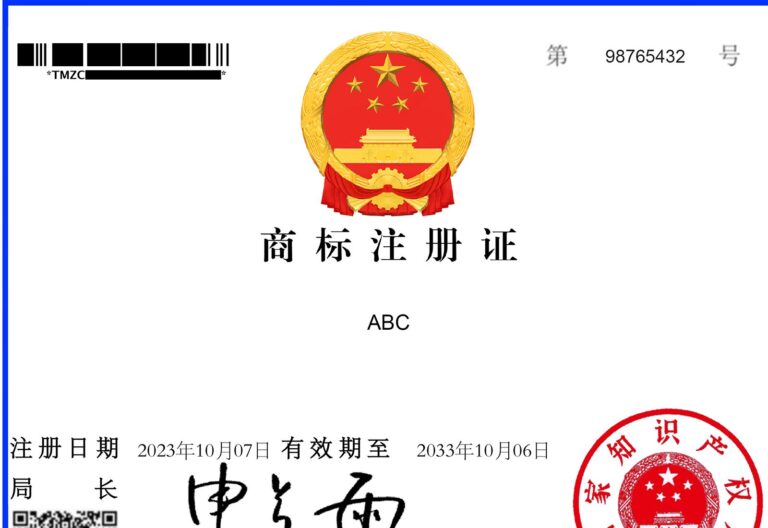
Register your trademarks. It’s not very expensive, and China tends to enforce those. Patents are a whole n’other matter. China’s patent laws are not the same as in the U.S., and they’re much tougher to have enforced. So what you should consider before you register your patent is — number one — is this patent the kind that is going to be enforced? And number two, am I willing to spend the time and money to enforce it? And if the answer is no to those, then don’t spend the money registering the patent.
Overall, what you really have to do in China is not think that it’s like the United States, and also not think that there are no protections. There are protections; you have to set yourself up to take advantage of them. And there are protections that aren’t even legal. So, for instance, if you’re making a product and the real IP is the product as a whole, well, maybe you make nine tenths of it in China, you ship it back to the U.S., and you have the last bit assembled in the US. It’s going to cost you more, obviously, but if it’s going to completely protect your IP (because no one in China is ever going to know it) then maybe it’s worth it.
Matt: I appreciate you spending the time with us today, I know you’ve been traveling a lot, so thank you for spending the time and giving us your insights.
Dan: Thank you very much.
You can find the full video here.