The Basics On Doing Business In China.
Beijinger Magazine recently did a really nice article on our blog,entitled, "Blogging the Law." The article is mostly an interview with me and it nicely distills the basics for doing business in China.
On the business side, it first addresses China's current climate for foreign businesses:
How would you describe the government's present attitude towards foreign investment?
China's attitude towards foreign investment ebbs and flows. If I were to describe China's attitude towards foreign investment right now in one word, it would be "neutral." If your project is going to contribute good jobs for China and you are going to go in correctly, which means you are following the various laws, then your chances of securing the proper approvals are extremely high. If you think you can just waltz in because you are bringing in 100 mediocre jobs, you will likely fail.
It then discusses China joint ventures and why they tend to be so problematic:
Why are joint ventures so troublesome?
We are not fans of joint ventures in China, or anywhere for that matter, because the local party almost always ends up holding a much better hand and on top of that, it's their country. In mostinstances, everything that the potential joint venture parties seek to do can be accomplished just as well without doing a joint venture. The American company goes to China and comes back talking "joint venture" but when that same company goes to England they come back talking about "establishing a long term relationship" or "doing deals together." In most instances, they should be talking this way about China too. I love the expression, "same bed, different dreams." We have been involved with some joint ventures that have worked beautifully and truly stood the test of time, but those are rare.
It moves on to the (limited) role of guanxi for foreigners doing business in China:
Guanxi (relationships) is a much talked about, much written about subject. How big of a role does it really play?
Shockingly little. I have met many people who have real power in China but virtually none of them really do rely on their relationships with people to take care of business. Our lead China lawyer, Steve Dickinson, has been living in China and doing business there about half his life. His spoken and written Mandarin are better than your average educated Chinese person. Steve knows a ton of people in China, yet he would never claim to have pull there nor would he ever advocate taking a shortcut because of pull. I cannot tell you how many times I have heard of or seen a Western company believe it did not need to follow the rules because it had sufficient pull to get away with doing things outside of the lines, only to face major issues for having operated outside of the law. The problem with guanxi is that there is always going to be someone higher up than your contact and that person higher up may at some point call you to account for your failure to follow the laws to the letter. Also, and I have seen this happen more times than I can count, your contact may be removed and then the person who takes your contacts place may remove you as an example of how things will operate under the new regime.
I then talk about how just keeping up on China's ever-changing laws is the most difficult legal challenge for most foreign companies doing business in China:
From a legally oriented perspective, I would say that the most difficult challenge is for them to stay up on all of the laws that apply to them.
The problem with Chinese laws and laws everywhere is that unless you are a massive organization that can afford to have multiple attorneys in-house, you cannot realistically expect to be able to pay your lawyers enough to monitor every law that applies to your particular business. You are going to have to do much of that yourself and that is extremely difficult. Smaller companies often ask my firm to help them handle their various required employment and other taxes and I always tell them they need to find a good Chinese bookkeeper to help them with that sort of thing because using a law firm for that is just not cost effective.
I definitely sympathize though because my law firm is small and we have to hire out for just about everything, ranging from payroll to bookkeeping, to local taxes, etc., and it is very difficult to stay on top of all that is required and that is on my home turf with my native language.
I then set out what I see as the two most common (and somewhat paradoxical) misconceptions foreign companies tend to have about China:
Two things. That business in China is nothing like business anywhere else. Business is business – a good deal is a good deal and a bad deal is a bad deal. That the law in China is just like the law everywhere else. Far too often, Western companies go head first into China assuming the laws there are pretty much just like they are at home.
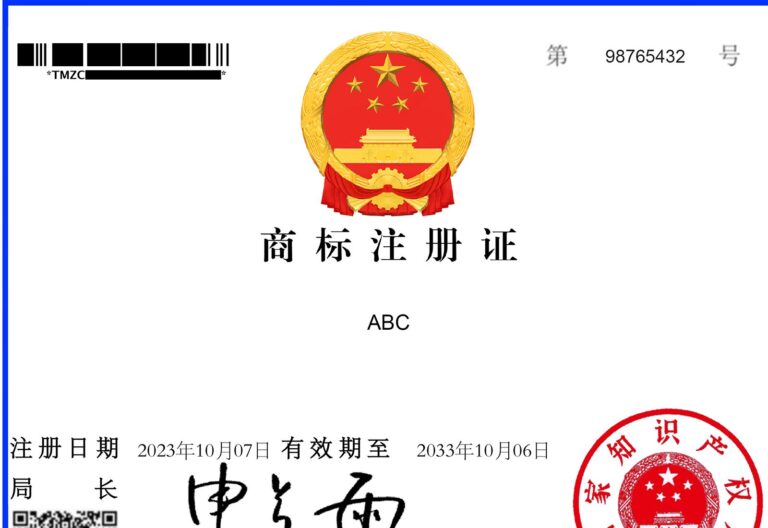
A classic example of this is in the area of trademarks. In the United States, the first to use a trademark generally gets it. In China (and most countries in the world) it is the first to file for the trademark who gets it. American companies will manufacture something in China for five years using their United States trademark and yet never register it in China. Then some Chinese company who has actually registered the trademark will go to the American company and tell them to cease using their (the Chinese company's) trademark or else pay the Chinese company to license it. The American company will then try to hire my firm to sue the Chinese company for having "stolen" the American company's trademark. I then have to tell them that just because they own the trademark in the United States does not mean they also own it in China and in fact they do not. They are never happy when I tell them that instead of hiring us to sue the Chinese company over the trademark, they should hire us to negotiate purchasing the trademark or securing a license to use it.
This problem and so many others stem from the assumption that Chinese law is the same as the law back home or, even worse, that the law back home actually applies in China.
Do check out the rest of the article here.

Comments (7)
Read through and enter the discussion by using the form at the endee ming - August 25, 2010 6:36 AM
What a great article. Thanks for sharing.
Hank Mobley - August 25, 2010 7:25 AM
I disagree with you about your perception of "guanxi". Its the same as the US, and you have your business friends too. In fact your entire blogroll is a form of "guanxi". Your issue is the seditious use of it, and of course that happens in China. But it also happens in the US. Getting senators on your side when lobbying is often guanxi. Guanxi is useful, it does exist and it is mainly benign. You talk it up as a problem of corruption where its not.
BeijingLegal - August 27, 2010 6:24 PM
Actually Guanxi is not quite the same in China than in the US, which should be more accurately called "relationship". Having a senator on your side when lobbying is "relationship", having an official within your circle and giving you the greenlight to bypass the law is "Guanxi".
Twofish - August 27, 2010 7:12 PM
Personally, I think people would be a lot better off if people stopped talking about "guanxi" and people just used the term "business relationships." "Guanxi" makes this sound particularly Chinese and exotic, when its just business relationships and Chinese business relationships deep down work the same as business relationships in the rest of the world. The basic business problem is "who can I trust to help me make money?" and that's the same in the US and in China.
fbp - August 29, 2010 12:06 AM
It is pretty straightforward that china's entire economy moves to keep the Yuan steady. Unlike other countries where economy drives the nations currency value, china's currency value is what drives their economy.
Different concept, but at least due to this they are able to keep their cost pretty low in global economy.
PCS - September 2, 2010 3:25 AM
Great stuff and I agree, especially with your comment on how foreigners who have nothing claim they have guanxi and then it is always those same people who complain when they are thrown out of China. But of course they have no argument for staying either.
QT - September 9, 2010 11:38 PM
China is a big market with a lot of potential. This article is really informative and encouraging for those who are thinking of doing business in China.