









Header graphic for print
China Law Blog China Law for Business

Six Ways To Protect Your China IP. No Lawyer Required.

Posted in China Business, Legal News

A client (who my firm has been representing on its international intellectual property matters for a long long time) sent me an article today and asked for my thoughts. The article is entitled, Enforcing Intellectual Property Rights in Weak Appropriability Regimes: The Case of de Facto Protection Strategies in China, written by Marcus M. Keupp, Angela Beckenbauer, and Oliver Gassmann, all of whom are professors at the University of St. Gallen, in Switzerland. 

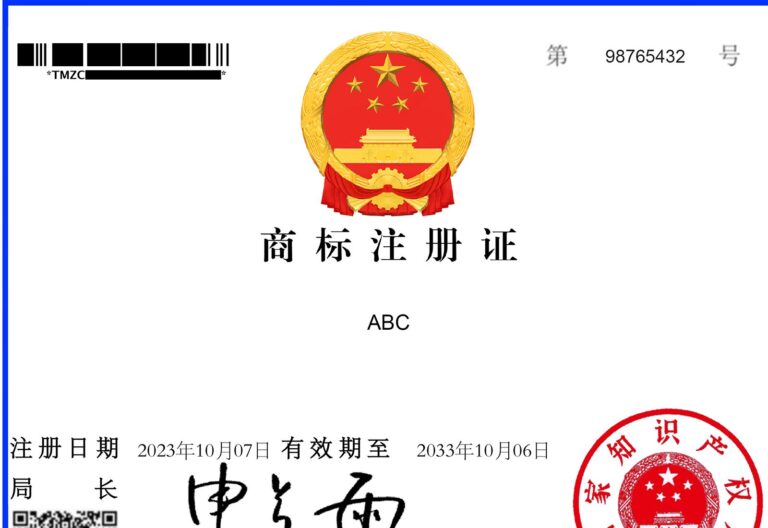
I am always being asked if registering a trademark, or getting a manufacturer to sign a non-disclosure agreement, or getting an employee to sign a non compete or trade secret agreement works in China My answer is always that doing these things, while also employing “non-legal” strategies as well, will greatly increase your chances of protecting your IP in China. Companies that combine legal and non-legal strategies to protect their IP have a much better record of IP protection in China than those who do nothing.  

The article focuses on the following non-legal methods for protecting IP in China:

  • Technological Specialization.  This strategy attempts to make imitation impossible by making the product so complex that imitation would take so long or be so costly as to render it uneconomic for someone to copy.   
  • De Facto Secrecy.  The authors define this as secrecy “not enforced by legal means, such as nondisclosure agreements.” This strategy involves stopping “the outflow of sensitive IPR from the unauthorized appropriation of documents, blueprints and technical description by local employees. The basic idea is simple: Do not document any important information in writing.” 
  • Internal Guanxi.  Win over your China employees by building trusting relationships with them by good pay, long-term education and training and constant reminders of the importance of keeping company IP a secret.
  • External Guanxi.  This strategy focuses on “establishing good relationships with firm-external official bodies and institutions” on whom you can call to help you ”pursue IPR infringements.”
  • Educate the Customer. “Most counterfeits offer poor quality, so the customer learns over time that the more expensive but high-quality original product will better fulfill demand than the low-cost, low-quality counterfeit. Help the customer learn how true this is by providing quality and service counterfeiters do not match.  
  • Product Structure and Know-how Intensity.  Hang on to some “key” to using your product. 

All of the above strategies, alone or in combination, can work to increase IP protection in China (or elsewhere).  The strategy you employ should depend on your product and on the way you do business. 

We have a client that sells expensive technology equipment that requires password protected internet access to achieve all of its capabilities. The internet access is the “key” to full functionality and so duplicated hardware will never be as valuable as the original. We have another client who pays a little more to have two Chinese manufacturers make the two main components for its product, and then has the product assembled in the United States, so no Chinese manufacture ever gets the whole product. A large number of our clients rely on trademarking their brand in China and constantly coming out with new and better product so they will always be “one step ahead” of their competitors.

How do you protect your IP in China?

  • Kevin

    “Do not document any important information in writing” – yeah, great idea, until a key employee leaves and you’ve got to reverse-engineer your own product to find out how it’s supposed to work.

  • Joshua

    These all make sense, but this is the China Law Blog so can you do an article on what we should be doing on the legal front?