How To Get Your Business Into China. Legally.
Spoke with a company last week that is interested in hiring people in China to oversee its China purchasing and quality control and stake a beachhold for selling its products there as well. This company asked me to set out the basics on what my firm would propose to do for them to get them going in China. I just wrote the email and figuring I might as well kill two birds with one stone, I have modified it slightly to make up this post. Here's my email:
This is to follow up on our recent telephone conversation regarding what it will take for your company to hire employees in China legally and the additional actions you should take to operate legally in China and to protect your company there.
1. In order to hire people in China, you must first create a legal entity in China. There are three basic types of legal entities for foreign companies seeking to go into China.
One is the joint venture in which the foreign company forms a sort of partnership with a Chinese entity. These are generally the most difficult, most expensive, and most risky and since you do not have a Chinese partner in China, it likely will not make sense for you to go in as a joint venture. But just in case you have an interest in that, I suggest you read this American Chamber of Commerce article written by our lead China attorney, Steve Dickinson, on the potential problems of joint ventures in China and this Wall Street Journal article I wrote on why joint ventures are becoming so much less common in China.
Another way for foreign companies to go into China is via what is called a representative office. This is where you form a Chinese entity that can only represent your interests in China; it cannot actually conduct real business there. Essentially it can do little more than market your company. Based on what you have told me, such an entity would not make sense for you in China because you want personnel there to negotiate contracts for you at the lowest prices and to do that, they will need to be able to pay for many of those contracts in Yuan, not Dollars. A rep office will not be able to do that. The advantage of rep offices is that they are relatively cheap and easy to form. Here is a post I wrote many years ago comparing Representative Offices and Wholly Foreign Owned Entities (WFOEs) in China.
Based on what you have told me so far, a Wholly Foreign Owned Entity (WFOE) sounds best for you. A WFOE will be its own free standing Chinese company, able to do just about everything a domestic Chinese company can do. We can set this company up to be 100% owned by your existing company, or we can form a new US (or Hong Kong company) to own it. Here are some articles we have written regarding the forming of a WFOE:
-- The basics of forming a WFOE in China.
-- An article explaining one of many reasons why it is critical to form a China WFOE correctly.
-- Another article on China WFOE basics.
-- A two part series laying out what it takes to form a WFOE in China and explaining China’s minimum capital requirements.
2. With your Chinese entity, you will be able to hire and retain employees. China has very strict labor laws that require you have written contracts with your employees (or face severe sanctions) and that greatly limit firing for any reason not set forth in your employee manual. This post gives a basic explanation of China's labor laws. What you need to know is that the labor laws apply to every company in China and to every employee and that the best defense against them is a good contract and a good employee manual, both in Chinese. Our employee manual has provisions intended to protect your company from the Foreign Corrupt Practices Act (FCPA). Here’s a recent article on the FCPA.
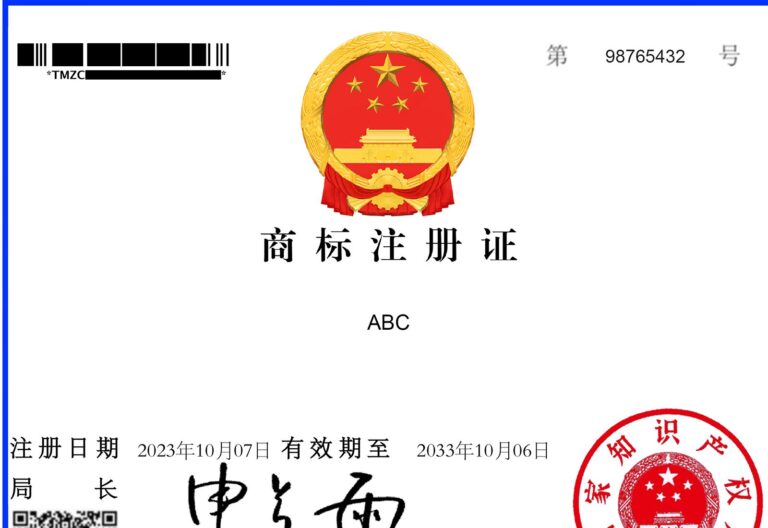
3. Based on our conversation, it is also going to be extremely important for you to register your trademarks/tradenames in China. Here’s an article on why it is critical to register your trademarks in China.
4. It also sounds as though you will be needing us to write your Original Equipment Manufacturing (OEM) contracts for all of your China purchases. A good OEM contract greatly decreases the likelihood of your receiving bad or late product and greatly increases your chances of being able to get recourse should a problem arise. Here’s an article on how enforcing contracts in China can be way more effective than most people realize: and here is an article on China OEM contracts generally:
And just in case I have not given you enough to think about, here are two articles setting forth the legal basics of what companies need to think about if they are going to do business in China. One is What Lawyers Must Know About China and the other is a legal checklist for businesses going into China.
We would love to get started in helping you get into China. Let’s talk next week about the next steps.
TrackBack
TrackBack URL for this entry:
http://www.chinalawblog.com/cgi-bin/mt/mt-tb.cgi/3214
Listed below are links to weblogs that reference How To Get Your Business Into China. Legally.:


Comments
Another Great Blog, you are my go to blog for research for my thesis...I even took your advice and got Jack Perkowski's book, a great read! You certainly do have great insight into China.
Thank you!
Posted by: Dee | August 2, 2009 8:49 AM