Go Ahead And Quote Me: $100 = 100 RMB

Jeremy Gordon at China Business Blog is out with his latest in his emminently quotable "Don't Quote Me" series. This one is entitle, "Don’t Quote Me (On When US$100=RMB100)" and it quotes Jack Perkowski, of “Managing the Dragon” (the book and blog) on how Chinese view money.

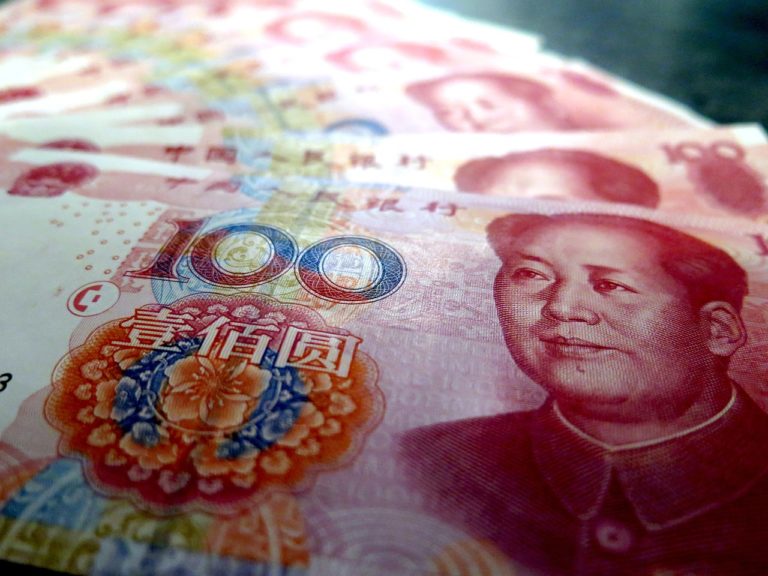
I always carry two bills with me – an RMB100 bill and a $100 bill…The point I make is that these two bills are treated in exactly the same way in their respective countries. Just as the $100 bill is the highest unit of currency that you can get in the United States, an RMB100 bill is the highest unit of currency you can get in China.

When Americans look at a RMB100 bill, I say, divide by 8 and see $12.50. But when Mainland Chinese look at the same bill – and I don’t care how wealthy they are – they see what Americans see when we look at our own $100 bill.

Jermey goes on to say that "anyone who has conducted price negotiations in China will know what he is talking about."

So true.

In the Managing the Dragon book (which I highly recommend, here), Jack talks about how much he spent on a haircut compared with how much his well paid Chinese executives spent, and on how silly they all thought he was for spending something like $10. The book also uses hotel prices to show the purchasing power parity between a 100 RMB note and a USD$100 bill. The relevance of all of this is that if you do not understand how money is valued/viewed in China, you cannot be well positioned to negotiate anything there.

Comments (13)

Read through and enter the discussion by using the form at the end
Jim - October 25, 2008 3:23 PM

This is a 'rule' that I stumbled upon early on when I came a decade ago, and so far it has been extremely helpful in understanding how things work.

Ron - October 25, 2008 4:14 PM

Dan,

Couldn't agree more on this point! It took me more than a year to realize this point and lost a lot of money in the meantime. Once I realized what my Chinese counterparts were thinking in regards to money, it changed my success rate.

尼克 - October 25, 2008 9:09 PM

I wish it was still 8:1 instead of 6.5:1!

david - October 26, 2008 4:16 AM

I have to disagree. The concept of understanding local money and the ideas about money are certainly true and valuable. But the equation of 100RMB with $100 is a big stretch. You can remember the first time you saw a $100 bill, I dare say. No Chinese under 50 could tell you about the first time they saw a 100RMB note. They are just too common.

A couple more examples.

First, in my neighborhood in Shenzhen our ATM's only spit out 100 RMB notes. To be honest, in all the other 10 provinces in China where I've done business I've never seen any other ATM spit out anything less than 100's either. Imagine if the only bills you could get out of ATM's in the US were $100 notes--it would make getting cash from the ATM almost worthless. Many gas stations won't take $100 bill in the US. Ditto for many stores if you're buying less than $20 dollars worth of goods/services. Now, zip back to China and try paying for your 12.5RMB taxi ride with a 100RMB note. No problem. How about a single Coke at the Circle K with a 100RMB note. Again, no problem. How many times do you go out to lunch or dinner with Chinese friends and they stop at the ATM and get out multiples of 100RMB bills? Everyday? Yea, me too. How many times has that ever happened in the US?

Second, dealing with cash for Chinese is very different depending on what part of China you are talking about. Maybe the 100RMB note is a big deal for the 600 million peasants. But what about the 400 million urban residents? Not so much. If office workers in China spend 12-15RMB per lunch on fast food that would, under the above assumption, mean that Americans are also spending $12-$15 dollars per fast food lunch. But a set meal at a western fast food place in China cost 20RMB or more and only $5 in the US. Even a mom n pop shop next to your office building in the US isn't going to be charging $12-$15 for lunch sets. A nicer sit down dinner, yes, sure.

If the Chinese middle class are making $750 a month (about 5000RMB) and the average American is making $3400 a month (about 23,000RMB+) The exchange exchange across cultures is less significant that this comparison would lead on. It's the difference of carrying around 50 bills in your wallet verse 34--about a third more!

Further, how difficult is it for Chinese to have to deal with the fact that they love to use (are used to using) cash for all transactions and have only 100RMB with which to do so?! Have you ever paid for a car with cash? How about a fridge? A TV? A microwave? Many, if not most, Chinese have. The 100RMB is not so much a treasure that is rarely seen, but an inconvenience in this newly expensive world.

Finally, the US offers a $10,000 note.

FOARP - October 26, 2008 10:36 AM

Well, I do actually remember the first time I saw a £ 50 note, and it's amazing how much inflation in food and petrol has made what once was a rare item into something you see quite often. Would I spend a fifty pound note the same way I would spend 100 RMB? Not even nearly, the most I've ever even seen spent in one night in London was 500 quid, and that was in a very high-rate club - and I wasn't paying! In China the most I ever spent in one night was a good 3-4000 RMB in Shanghai, but I guess there's more stuff to spend things on. Plus I'd be pretty shocked if a fifty pound note only bought two beers, but that's about what 100 RMB will buy in a lot of clubs/pubs in Shenzhen/Nanjing/Shanghai.

Finally, it really does matter where you're talking about. With 3 G's in your pocket you're set for a good week of wining and dinning in Chuzhou, Anhui province, but (depending on where you go) it might not even get you all the way from Friday night to Monday morning in Shanghai.

Don Clarke - October 26, 2008 4:36 PM

I'm with David. Perhaps in Jack Perkowski's circles people regularly use $100 bills to light cigars and stuff into lap dancers' knickers, but they are not readily accepted by the general public. As for PPP, $100 buys a lot more than 100 yuan. The reason Perkowski's Chinese colleagues thought $10 was too much to spend on a haircut is cultural, not economic: have you ever seen the haircuts on these guys? They make Bill Gates look stylish. And think about the lowest price for a beer in the diviest bar: 10 yuan or so in Beijing, but certainly less than $10 in the US.

A much better (although still of course imperfect) equivalent in terms of cultural significance would be the US$20 bill.

dan - October 26, 2008 4:49 PM

I love this discussion.

Here's my thinking:

1. Everyone uses $100 bills now, at least in Seattle. I've apologized for using it to buy something for less than $5 and yet, nobody really seems to care.

2. Don Clarke, you are absolutely right on the haircuts making Bill Gates' look good (though to his credit, his improved a lot post-Ms. French).

3. There are two economies in China, particularly in places like Beijing and Shanghai. There is the ex-pat economy and the local economy. A story I always tell is how in Shanghai, breakfast at the hotel for just me was $35. Lunch for three of us, right around the corner, with plenty of good food, was $13.

4. There is definitely something to what Jack is saying though. How many times have you seen someone negotiate at a market for 15 minutes over 5 RMB? That just wouldn't happen in the US. And I don't know how many times I have bee chastised for just letting the cab driver keep the change when it is just a few RMB.

So while the $100 to 100 RMB might not be exact, there definitely is something to what Jack is saying and that 100 RMB is viewed as more valuable than $20. Way more.

Ron - October 26, 2008 5:40 PM

I also want to add my two mao......our company moves expats in and out of China. I need to communicate with the expats 50% and the Chinese 50%. When we are negotiating a quote for a move from China to the states and the difference in price between us and the competitor is RMB 500 to 1,000, most expats may not care about the price difference and go with the higher price because they recognize and have used our company in the past. But, in many companies, the bottom line is cost and when the Chinese HR manager (in a foreign company), who makes the final decision and is making RMB 2,000-3,000 a month, can save their company RMB 500 to 1,000, they will do this because they see the cost as half their salary and a good amount of money. Now, if this same situation was in the states and your salary was US 2,000-3,000 and you could save your company US 1,000 you most likely would choose the lower price.

Ron - October 26, 2008 5:42 PM


Oh yes, and I forgot to add that I live in a second-tier Chinese city and also deal with people in third-tier cities.

chriswaugh_bj - October 28, 2008 1:46 AM

What I saw in the original post was a re-worded version of what I always tell newly arrived expats/tourists: Don't think in terms of your home country's currency, that's the quickest way to get screwed. Too many people think in their home country's dollars/euros/pounds/whatever and automatically convert prices back to their home country's currency, comparing that with what they'd pay for the same item back home. You come from a Western country (or HK, Taiwan, South Korea, Japan) and do that, everything seems super cheap all of a sudden. But it isn't cheap, really. Or, to try to sound all intellectual-like: People coming to China need to see the RMB as a representation of value in the Chinese economy, not as some quaint local equivalent of this thing they call "money" back home.

Oh, and don't forget China is a cash society. Back home in New Zealand, at least last time I was there about 6 years ago, ATMs dispensed $20s and..... why the hell were you bothering with ATMs when you can swipe your card at the EFT-POS machine in basically any store? In a society where everything is done electronically, you're naturally not going to see too many $100 bills (and when you do, remember they're plastic- they can be washed, but don't iron them, they tend to melt). In a society like China where cash is king (and my boss still pays me in cash, but that's as much my reluctance to open yet another bank account so he can pay me electronically as anything else), it's only natural you'll see more 100s. Still, when I was a kid in NZ helping my parents count up the tithes from church, I saw a few 50s and 100s- they were held up for all to behold in awe. Those few $50 and $100 notes that found their way into the collection plates represented such a fantastical amount of money! Oh, yeah, most people giving that kind of amount would pay by cheque, something that never seems to have taken off in China.

Tim - October 28, 2008 2:31 AM

I have to agree with David and Don on this one. I’d say the 100RMB in the first tiers is akin to a $20 in most cities in the States. That being said, the more you move down the rank of tiers, the less true this becomes. The disparity of income in China becomes much more pronounced once you begin visiting small villages and towns ; to an extent you will not as easily find in the States.
BTW: The highest denomination note in the State was the 10,000 (If you’re in Las Vegas the Horseshoe used to have a nice collection of 100 of them prominently displayed in their lobby) . The highest bill still printed today is the 100. http://www.purpleslinky.com/Offbeat-/500-to-1000-to-10000-and-Beyond-The-Biggest-Dollar-Bills-in-United-States-History.82847

bizCult - October 28, 2008 10:47 PM

If you'd like, check out Jack's more in depth explanation of the $100=100RMB phenomenon in his own words in our podcast here:

http://www.bizcult.com/content/?p=460

b. cheng - October 30, 2008 12:22 AM

I couldn't disagree more. I also think that there is an absolute need for an RMB500 (and possibly even RMB1,000) bill. Negotiating over RMB5 is just a Chinese habit and I know it does happen and can't be used as an example.

I disagree with the "2 economies" point as classified as an expat economy and a local economy and am a bit surprised by this statement. Yes, there are certainly 2 economies, especially in cities like Beijing and Shanghai, but it is more white collar/blue collar and not expat/local. The expat population is not really that large and can't sustain all the foreign restaurants and bars in these cities, they have to pull in local Chinese with money if they want to make it, this is something that too many bars/restaurants forget. There are Chinese in Beijing and Shanghai who eat out every night and could care less about dropping RMB100 for a meal, there are also Chinese in those cities who never eat out and spend a total of RMB100 a month on food.

Its impossible to offer a view of how the "Chinese" view money. I can ask lawyers and other people in Guomao and they'd respond that losing a RMB100 bill would be pretty meaningless, whereas the construction workers building tower 3 would do everything they could to find a lost/misplaced RMB100. I don't think this is just a Beijing/Shanghai thing either, there is plenty of money in the provincial cities as well.

Post a comment

Fill out this form to add a comment to the discussion
I'd like to leave a comment. is
,
is
,
is
is