Trademark Protection In The Global (And China) Marketplace
This article was written by my friend, Brian Geoghegan, who describes himself as having "practiced trademark and copyright law since graduating in 1985 from the University of California at Berkeley School of Law (Boalt Hall). In 2003, he finally left behind the megafirm lifestyle and founded GeoMark, a boutique trademark and copyright law firm."
Trademarks are among the most important assets of any company. Indeed, if it weren't for trademarks, customers would be unlikely to even find a company's products. Naturally, then, most companies want to protect these essential and valuable assets to the greatest extent possible and therefore make sure that they are registered with the United States Patent & Trademark Office (the "USPTO").
But many companies stop there, thinking the job complete. It doesn’t occur to them that trademark rights are territorial and that owning a United States trademark registration creates no rights whatsoever outside the borders of the U.S. I've long since lost count of the number of companies who have suffered from this misconception. Although we now have several new tools to secure multijurisdictional protection, discussed more fully below, in large part trademark protection must still be secured jurisdiction by jurisdiction.
Often, the issue comes to light only after a problem has been encountered, such as someone selling knockoffs of the trademark owner's products in another country. If the company is fortunate, corrective action is still possible. For many, however, it may be too late and no legal remedy exists. For such a company, someone else now owns "its" trademarks in that other country (or countries) and the only option, if any, is to purchase them back from the foreign “owner”, usually at a stiff price.
Although this might sound like extortion, in most cases it is perfectly legal. Most countries, unlike the United States, grant trademark rights on a "first to file" basis, not the "first to use" basis to which we are accustomed here. The first company to file an application to register a trademark, whether or not someone else is already using it, either in the jurisdiction or elsewhere, becomes the trademark owner in that country.
For that reason, trademark registration overseas can be even more important than in the United States. First of all, without a registration in a particular jurisdiction, a U.S. trademark owner will be unable to prevent someone else from using its trademark. Moreover, to add insult to injury, if that other party has taken the step of registering the U.S. company's trademark locally, the U.S. company could even be prevented from using the trademark in that country and could be liable for infringement if it were to do so!
Given these factors, it's not surprising that a class of entrepreneurs has emerged in many countries (particularly in Latin America and Asia) who watch for successful emerging American companies and then move quickly to register their trademarks first. Later, when the American trademark owner is ready to expand into that country, it is dumbfounded to learn that someone else already owns its trademarks there. These opportunists may not even intend to actually sell product using the trademark. Rather, they are often more interested in selling the trademark back to the U.S. company, at whatever price can be extracted. The negotiated price can vary considerably but it will certainly be many (or very many) times more than it would have cost the U.S. company to register it originally.
So how does a trademark owner protect itself from these dangers? In short, by registering its marks in as many jurisdictions as possible. Unfortunately, there are roughly 200 countries in the world today, most with their own trademark registers, application procedures and, of course, costs. Until quite recently, a trademark owner wanting to fully protect its marks around the world had no choice but to file individual trademark applications in each of those jurisdictions. Needless to say, the expense of securing protection in even a fraction of those countries could quickly become formidable.
Fortunately, things are improving. While there is still no such thing as a "global trademark registration", and while virtually all countries still allow for national trademark filings, in recent years there have been two significant developments which have helped to reduce the burden on trademark owners.
The first was the introduction in 1996 of the European "Community Trade Mark" (the "CTM"), whereby a trademark owner can secure protection in all member states of the European Union by means of a single trademark application. Back then, this provided coverage in 15 countries. Today, the EU has expanded to 27 member countries and continues to grow. As one might expect, a CTM costs more than most national applications. As a general rule, the cost is approximately the same as filing national applications in three individual European countries. Accordingly, as long as one needs protection in at least three countries, then the Community Trade Mark becomes the more economical choice. But if one sells product throughout the EU, it's easily the best trademark bargain to be found.
The second development occurred in 2003 when the United States joined an international treaty called the Madrid Protocol. Under this treaty, if one owns a trademark registration in one's "home country", one can apply for an "International Registration" and designate, in a single application, as many other treaty members as one desires (each assessing its own fee, of course). Currently, 77 jurisdictions have joined the Madrid Protocol, including most of the world's major economies. Notable exceptions are Canada, Mexico, Hong Kong (still a separate jurisdiction for trademark purposes), Taiwan, India and all of South America, where protection still needs to be secured country by country.
In addition to these new vehicles, there has long been another useful international treaty called the Paris Convention to which most of the world, including the United States, belongs. Under this Convention, a trademark owner can take advantage of a six month "priority period", whereby the company can file for a new trademark in one member country and then have a six-month window in which to file for the same trademark in any other member countries and have those later applications treated as if they had been filed at the same time as the first one. Accordingly, an American company can file an application with the USPTO today for a new trademark, then wait up to six months to file elsewhere without any concern that some enterprising individual overseas might file a preemptive application for the mark. For trademark owners with cash flow issues, such as many startup companies, this can be a very valuable tool.
Finally, all three of these treaties can be used together in an appropriate situation. For example, a company may file an application in the United States for a new trademark and then, under the Paris Convention, wait close to six months before filing with the USPTO an application for an International Registration under the Madrid Protocol and, in that application, designate the European Union as one of the jurisdictions in which protection is desired.
Collectively, these treaties have brought the cost of international trademark protection down by perhaps 30-50%, depending on the particular jurisdictions of interest. However, despite these advances, protecting every trademark in every country of interest can still be beyond a company's budget. So how does one choose where to seek protection first? There are several factors a company should consider. First, where does it have the greatest foreign sales? In which countries would the emergence of knockoffs hurt the most? Where does it have manufacturing facilities (especially if the company uses outside vendors to manufacture its products)? Are there countries with notorious counterfeiting problems in the trademark owner's industry? Finally, and perhaps most importantly, in which jurisdictions would the company suffer the greatest damage if it were precluded from using its trademarks because someone else had registered them first?
Often, once these questions are answered, if the budget does not permit securing all desired protection immediately, the trademark owner will adopt a plan whereby protection is secured in stages, covering the most important markets first, then another group in six or twelve months, and so on. Although there may still be gaps in protection, at least temporarily, they will be the result of a conscious business decision, rather than a failure to identify the issue at all. Ignorance may be bliss but, at least in the trademark world, what you don't know can indeed hurt you.
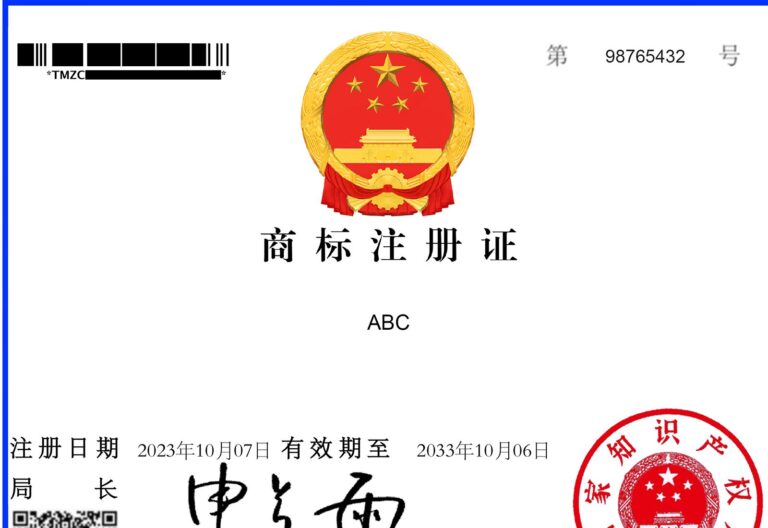
For China specific trademark advice, check out "China Trademark Law: Simple And Effective."
http://www.chinalawblog.com/cgi-bin/mt/mt-t.cgi/2832
» Which Comes First, The Trademark Or The OEM Contract? China Law Blog
I am paranoid about my clients registering their trademarks in China, pretty much before they do anything else. For a few examples of my feelings on this, check out, "China Trademarks -- Do You Feel Lucky? Do You?" "China Trademark Law: Simple And Effe... []


Comments
A few additional points:
1)There must be some non-token use within the first ten years of registration otherwise the trademark may be lost. The standard for 'non-token' here in the UK is very low (sales of a few hundred pounds over several years being enough), and in the rest of Europe is also low - use of the trademark on letterheads sent to customers has been enough, although purely internal use would probably be judged 'token'. Other jurisdictions, however, may have higher standards.
2) Whilst a registration in a territory (theoretically) forestalls other registrations, nowadays no-one examines UK or CTM registrations on relative grounds. This means that whilst a European Community registration is examined to see whether it fulfils the absolute grounds for registration (e.g., that it is capable of acting as a mark, that the registration is formatted correctly etc.), registrations of marks identical or similar to those already on the register will not be rejected.
3) The Madrid system has two parts - the convention and the protocol. In both systems a national registration is used as a 'root' from which applications in other jurisdictions may be made. Under the Madrid Convention (i.e., not in the US or UK, but many of the Latin countries) the applications may be subject to 'central attack' in the first five years of the Madrid registration, whereby if the trademark is restricted or cancelled in the root country, all branch applications are equally restricted or cancelled. In Madrid protocol countries in the event of a central attack the branch applications can be 'transformed' into national registrations, but at a cost.
4)European community marks (CTMs) are not always ideal, as they are cancelled throughout Europe. EU member states continue to maintain their own registries to which it is still possible to register national marks which cannot be cancelled in one go.
5) As Dan has noted before, China has at least three registers - HK, Macau, and mainland PRC. There is also the register maintained by the ROC authorities to consider. Complete protection in all of these territories can only be achieved by registration in every one of these territories. A registration in Macau does not register your TM in mainland China, and a PRC registration is useless in Taiwan.
Posted by: FOARP | September 18, 2008 11:51 AM
I agree with you. Trademarks are very important in the contemporary world and their importance is only going to increase.
Posted by: mathews | September 18, 2008 10:38 PM
There is a flipside to this. Business should be very careful to whom they license their brands. The more licenses a brand gives out, the more brand protection problems will arise.
This is very true in China, where various licensees may be sourcing products from the same country. It can create a real nightmare when trying to track down the source of a product and determining whether or not a supplier is authorized.
Posted by: Richard Gould | September 19, 2008 4:47 AM
Good post.
Posted by: Chris Carr | September 19, 2008 12:42 PM
you are all right!Trademarks are very important in the contemporary world and their importance is only going to increase.
Posted by: business | September 24, 2008 6:17 AM