RSS Feed

« CYA: China Outsourcer Protect Thyself | | Getting Past The Hype Of China's 1.3 Billion Customers »

China Food Safety: The Science And The Politics

Posted by Dan on August 15, 2007 at 10:12 AM

The Wall Street Journal just ran an excellent "commentary" on Chinese/American/International food safety. The commentary is entitled, "Food Fights," [subscription may be required] and it is written by James Rice, Vice President and China country manager for Tyson Foods, Inc.

Rice's commentary starts out by stating that what constitutes "safety" is not a "simple question, given that safety standards frequently vary from country to country, and for many reasons." He then notes that politics can compound the problem as safety standards "can become a back door to protectionism. The phenomenon even has a name: technical trade barriers:"

Everyone plays this game. The European Union enforces safety regulations that lack support in international science; its standards on hormones prevent the import of U.S. beef, and rules on naturally occurring aflatoxin mold blocks all imports of corn and nut products from Africa. China enforces a zero-tolerance rule on salmonella and the feed-additive ractopamine in meat and animal-feed imports, although the U.S. and EU allow trace amounts, without any accompanying health problems. The U.S. blocked importation of Chinese Ya pears for two years (in 2005 and 2006) based on an alleged fungus that no scientist outside the U.S. Department of Agriculture could ever identify.

Rice calls for food safety issues to be decided by science, not politics and argues this is entirely possible:

Despite some safety or sanitary problems with Chinese exports, it's far better to settle these issues through technical discussions on standards rather than through political sparring. Ideally, the end result will be that both countries have the same technical standards for quality and food safety, which will mean products of the same high quality could be sold to consumers in both countries.

The alternative to science based standards is political sparring:

The alternative is a climate in which no one can be sure whether import bans are related to genuine safety concerns or politics. My own company, Tyson Foods, and others recently saw some of our processing plants banned from importing into China due to the presence of traces of salmonella that wouldn't survive proper cooking, and would have been acceptable at most other borders. The move followed what was effectively a U.S. ban on imports of several seafood types that may have resulted either from political pressure or concern over trace amount of antibiotics.

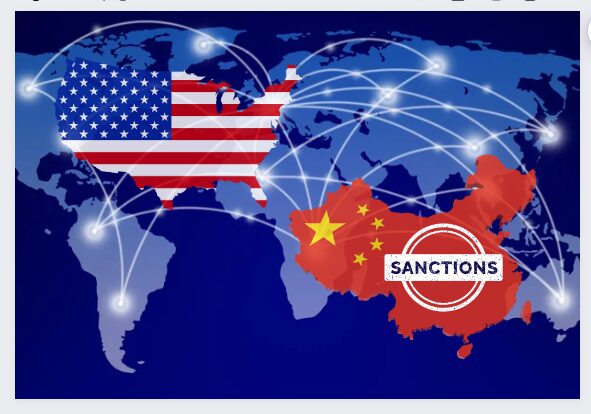
The United States and China have engaged in discussions on ending technical trade barriers, but those discussions have stalled:

More than one year ago, there were some encouraging signs on this topic. The Joint Commission on Commerce and Trade agreed to discuss technical trade barriers. The JCCT is a forum for high-level dialogue on bilateral trade issues between the U.S. and China, and it's co-chaired by the U.S. Secretary of Commerce and China's Minister of Commerce. In their 2006 meeting, both countries agreed to start developing mutually accepted standards to avert disputes over safety regulations. The U.S. Department of Agriculture and China's Administration of Quality Supervision, Inspection and Quarantine (AQSIQ) even signed a memorandum of understanding on this principle.

Then, silence. A dialogue on the issue never materialized. Until, that is, today. Even as the U.S. Food and Drug Administration has effectively banned certain types of Chinese seafood and the Chinese have blocked certain meat imports from the U.S., the two sides are finally sitting down together to start discussing standards. Real negotiations about technical food safety and sanitary standards are happening this month in both Beijing and Washington, between the FDA, USDA and AQSIQ. Last week, China's State Food and Drug Administration agreed with the U.S. FDA to increase technical exchanges through seminars and training programs, a process that will certainly increase the technical and scientific skills of Chinese regulators.

Rice suggests China and the U.S. seek assistance in their talks from "world health authorities, who stand a better chance of operating above the fray of national politics:"

The World Organization for Animal Health (OIE) and the Codex Alimentarius, which literally means the food code, of the Food and Agriculture Organization of the United Nations, provide a base from which to start. Both organizations have standards and guidelines that a member country can adopt, protecting the health of consumers and fair trade practices in our industry.

Rice notes that "distinguishing between prudence and protectionism requires constant vigilance," but standards based on science not politics are good for both business and consumers:

Tyson Foods, Inc. and our industry peers have long sought a set of equal standards for trade of our products between China and the U.S. Only the recent food safety issues inside China and the U.S. have brought both governments back into a discussion. Agreements on scientific quality standards for food will facilitate the trade of food products between producers and consumers, and have the added advantage of bringing universally accepted food standards, and safe food, to all individual consumers, everywhere.

Mr. Rice sent CLB the follow additional comments on food safety systems in China, all of which ring true to me:

● Food safety systems cannot be built overnight. China’s systems are new, as compared to the U.S. where, for example, The Federal Meat Inspection Act was passed in 1906.
● "China’s problem is their systems rely on “test and sanction” on violators to control risk. In the US, we rely on process control to identify, control, and evaluate risks. China needs to adopt standards that rely on controlling risk: risk assessment, risk management, and risk communication."
● "China’s headline grabbing actions are not solving the problem; the country cannot execute its way to food safety."
● China’s weakness in food safety is at the local level where regulators lack experience and the national government has little control. Local officials are also "caught in the pinch" because they receive promotions based on increased GDP, "which may be in conflict with closing down or inhibiting local exporting companies." "There is no consistent standardized national training for inspectors."
● China has very little transparency on food safety issues. News reporting and coverage of food safety issues is "generally forbidden." "The Chinese do not allow risk communication."
● "There are multiple ministries involved in food safety, which adds to confusion and enforcement issues: AQSIQ, Ministry of Health, Ministry of Commerce, Ministry of Agriculture, and SFDA."
● China has "medieval small food processing enterprises operating in the shadows of huge and modern food processors. An industry is only as good as its weakest players, and China has too many producers."
● "Food safety disputes in trade are not helped by tit for tat actions. This needs to be handled by scientific assessment of risks and development of good standards. China could get a jump start by adopting standards from the OIE and the FAO/WHO food code, which are already accepted by world scientists, and they give international standards on pathogens, BSE, and residues."

For more on the interaction of politics and science in the food safety arena, check out our previous post, "Bubba Sparks Is Messing With OUR China Policy," and be sure to read the comments as well.

Comments

You can access that wsj.com article for free using a site called www.congoo.com - that was in PCWORLD last month.

China's infamous powdered baby formula scandal was committed by a rather well known manufacturer, not some closet operation or subcontractor (as was the case with Haagen Daaz).

One point that is not mentioned is that EVEN IF the inspector from Beijing is competent, incorruptible and catches violations, they may be threatened with violence if they won't make their report more presentable before leaving or receive violence when they return to that locale. And said federal inspectors cannot rely on PLA or PAP authorities to protect them as those organs are also usually in cahoots with the local authorities and industries.

"The mountains are high and the emporer is far away" is a warning as well as a proverb.

"The European Union enforces safety regulations that lack support in international science; its standards on hormones prevent the import of U.S. beef"

Well, I have to say that precisely because of everything I've read about the American meat industry, if I were in the US I would go totally vegetarian, or, at the very least, buy only meat that was certified organic by a trustworthy agency. Sorry, but everything I've ever read about America's meat industry terrifies me. It seems to me you don't have meat so much as you have chemistry. Chemistry produced by mad scientists.

Having said that, absolutely, all too often health, environmental, or safety issues are used for protectionist reason. Let me, the consumer, go to the supermarket and choose between American, New Zealand and Chinese meat (personally, I'd take the Kiwi stuff every time, and not out of "patriotism"), and let the market decide. A market of informed consumers would force less trustworthy American and Chinese producers either to the margins or to improve their practices.

And I'm not even a capitalist. Oh, and I don't intend to be anti-American, anti-Chinese or pro-Kiwi. Just using the meat industry as an example. Change it to cars, I'll go to Europe first, Japan second. Music? New Zealand first, America and China second equal. Like I said, let an informed market decide.

@Chris,

You consider Chinese and American music to be on equal footing? gag. Have you ever even listened to a real US band?

Both the US and EU have their QC problems (rampant mad cow in Europe, only scattered cases in the US).

Ok, enough battling. Capitalism assumes a level playing field, which will not happen in our lifetime, so relying on "the market" to decide. China clearly has quality problems, just look at the official statistics for the rate of cancer increases in China.
Stop cheerleading Chris.

Cheerleading? No. Maybe I should've added that one important step in levelling the playing field so that the market can work is informing the consumers. That isn't happening.

The US system does allow people to hold companies accountable for dangerous or defective products. Witness the massive product recalls. Mattel's lawyers saw the writing on the wall (and imagined it on the front pages of major newspapers) as well as some very expensive lawsuits.

Informing the consumer in China requires alot of institutional changes that are nowhere in sight.

Informing the consumer begins with basic education and continues with responsible media coverage and people using their brains. Seeing the hysteria over dangerous Chinese products in the US and occasionally other media (I watched an Al Jazeera report last week that could easily have been lifted straight off CNN, it was so full of the same hysteria), I can't help but thinking a lot of consumers in the Western world are not well informed at all.

Chris:

Knowing Al Jazeera's stance towards the US, now you cite two very opposing parties pointing fingers at the same source of bad quality, human suffering and simply unbelievable pollution: China.

Maybe people in the Middle East are getting fed up with China too. They have to put up with more bad products from China than the US does (like cars and household appliances) and everyone's rush to outsource to China has hobbled the growth of their manufacturing industries.

You are sounding like some Chinese university student who is both angry and paranoid about "everyone being out to get China" more and more. You can bet that the muslim world and the US are not colluding to "get" China.
Maybe you are the one who is wrong.

Actually, I find Al Jazeera pretty fair. No doubt, you'll take this as more proof that I'm some fenqing nutjob with rabidly anti-American views, but whatever. I guess I should point out I was watching Al Jazeera English, which is very, very global, with bases in Doha, Kuala Lumpur and Washington DC, and the item in question had nothing to do with the Middle East.

Basically, all I'm asking for is a more reasonable, honest approach to this coverage of China. That's all. With the coverage we're getting, consumers are not informed, they are misinformed. There's a difference.

Chris:

Did you think the coverage of China as the greatest thing since sliced bread (and that we shouldn't criticize China) was fair and balanced in the late 90s and early 2000s?

This is simply the result of irrrational exuberance regarding bad China.

The short answer, obviously, is no.

And irrational exuberance is just as bad as the current round of over-hyped toxic Chinese products rubbish.

And who said we shouldn't criticise China?

Jeffry Goldner --

Thanks for the tip. I have used congee, but it does have its limits.

nh --

I agree with you that the job of even honest inspectors may be fraught with peril, but we must keep in mind that these problems are really just a very small percent of the goods leaving China.

chriswaugh_bj --

I have not had meat for more than 15 years (after my firm defended one of the parties in the Jack in the Box e-coli case), but I think America's meat is as safe as anyone's. Again, you cannot believe everything you read. The latest worst outbreak of food poisoning in the US involved organic spinich. The reality is that these things can happen anywhere.

I completely agree with you regarding free choice at the market (sounds rather capitalistic to me). You are kidding about NZ music being better than the US though right? Let's see, on the US side we have Marvin Gaye, Bob Dylan, Bruce Springsteen, Aretha Franklin, Ray Charles, Jim Morrison, Elvis Presley, Chuck Berry, Jimi Hendrix, Muddy Waters, Nirvana, Johnny Cash, Smokey Robinson, Simon & Garfinkul, Grateful Dead... This is just in rock. In Jazz the US kills everyone else. I cannot even name one NZ singer and though this is no doubt due in part to provincialism on my part, I'm thinking this cannot account for all of it.

nh(ii) What do you mean by capitalism assumes a level playing field?

Chris:

I'm not going to get into a courtroom debate over what you define as "criticism" of China. The overall intent of your posts is to tow the China line of "other countries have problems too".

nh/chriswaugh --

Interesting discussion.

nh -- if you really think China is to blame for the Arab world's utter failure to produce anything in manufacturing, I will say you are off your rocker. China deserves a hell of a lot of credit (there, I said it) for what it has accomplished in manufacturing over the last ten years or so. Does it still have a hell of a long way to go? Yes, but don't fault China for having succeeded, which it has.

In defense of Chris, he never said we should not be criticizing China; he said the criticism has gone overboard. Huge difference, in type, not just degree.

I am not terribly worried about the American consumer. The American consumer does just fine and will no doubt continue to do so. The safety of food and products in the US is better now than it has ever been in our history and I defy anyone to prove otherwise.

CLB:

Music: We've got Neil and Tim Finn, on their own and in Crowded House and Split Enz, and all the other Split Enz members, and the Muttonbirds and the Exponents and Hayley Westenra and Kiri Te Kanawa and Bic Runga and plenty more... And my sister, can't forget my sister. NZ wins.

Meat: Well, you may well be right about American meat being just as safe as the rest of the world's, but what I've read scares me. And besides, cattle and sheep are supposed to graze out in fields, not eat grain in feedlots. And I'm pretty careful about the meat I eat here in China, too. And sure, that E. coli outbreak came from spinach, but wasn't the source of contamination traced to nearby cattle? And wasn't the strain an unusual variety that comes from the gut of grain-fed cattle?

And I don't like sounding like a capitalist, but let's face it, regardless of your political or economic views, people have to trade, and the market is the natural way to do that. So let's allow informed consumers make rational choices about the products they buy.

And for nh, let's review this:

"In defense of Chris, he never said we should not be criticizing China; he said the criticism has gone overboard. Huge difference, in type, not just degree."

Absolutely, and thank you, Mr Harris. There's nothing wrong with reasonable criticism, criticism that is rational, based on fact and not hyperbole, and put into a proper context. And I'll happily join in such criticism where it's appropriate. And the only line I'm toeing is my own.

@Dan:

Chris brought up Al-Jazeera's critique of Chinese quality standards as more "China bashing". Regardless of the Arab world's faults, as one of China's customers the Arab media have a right to complain. If the Chinese (and the China expat community) don't like it, tough. Free speech is a b*h.

If China wants to be the world's factory it is going to have to be responsible. Just like China is not responsible about its domestic pollution affecting Asia or N. America or its mischievous spreading of nuclear weapons technology to make trouble for the West. Same mindset, different applications.

Chris is exposed to contaminants far worse and in far greater concentrations by living in China but all he and the rest of the expat community can do is shake their fists and blog in anger (if they can access their blog). Perhaps he feels cheated because you and I have many real avenues of recourse where he does not, unless his english teaching gigs pay enough for him to buy imported food at the City Shopper. And he still has to breathe the air and use the water for cleaning and bathroom functions.

And everything...EVERYTHING China has accomplished over the past 10 and 20 years in manufacturing has been due to untold billions in direct cash investments, technology transfers, free Ivy league economics and management training for CCP officials and SOE managers and expat and returning Chinese immigrant knowledge, experience and skills.

If only western governments and MNCs were so generous with the Middle East, Africa and Latin America...

As for "the market", companies would rather none of this information got out, for they are even more exposed in the US. Mattel didn't recall 18 million toys out of the goodness of its heart, Chinese kids are exposed to far worse and the whole family gets bruises for even raising a voice about bad products.

"Market forces" is just more senseless cheerleading, the same "flat world" nonsense many even in the world's financial centers dismiss as bullocks. Market forces are just as subject to government and insider manipulation for the gain of a few as any other mechanism we've developed.

Post a comment

(If you haven't left a comment here before, you may need to be approved by the site owner before your comment will appear. Until then, it won't appear on the entry. Thanks for waiting.)


http://www.chinalawblog.com/cgi-bin/mt/mt-t.cgi/2085

China Food Safety: The Science And The Politics:

Subscribe Using ANY Feed
Tell The World About China Law Blog

Recent Posts