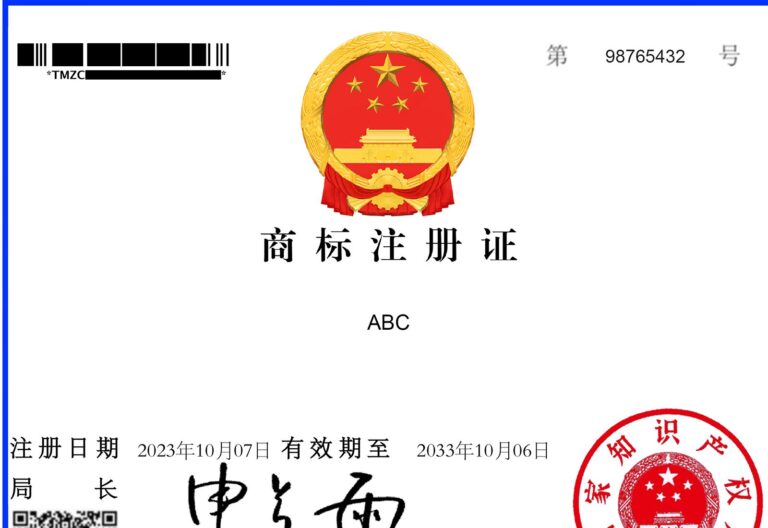
Free China Legal Advice: Do Not Sign A Contract You Do Not Understand

The official language of China is Chinese.  If you sign a contract written in Chinese it is a valid contract whether you understand Chinese or not. 

Rule Number One for doing business in China:  do not sign a contract in Chinese unless you know exactly what it says as you will be bound by that contract.

This recent article in Xinhuanet bears this out.  Seems some Americans (is it just me or does it always seem to be Americans who get themselves into these situations?) are of the view that contracts in China should either be in English or, if they in Chinese, should not apply to them even when signed. 

The Xinhua article highlights William Arrington, an American who found out "the hard way" that a Chinese apartment lease contract he signed actually applied to him even though he did not understand it "at all" beyond the numbers: 

It was fine at first, because his Chinese roommate explained the contract to him. But when the roommate left, the troubles started.

When the housing management company came to collect maintenance fees, Arrington argued: "Isn't that included in the monthly rent"

"No, the contract says clearly that the maintenance fees are not included in the rent," he was told.

The article goes on to talk about "James Baquet, a teacher with Shenzhen Polytechnic, [who] had an experience similar to Arrington's, although he was luckier because his landlord spoke English:" 

"My landlord is a lawyer who speaks good English, and he explains the contract terms to me. I had to rely on him, although I did not know if I should trust him," said Baquet. So he signed the contract, but added a line below his name: I CANNOT READ CHINESE.

Rule Number Two for doing business in China:  the last person you want to be your translator on a contract is the person with whom you are contracting.  If you do not know Chinese, bring on someone you trust completely to translate for you.  Better yet, hire a lawyer fluent in Chinese. 

Mr. Arrington proposes a fail-safe solution to prevent someone else from falling prey to the legal problems that befell him:

Arrington suggested that the government make it a rule requiring all contracts involving foreigners to be bilingual.

I am not aware of any country in the world with such a requirement and until such a law is enacted in China you should just follow the basic rules set forth above.   

Comments (14)

Read through and enter the discussion by using the form at the end
Craig Maginness - August 23, 2006 7:25 PM

Been there done that! In a class I teach through the World Trade Center Institute on export market development, I use a slide of a contract we signed as part of purchasing a plant in Changzhou. It was to be purchased from a quasi-government agency and there was no question Chinese would be the controlling language. What struck me the most is that much effort had been expended on negotiating the wording of what was intended to be the English translation. The English version was several pages long and much of the wrangling was over whether a clause should be subordinate or not, and whether the placement of a comma changed the meaning. Upon attending the closing, we were presnted the official Chinese version for signature -- one densely packed page and no punctuation other than periods and paragraph breaks. I don't speak Chinese, but I don't think a lot of wrangling had gone on over the finer points of using subordinate clauses or whether an obligation should be in the future or future perfect tense to be clear.

Fortunately I had followed your rules and had a trusted Chinese translator who could read it to me so that I could be satisfied that it did in fact memorialize the deal we had negotiated.

I would add one more recommendation on the selection of a translator --use someone, if possible, who is also familair with your industry. I have negotiated deals in many countries and many languages. My experience is that even an otherwise fluent and objective translator can materially mis-convey the meaning of something if they don't also have an understanding of business terms and idioms used in the particular industry and a context for the deal.

China Law Blog - August 23, 2006 8:12 PM

Craig --

Thanks for checking in. I completely agree with your advice to use a translator who knows the industry as well. In other words, use the best translator/interpreter possible because it really matters.

When it comes to interpreters, I generally like using someone who will make me appear smarter than I really am.

For many years my firm had a Russian paralegal, Oksana Demina, by name. Oksana's English was perfect. Her Russian was perfect. She understood American culture beautifully and, most importantly for me, she understood Russian business culture beautifully as well. I can understand around 50% of spoken Russian and there were countless times when I would say something on the phone to the client and I could tell Oksana was translating it differently. After the client or opposing counsel had hung up, I would ask her why and she would invariably give a cultural explanation that made complete sense. Oksana left the firm to go to law school and is now a top flight immigration attorney in San Francisco. I'm guessing my Russian clients think my IQ has dropped since she left.

Kenneth Manusama - August 24, 2006 1:13 AM

I totally agree on having a lawyer present who not only translates, but also checks the integrity of the contract. Moreover, in our experience it is better to draft and negotiate both the Chinese and English version at the same time, with the translation process to be guarded by your lawyer. In practice, every contract clause should be written in both Chinese and English, right underneath each other. This way, your Chinese lawyer can easily check and incorporate any change in both languaged.

China Law Blog - August 24, 2006 2:15 PM

Kenneth --

Thanks for checking in.

I actually disagree with you on dual language contracts. I am of the view that in nearly all cases the way to go is to have the contract be in only one language. I have handled too many cases involving "two language contracts" where having two languages only further confuses everybody. If you are going to need to sue on the contract in China, the operative contract should probably be in Chinese. If you are going to be having an international arbitration in English, the operative contract should probably be in English.

What advantages do you see with dual language contracts?

In an ideal world, if you are a Western company, your lawyer is a Western lawyer who is completely fluent in Chinese. That is how we handle our contract work for our clients (using Steve Dickinson and local Chinese lawyers working with Steve).

Kenneth Manusama - August 25, 2006 1:07 AM

Key to dual language contracts is your lawyer (duh! ;-) ). He or she is to make sure that both version are the same. Moreover, it is my experience that the level of English is not sufficient enough for reliable contract negotiations. Hence the necessity of a lawyer. Ask yourself, which method (dual language or single) has the greatest risk of evoking divergent interpretations and thus disputes?

But I actually disagree that ideally you should have a Western lawyer who speaks fluent Chinese. Chinese business culture seems not so far developed that the Chinese completely trust a Western lawyer, no matter how well Chinese he/she speaks. In the coming years, you will see more and more foreign educated Chinese lawyers who speak fluent English. The cultural gap is still so tremendous, I don't care how long you have been doing business in China, that a Chinese person has a better shot at communicating your point to a Chinese person. Moreover, with such a globalized lawyer, the dual language contract becomes even more attractive and reliable.

China Law Blog - August 25, 2006 1:28 AM

Mr. Manusama --

I disagree about dual language contracts. It is absolutely impossible to have a contract in English that says the exact same thing as one in Chinese. I would even say it is impossible to have one in English that says the exact same thing as one in French.

I agree that no matter how good a Western lawyer's Chinese is and no matter how much that lawyer knows of Chinese culture, that lawyer will never be Chinese and will never be thought of as such. But so what? I advocate Western companies using Western lawyers because Western lawyers are much better equiped at understanding the goals of the Western company and in knowing the kind of service to provide. It is not a problem (and might even be a good thing) to have the other side a bit uncomfortable.

Xiao Zhu - August 27, 2006 9:26 PM

How valid is an English-language contract in China? When I worked for a Chinese company, they would write false company names in the English version of the contract. When I asked my workmate why, he shrugged and said that an English-language contract wouldn't stand up in court anyway.

China Law Blog - August 29, 2006 12:06 AM

Xiao Zhu --

That's a great question, to which I am uncertain of the answer. I have been told that the more sophisticated courts will enforce an English language contract and I believe this to be the case. I also believe (with virtually no evidence) that one could get most of the courts in China to enforce an English language contract.

We are of the view that if you are going to be suing on a contract in a Chinese court, get it in Chinese as that will make everyone's job a lot easier. Of course, we are also of the view that in nearly every case the foreign company would be better off putting an international arbitration clause in its contract.

We are checking to see if we can come up with a more definitive answer to this question.

Kenneth Manusama - August 31, 2006 4:46 AM

"I advocate Western companies using Western lawyers because Western lawyers are much better equiped at understanding the goals of the Western company and in knowing the kind of service to provide. It is not a problem (and might even be a good thing) to have the other side a bit uncomfortable."

Experience has taught me that the Chinese company can get very uncomfortable when the Western company shows up with Chinese counsel. Your preference for a Western lawyer I can understand very well. However, I think you will increasingly find Chinese lawyers who are more than able to understand Western companies, goals and styles.

China Law Blog - August 31, 2006 11:34 PM

Mr. Manusama --

Thanks for checking back in. Yes and no. Yes, I fully expect Chinese lawyers to get better at this, but no, I do not expect them to ever be as good at relating to American clients as American trained attorneys. I based this on the many years in which I have worked with top Korean, Japanese, and Russian lawyers, all of whom would probably admit (and many of whom have to me) that they are not as comfortable working with American clients as they are with clients within their own country.

James Baquet - December 25, 2006 5:08 AM

Hi.

As you may know, what is printed in "the paper" may not be what was said. My comments were truncated beyond recognition, and in fact most of what is said is way off.

The first contract signed with my landlord was signed by my Chinese then-girlfriend. SHE was comfortable with the terms.

After her departure (a long story), when the next lease was offered, it was identical in every way to the first (I read enough Chinese characters to be able to compare). I in fact had a translator on "my side" (contrary to the article, the landlord speaks NO English). My friend/translator was not present, so didn't see the contract; he helped me via phone, and was comfortable with the answers the landlord gave to my questions. I later had him look at the contract, and it did in fact say everything that I thought it said.

To recap:
1. I had lived one year in the apartment trouble-free under an identical contract
2. I had a friend translating for me via phone

NEVERTHELESS: When I signed the contract, as the article states, I added the disclaimer "I CANNOT READ CHINESE." I simply saw this as added insurance, and a sort of "common sense" thing to do. (We are talking about a rent well under 2000rmb here; it's not like I was BUYING the place).

So I may not be THAT much of a naif, signing a contract blindly.

China Law Blog - December 25, 2006 7:32 AM

Mr. Baquet --

Here's how I see it based on your additional facts:

The girlfriend as lawyer is one of my favorite mistakes. It seems to be based on the bizarre assumption that China consists of 1.3 billion lawyers so if they speak Chinese, have them review the contract. I think her apparent failure to point out the salient points of this contract to you is proof of her failure to serve you well here. Now I realize that SHE signed the original contract and you just signed the same one later, but this leads me to another typical mistake: the belief that if someone else did something before you, it must be the right way to go. We see this frequently when people call us and tell us that they want to do something in China because some successful competitor did the exact same thing 5 years ago. This completely ignores two very important things. One, that the laws have changed during the last 5 years and two, that the competitor may not have done everything exactly correctly.

After her departure (a long story), when the next lease was offered, it was identical in every way to the first (I read enough Chinese characters to be able to compare). I in fact had a translator on "my side" (contrary to the article, the landlord speaks NO English). My friend/translator was not present, so didn't see the contract; he helped me via phone, and was comfortable with the answers the landlord gave to my questions. I later had him look at the contract, and it did in fact say everything that I thought it said.

Why would you think that your adding "I CANNOT READ CHINESE" would have any impact on a contract YOU went ahead and VOLUNTARILY signed?

My conclusion is still that you did just about everything wrong here, but I am less sure you are a naif. The reason I say that is becuase if your contract was really for only 2000 RMB, I am not sure what you should have done? Hiring a lawyer costs money, obviously, and it is questionable that it would make sense to have done so here for such a small amount. And yet, what if you had signed something even worse than you had?

Anyway, I do greatly appreciate your checking in and giving us more facts. I certainly agree that the papers rarely get things right and it is good to get the more complete picture from you.

All the best.

Gratis retshjælp - September 16, 2010 12:36 PM

How valid is an Danish-language contract in China? Thanks for a good post.

Best regards from the free legal advice in Denmark.

Russ - April 21, 2011 10:40 PM

Hi - the comment at the end of the original post:
" Arrington suggested that the government make it a rule requiring all contracts involving foreigners to be bilingual.

I am not aware of any country in the world with such a requirement and until such a law is enacted in China you should just follow the basic rules set forth above. "

I have just arrived in China after seven years in Ukraine. In Ukraine a contract is not binding upon any foreigner who cannot read and understand the language - so while not law, all contracts with foreigners are bi-lingual, and all include a provision about which language takes precedence in case of a conflict between the versions, or a provision stating that each language shall have equal force. The usual way of writing these contracts is for each clause in Ukrainian to be on the left of the page, with it's corresponding clause in the foreign language on the right of the page. Each clause begins level on the page, and need not end at the same place. The two language versions of the next clause start at a point below the longer version of the preceding clause.

It should be possible to have any contract in China made into a bilingual contract by using the services of a translation agency. Personally I'd want to have the translation certified as accurate.

I think it is the safest way for a foreigner to do business - but as even in your home country, get the contract checked by a lawyer. In this case, a lawyer proficient in both of the languages used in the contract. It's much cheaper to pay a lawyer to check a contract, than to hire the lawyer AFTER a dispute!

Post a comment

Fill out this form to add a comment to the discussion
I'd like to leave a comment. is
,
is
,
is
is