China Trademarking, Chinese Watermelons, And Rumors Of HIV Tainting

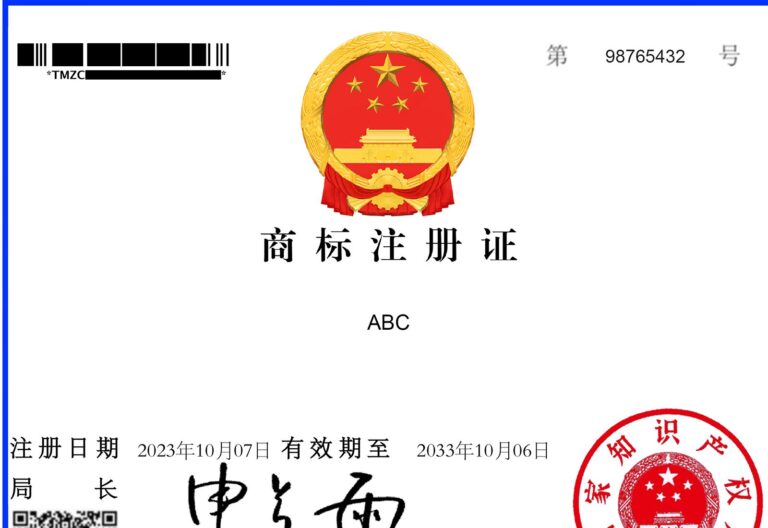
Just came across a troubling article in the Shanghai Daily (h/t to the IP Dragon Blog), entitled, "Police investigate rumor on 'HIV melons."  The article talks about how the watermelon farmers of Linquan county, (a county in Shandong Province known for the high quality of its watermelons, according to this Shanghai Daily article, but a county in Anhui Province, according to everyone else) had earlier this year registered a trademark for their watermelons and established an association to promote them. The Linquan watermelons became "the top sellers, even though their price was much higher than watermelons from other regions." 

Sales of Linquan watermelons recently plunged amid rumors they had been injected with HIV tainted blood. The local government held a news conference to try to quash the rumor.  According to the article, after a "thorough investigation, no HIV carriers were found in Fanji town [please do not ask me to explain this because I cannot], Linquan County, which is well-known for its watermelons crops."  The police are investigating the source of the rumor, which is having a devastating impact on sales:

Li Huadong, a Linquan farmer, also the vice director of the local watermelon association, said he planted more than 6.7 hectares of watermelon this year, which topped the farmers in Linquan. Before the rumor spread, the watermelons that he harvested earlier this year sold out. However, he only sold a very small fraction of the watermelons in recent days. A large amount of watermelons were left to rot in the fields, he said.

"The police said it was possible that someone spread the rumor to reap commercial benefit."  You think? 

Two things should be drawn from this article.  The first is that securing a trademark in China can be an effective tool for distinguishing your product from the competition and for allowing you to charge a premium price for it. That is exactly what happened here. 

Unfortunately, it appears the trademarked watermelon became so successful, that one or more competitors (I presume it was a competitor that started the rumor) felt it necessary to spread a vicious and untrue rumor in order to compete.  This leads to the second lesson, which is that the law is always going to have its limits.  Sure, the Linquan watermelon farmers can sue the rumor monger if they ever find out who it is, but extensive and, probably irreversible, damage has already been done. 

I leave it to the marketing and public relations experts to explain how businesses can minimize the damage from such rumors both before and after they occur. 

Comments (10)

Read through and enter the discussion by using the form at the end
Curt - June 28, 2006 2:46 AM

Linchuan is a county of Jiangxi and famous for watermelon in China. You guys could refer to this link for information.

Curt

Will - June 29, 2006 3:01 AM

Well, doctrinally, the PR approach to this kind of situation is pretty straightforward:

1) Actually investigate the rumor (just on the off chance that the rumor was accompanied by sabotage).

2) Be completely transparent about the investigation process to demonstrate fully for the media and your melon-munching public that you take the situation seriously and are addressing it.

3) Have a little media blitz to make sure the news about your investigation and the (ideally) good news about the results gets out.

Unfortunately, while this may protect your brand in the long run, it won't do much about near-term sales dropoff as the rumors do their work for a few weeks. But in this kind of sitation you're usually worried more about the long-term consequences (and why create a brand if you're not thinking long-term?).

At this point, we PR people hand off to more traditional marketers to work a little of their razzle-dazzle to get people interested in scrumptious Linquan watermelons again. Although I am not a marketer per se, a few thoughts come to mind:

- Discounts (although this could be seen as trying to offload your tainted melons)
- Promotions and roadshows; tart up those donkey carts
- Girls in bikinis

That last one always does wonders for me. And I buy a lot of watermelons, although the one I bought this week made me sick. Twice. I don't know where it was from.

China Law Blog - June 29, 2006 6:10 AM

Curt --

Thanks for checking in, and thanks for the great job you are doing converting CLB into Korean. My research keeps indicating Linquan county is in Anhui Province. Linchuan county is indeed in Jiangxi, but that is a different county. Now, in my research, I came across this November, 2005, article about a Linquan country, Anhui Province, watermelon farmer who is HIV positive: http://english.people.com.cn/200511/08/eng20051108_219911.html

I wonder if this article was the genesis of the rumor?

China Law Blog - June 29, 2006 6:15 AM

Will (Imagethief) --

Thanks for checking in and thanks for detailing how the farmers might respond. What I find interesting about your suggestions (based on what little I know about crisis PR) is that your suggestions seem to be the same as if this had happened in the U.S.

I like all of your suggestions except the cutting prices, which I would think might diminish the premium view of the watermelon.

Lonnie - July 4, 2006 10:48 PM

Jianxi is probably more superstitious than Guangdong and attentive to remarks by anyone in a perceived position of authority. Dave Barry in Dave Barry Does Japan said it was easier to get the whole of Tokyo to wear the same clothes for a day than to get two Americans to agree on what to cook for the 4th of July.

I actually had students bring me a Chinese article from one of the online news services that showed an old Maxim photo of a buxom model pretending to teach a class: She had her skirt hiked up and her enormous chest was bursting out of her shirt....The article claimed that American teachers were now required, BY LAW, to dress in sexy clothes to attract more students.

It took an analysis of the pic' (sexually explicit, uh, math on the board...) and a lot of talk to get things reversed....The student kept saying: "If it is in the news it MUST be true!"....Sheesh...

China Law Blog - July 4, 2006 11:36 PM

Lonnie (OMB)--

Thanks for checking in. Everyone in the U.S. used to believe everything Walter Cronkite would say, then Dan Rather changed everything. The key is critical thinking, which relates even to innovation. Critical thinking is obviously necessary for determining whether an article is probably true or probably false and it is also necessary for innovation. Problem is that it is also what leads to governmental challenges.

PS -- Image Thief just wrote that Typepad is down everywhere in Beijing and he could not get on our blog. Can you see us in Guangdong?

Lonnie - July 6, 2006 8:50 PM

No problem seeing you in Guangdong, but that does not mean it will last. A lot of sites have been on and off: Technorati, NPR....You are in good company anyway....

China Law Blog - July 6, 2006 9:28 PM

Turns out it was an issue in Image Thief's neighborhood, not with typepad. At least so far. Thanks for the report.

Dave - July 21, 2006 6:05 AM

I heard romours that in my town there was an insane person who infected people with HIV in public transport. That's one of the reasons why people should be educated about HIV. In this case it wouldn't be so easy to create panic in the society. HIV is not that easy to catch.

China Law Blog - July 21, 2006 3:00 PM

Dave --

Thanks for checking in.

Hard to disagree with a call for increased education and knowledge.

Post a comment

Fill out this form to add a comment to the discussion
I'd like to leave a comment. is
,
is
,
is
is