Header graphic for print
China Law Blog China Law for Business

The Four Essentials For Sourcing From China.

Posted in Basics of China Business Law, Legal News

Got an email the other day from a friend whose company is getting ready to source from China. The email asked me what the company needed to know “to protect their butts in China.” I told them they needed to know/do the following four things.

1.  Choose a good factory. This is the sine quo non of China sourcing. I am always saying that I can write the world’s best contract, but if the party on the other side is a thief, the contract will have no value. How do you pick a good factory? The first thing you do is make sure that you have actually picked a factory, and not a broker claiming to be a factory. The best way to pick a good factory is to go and look at it yourself. The second best way is to have a qualified person you trust go and look at it. The third best way is to rely on the views of others.   

2.  Use an OEM Agreement suited for your situation.  You need a good written contract between you and your supplier, the official version of which should be in Chinese. For more on this, check out “China OEM Agreements. Why Ours Are In Chinese. Flat Out.” This agreement is the road map between you and your Chinese supplier. It will do at least three things for you:

  • It will make clear to both you and your Chinese supplier the terms and conditions of your relationship.
  • It will let your Chinese supplier know exactly what it must do to comply with your requirements and to stay within the law. By doing so, it will greatly decrease the likelihood of your having problems with your Chinese supplier.
  • It will position you well should problems arise.

3.  Set up a Quality Control System.  Even with a good supplier and a good contract, you will almost certainly still face at least some quality control problems. The big question is when will you discover them. If feasible, check for quality before you pay for you product and before your product is shipped.

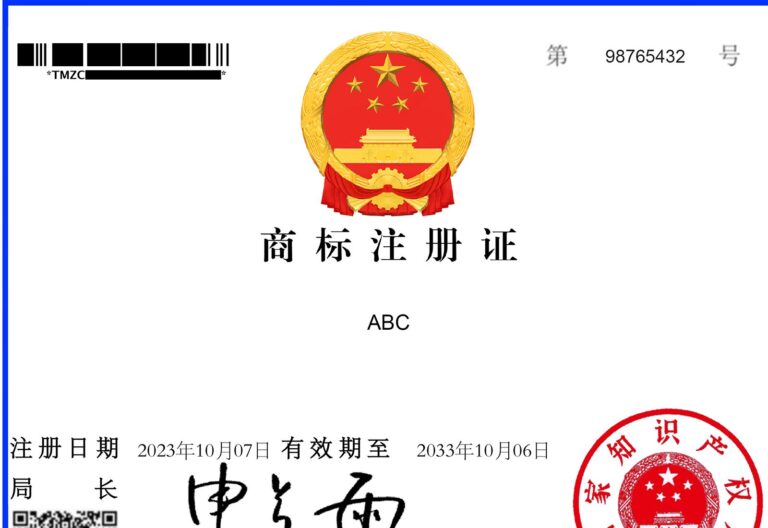
4.  Register your trademark in China. When it comes to trademarks, China is a first to file country. This means that, with very few exceptions, whoever files for a particular trademark in a particular category gets it. So if the name of your company is XYZ and you make widgets and you have been manufacturing your widgets in China for the last three years and someone registers the XYZ trademark for widgets, that other company gets the trademark for widgets. And then, armed with that trademark, that company has every right to stop your XYZ widgets from leaving China because your widgets violate that other company’s trademark. Trust me when I say that many foreign companies have incurred massive damages by failing to take the simple and inexpensive step of registering their trademark in China.

If you abide by the above, you almost certainly will do just fine.

What do you think?

  • http://orientalxpress.com Dave Freeman

    Dan,
    From your other posts I know you’re a strong proponent of this but it may help to state it once again here. The glue that will hold all of this together is a strong relationship with your counterparts in China. I suppose this could be said of business in many parts of the world, but in China taking the time to develop a relationship is so vitally important to success in business. Our advice to people doing business in China comes in the form of a math equation like this:
    Relationships² + Contract = Success
    Thanks for another great post. Keep up the good work.

  • Aaron

    On point 4, some finer points of law:
    Most countries (if not all) are “first to register” when it comes to Trademarks.
    However, most countries also provide “prior use” exceptions for “first to register” in TM laws.
    This is true in China as well, I believe. http://www.chinaiprlaw.com/english/laws/laws11.htm
    Chapter III, Article 31
    “An application for the registration of a trademark shall not create any prejudice to the prior right of another person, nor unfair means be used to pre-emptively register the trademark of some reputation another person has used.”
    Meaning, if your company can establish prior use of XYZ name for the last 3 years, the other company cannot prejuidice your use of the XYZ name via a “first to register”.
    Your prior use gets you continual right to use XYZ. However, you may not expand your use of XYZ as a trademark either. For example, if you made products under XYZ name in China, but you never sold the product under XYZ in China, then you might not be able to sell them in China after the other company registers XYZ trademark.
    This is similar to prior use exception in US, in the Burger King TM case, http://en.wikipedia.org/wiki/Burger_King_(Mattoon,_Illinois).
    >
    Registration of TM is always important, regardless of which country the business is in.
    However, it is perhaps equally important to monitor TM’s in countries that your business is planning on going into, and anticipate potential problems.
    Even if you are not yet in China, you may contest the registration of a TM by another company in China, if you already have substantial well known international use of your TM.
    Chapter I, Article 13
    “Where a trademark in respect of which the application for registration is filed for use for identical or similar goods is a reproduction, imitation or translation of another person’s trademark not registered in China and likely to cause confusion, it shall be rejected for registration and prohibited from use.”
    Chapter III, Article 30
    Any one may file an opposition to contest a TM registration, within 3 months of the TM preliminary approval and publication of TM.
    (US has a similar provision to contest a TM federal registration on various grounds, similar to Chinese laws).
    Chapter V, Article 41 also provides
    “Where a registered trademark stands in violation of the provisions of Articles l3, l5, l6 and 3l of this Law, any other trademark owner concerned or interested party may, within 5 years from the date of the registration of the trademark, file a request with the Trademark Review and Adjudication Board for adjudication to cancel the registered trademark. Where a well-known mark is registered in bad faith, the genuine owner thereof shall not be restricted by the five-year limitation.”
    Which means, you may also seek to contest the TM and have it cancelled within 5 years of registration.
    >
    In sum, the statement that China is “first to file” is too generalized to wrap up the complexity of Chinese TM law.
    In reality, China’s TM laws are very similar to US’s TM laws.

  • http://www.qualityinspection.org Renaud

    Good points.
    Just one comment about “The best way to pick a good factory is to go and look at it yourself”: it’s true only if you have manufacturing/auditing experience. Chinese factories are good at putting up a show and saying “we do QC at this point, at this point, at this point, etc. and we check 100% of pieces”. Inexperienced buyers are easily bluffed. Then they don’t inspect their orders and they often receive unsellable junk.

  • Aaron

    1 additional point relating to TM and Quality control,
    Chinese Trademark law makes it the TM owner’s responsibility for ensuring the quality of the products sold under the TM.
    Article 7
    “Any user of a trademark shall be responsible for the quality of the goods in respect of which the trademark is used. The administrative authorities for industry and commerce at different levels shall, through the administration of trademarks, stop any practice that deceives consumers.”
    This provision is quite different and broader than what is in US TM laws. US TM laws generally only prohibit Trademarking of “deceptively misdescriptive” marks, akin to false advertising. In other words, only the Act of Registering deceptive misdescriptive marks is prohibited. In US, actual false advertising without using any TM’s are generally covered under State laws, and generally stops only the act of false advertising.
    But in China, the TM law gives broad authority to virtually all “administrative authorities for industry and commerce”, to “stop ANY practice” that deceives consumers, NOT just the trademarking itself.
    In view of some of the recent product quality/safety crackdowns in China, under Chinese TM laws, TM owners may be liable for any product quality/safety issues, and may be subject to broad spectrum of administrative sanctions, even if the TM owners are not directly responsible for the issues arising from their sub-con’s.

  • http://www.watanmal.com SUNIL THAMPY

    Given the laxity of the concerned Departments in China in finding and prosecuting trademark violations of their own volition
    a) Is it right by Chinese law to appoint a detective agency to monitor and report on trademark violations to the concerned authority
    b) Is such evidence allowed to be admitted as such in a court of law
    Regards,
    Sunil Thampy

  • Aaron

    Sunil,
    By most country’s TM laws, TM owners are responsible for monitoring any TM infringement and assert their own TM rights (by lawsuits when necessary).
    Governments are not responsible for “finding and prosecuting TM violations of their own volition”.
    In US, if a TM owner does not vigilantly monitor and assert its own TM rights, then it may be barred from future assertion of TM rights, according to principles of “laches”, derived from Common Law.
    Similarly, in China, a TM owner must monitor and assert its TM rights. As in US, TM owners should consider hiring a TM monitoring service (law firms, etc.) to investigate and monitor potential infringement activities, or to dedicate a sizeable portion of its own legal department to perform this function.
    There have been number of TM cases in Chinese courts, with substantial victories for foreign companies who actually brought the cases.
    For example, IKEA was able to win a case against a Chinese company.
    (But this case was more about IKEA TM used as a domain name, relating to cybersquatting. The Chinese company registered the domain name IKEA.cn, before IKEA registered its TM in China. A Chinese appeals court, with a 3 judge panel, found in favor of IKEA, and required the Chinese company to turn over the domain name).
    IKEA was obviously aggressive in asserting its TM rights in China, bringing a lawsuit against cybersquatters as soon as it entered China.
    And it used its own investigations to uncover evidence of the Chinese company’s intent to cybersquat on the domain name, and the evidence was admissible in Chinese courts.
    (Words on evidence rules in Chinese courts: Chinese courts are generally much more willing to consider evidence than most common law jurisdiction countries, because Chinese courts only recently implemented formal evidence rules).
    http://www.managingip.com/Article/2460225/Chinas-evidence-rules-explained.html

  • Jonny

    At present working with China goes via this rote: Factory in China -> agent -> warehouse in USA -> distributes -> retailers – > user
    This adds a layer of nonefficency making China less competitive. If China can achieve “Factory – > user/consumer” system, then it will become cost effective disregarding rising rate of local currency. It will provide anogh buffer for further 50% appreciation of the Yean. There are just way to many comanies like this http://www.pa-international.com.au that work as a sourcing agent and adding the cost to the product.
    As to Vietnam, it’s in the early development, still needs few years to go before becoming a player. India – I am not even going to comment, did you ever try working with them? I give up after few attempts, even via agent, it’s hopeless.

  • http://www.squidoo.com/smart-sourcing-in-china Jon Borillo

    Thanks for these tips, Dan!
    The trademarking issue is of special interest and we’ve updated a guide on sourcing in China with a linkback to this useful post.

  • http://www.china-inspections.com/ Nancy

    The point of choose a good factory is very important. A good factory will respect contract, have their own quality control system and protect customer’s trademark.

  • Pingback: How to protect your intellectual property in China

  • Pingback: A Guide to Importing From China » Eristoddle