Header graphic for print
China Law Blog China Law for Business

How To Buy Product From China.

Posted in China Business, Legal News

The always helpful Quality Inspection Blog has a must-read post entitled, “Should you tell your China suppliers about your China price.” In the post, Renaud Anjoran, China quality control inspecter, extraordinaire, does a really nice job explaining the steps you should go through in sourcing your product from China (my comments are in italics):

Here is the sequence I advise importers to follow, when they source new suppliers:

Get in touch with at least 10 potential suppliers, and ask some questions (about their main market, their size…) to evaluate if they are good fit for your needs.  I worry about the high number of potential suppliers. For my reasoning, see below.

Request quotations (FOB, in USD) from them, to get a first pricing (without giving any target). Good idea.

Be in touch with them briefly on the phone, if possible. Human contact will show them that you didn’t sent that RFQ to 100 suppliers, and they will be more inclined to give a fast response. Great idea. A client recently told me that some of the better/busier Chinese factories will sometimes not bother responding to fax quotes.

You will likely see several very similar quotes: that’s the “market price”. Eliminate all the “outliers” that gave prices 20% higher or lower than the average. (If you are consciously looking to buy above the market price to get above-average quality, keep the highest quotes). Excellent advice.

If you have a team on the ground and if all candidates are in the same area, this is the best time to visit their factories. If this is not easy, continue discussing via email and phone, and pay for factory audits once you have narrowed your search down to 1 or 2 candidates. Makes good sense to me.

Give more information about your product and your quality requirements to the most interesting candidates. Don’t hesitate to give them your target price if it is very different from what they offer you. Ask them to justify their price level precisely. Makes sense. 

Don’t forget, in China price is very closely tied to quality. If you negotiate a very low price, most suppliers will end up saying yes. Then they will wonder how to make your products. They will probably use the very cheapest materials and subcontract production in a small workshop. You will get what you pay for. So true.

One last piece of advice: if you pay 20% above market price, all you risk is wasting 20% of the money you disbursed for your project (and actually it is closer to 10-15% because the FOB price is only a portion of your total landed cost). If you pay 20% below market price, you risk getting something that can’t be sold at all (which means you risk losing all your investment). Completely agree.

I will add one thing to the above. If you are going to be providing information to Chinese factories before contracting with them to purchase product, you should consider the confidentiality of what you will be providing to them for your quote. If possible, you should avoid providing anything you want to keep confidential, including any tradenames related to the product. If you cannot do that, then you should think about contacting fewer than ten factories and you should require those that you do contact to sign a Non Disclosure Agreement (NDA) or, better yet, what we call an NNN Agreement.

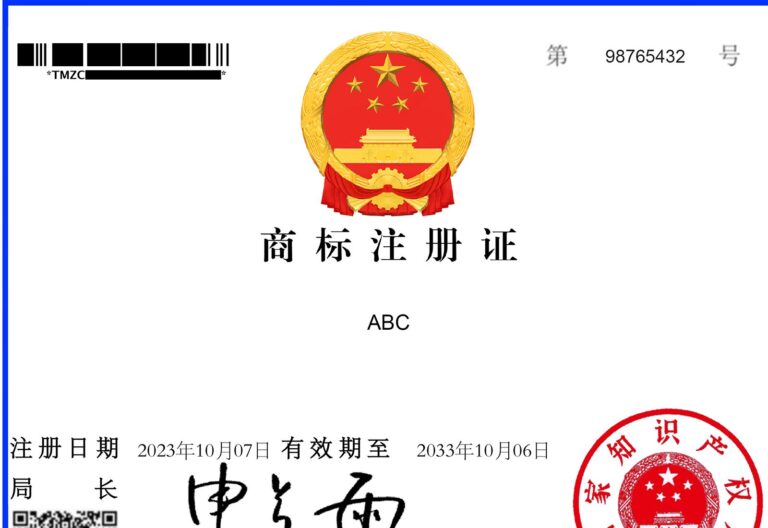
Also, if you will be revealing any of your trademarks or trade names to the Chinese factories and you have not yet registered those trade names in China, do so before the reveal. The most likely people to steal “your” trademark are those who are capable of manufacturing your prouduct and the only sure-fire way to prevent someone from stealing “your” trademark in China is for you to register your trademark in China before anyone else.

  • http://www.qualityinspection.org Renaud

    Thanks Dan. I understand your concern about the high number of suppliers who might put their hand on confidential information.
    What some importers do is this: they send a photo, or a rough sketch, of the product. If the product is really confidential, they photoshop it a little and they don’t send any technical drawings. If the factory speaks intelligently about the processes, it is time for a factory audit and maybe time to go further (hopefully with what you call an NNN agreement).

  • http://www.foarp.blogspot.com FOARP

    NDAs go hand-in-hand with non-compete agreements. What goes for third parties goes doubly for those you’re in a business relationship with because they’re in a much better position to compete with you using your own tech/know-how than a third party.
    Trademark/design registration is also a big one. I can’t believe I still get into arguments with people who say there is “no point” in registering IP in China when they do business there that they would want to get registered protection for anywhere else in the world. Back in December I spent most of a flight from Zurich to London trying to convince a software developer that there was not “no point” in patenting a software-implemented invention in China if this was an important market for the technology in question. Hell, I even got into an argument in a job-interview on the subject of patenting in China, basically saying that the fact that patent infringement damages are limited was not important when you can still get an injunction using your patent (I must have been convincing, because I got the job).

  • vicky

    Great article. I just wish I had read it years ago!