The FCPA And China. Do I Need To Get All Loud On You?
I spent my high school junior year living in Istanbul, where my father was teaching while on sabbatical. There was one other American family in our Bebek apartment building: the Richards. Adelle Richards was the matriarch of that family and there are three things I will always remember about her:
1. No matter how many times we told her we were from Kalamazoo, Michigan, she would always introduce us and refer to us as being from Illinois. Frankly, with her listening skills, I was just impressed she even remembered it to be somewhere in the Midwest.
2. When there was a small fire in our building and everyone was evacuated, she asked my father to run into her apartment to take something out, even though her husband was standing right next to her. My father actually did it, but the explanation for that will have to come in another post. And anyway, there ought to be a limit to one trashing per family per post.
3. I absolutely hated seeing her in any of our neighborhood stores because she was such an Ugly American. And when I say ugly, I mean it. Though she had been living in Turkey for about a year, she did not speak a word of Turkish. Not one stinking word. Okay, maybe she could say hello, but she truly could not even count to three, or two, or even one. I am not kidding. As bad as this was, however, it was how she compensated for it that was most ridiculous. She would talk louder. In English. Again, I am not kidding. What I mean was that if she was at the bakery and wanted four of a particular item and the person behind the counter did not now what Adelle meant when she would say "four," she would repeat herself by pretty much screaming out the word "four." Again, I am not kidding. Now, to top it all off, she once boasted (and I was there and I would swear on anything that this really happened) that "I find that if I talk loud enough, they can understand me."
I thought of dear sweet Adelle today when I read a post over at the FCPA Professor Blog, entitled, "The Results Are in...." The gist of the post is that even though everyone in the international law/FCPA legal business knows that the United States government is radically stepping up its FCPA (Foreign Corrupt Practices Act) enforcement, well under half of all U.S. companies have an FCPA compliance program in place. I find this particularly egregious because having a real compliance program is something the Department of Justice and the Courts look at in determining whether to prosecute and in determining sentencing.
Just as every foreign company doing business in China should have an employee manual, every United States (the EU has its own anti-corruption act) should have an FCPA compliance manual and program.
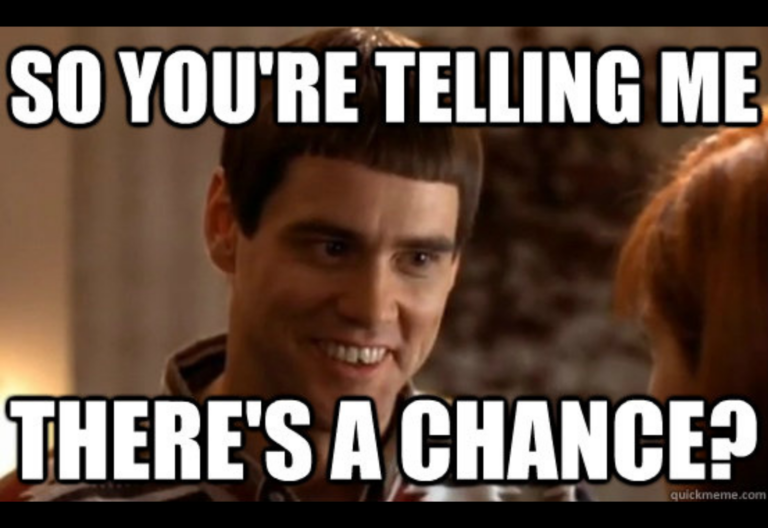
Do I need to pull an Adelle Richards on this issue?
For more on the FCPA, check out the following:
-- The Foreign Corrupt Practices Act. Can You Say China Relevant?
-- China And The Foreign Corrupt Practices Act (FCPA). Sometimes You Just Have To Step Away....
-- China And The Foreign Corrupt Practices Act (FCPA) -- Not Just For Americans Any More

Comments (3)
Read through and enter the discussion by using the form at the endMatthew Callis - September 15, 2009 8:56 PM
I’m often told a joke that goes something like this, "a judge’s pay is very low, so how can he afford such a nice car and the house to hold the garage he needs to park it in?" My first hand experience here is limited, but judging from the broad cultural acceptance of bribery in China, whatever its form, I say good luck in holding strict compliance with the FCPA. Bribery is just too likely to occur from someone, somewhere in your transaction. Unfortunately, deliberate ignorance isn’t any kind of defense.
Joe - September 15, 2009 9:29 PM
It WOULD be helpful for us to learn the local business customs. But it's hard when other another country's business practices are so radically different ( or even unethical by comparison) from ours.
XM - November 3, 2010 6:53 AM
I am a Chinese out of China. I have to say that where there is authority, there is corruption.
Give you an example:
If a buyer is authorised (signed task) by a company to buy a chair, he may buy the discounted one and send invoice with full price to his company.
He can share 50% (or any percent) of the price difference with the chair seller to fix the invoice (nothing is for fee. fake invoice also costs, seller needs to fix tax issue too if there is any).
By doing this, both the seller and the buyer can gain money. the buyer's company is the only loser.
Since every buyer does it, people do not feel strange by it. But if one buyer does not do it. He will spend less than other buyers. Then it is very strange. Because He could not give the seller 10%-50% share as well. Eventually, he becomes less popular and out of the game. His company will not pay him extra because he did not corrupt
I have to say the most corrution is NOT within the industry area. Because industrial area does not have much "authority", "power". It is the political area that is mostly corrupted. Basically, There is no "clean" politician in China. One party, no watcher.