








China Business. We Never Said It Would Be Easy.
Tough times make for tough business and China is certainly no exception. For foreign companies doing business in or with China, We are already seeing increasing problems and/or the likelihood of increasing problems in the following four areas:
1. Intellectual Property. Local software company (not one with which you are likely to be familiar). Tells me it wants to sue its employees in China over IP violations. The conversation went sort of like this:
Me: What are the IP violations?Him: They stole all of our software.
Me: What do you mean they stole all of your software?
Him: We hired them to develop specialized __________industry software for us to market in China and they have taken all of the work for themselves.
Me: Explain to me how this happened.
Him: [After going off on a wild tangent for about five minutes] We started the company in China about two years ago. I hired Mr. Wang [name is made up] to head up our operations there and he eventually brought on about 20 more people for us. I knew him from my days with _________ and thought I could trust him..... We spent two years on this and more than a quarter of a million dollars and the product is now finally ready and they've just taken the whole thing for themselves. You HAVE to stop it.
Me: Okay. Do you have written contracts with these employees that include non-competes, trade secret protections, or non-disclosures?
Him: No. We don't have written contracts with them.
Me: Hmmm. That could be a problem. Why don't you have written contracts with them.
Him: Because we wanted to keep this really under the radar.
Me: What do you mean really under the radar?
Him: Mr. Wang told me that if we didn't keep everything under the radar that our software IP would get stolen.
Me: Mr. Wang told you this?
Him: Yes. And I trusted him.
Me: Because you knew him from your days at __________.
Him: Yes.
Me: Okay, so no written employee contracts.
Him: Right.
Me: Did you pay employer taxes.
Him: No.
Me: Ummmm.
Him: We weren't exactly their employers.
Me: What do you mean?
Him: Mr. Wang was our only employee.
Me: How would you pay Mr. Wang?
Him: We would send him $10,000 a month and he would use that for everything he needed, including to pay the other employees.
Me: Who is the we that sent the money?
Him: Our company.
Me: Your US company?
Him: Yes.
Me: Do you have a Chinese company?
Him: No?
Me: Do you realize that virtually everything you have described to me was illegal in China?
Him: I do now.
Me: I don't see how you can sue here. Essentially, we would be asking a Chinese court to rule in favor of an American company that, for all intents and purposes, was never in China. Our claim would be that the people who stole your IP were your employees, even though there is no evidence they were your employees and if we argue that they were your employees, we will be admitting you violated nearly every labor law on the books. I take it you never registered any of your IP in China?
Him: No, should I?
Me: It might have helped.....
Him: Can you help me.
Me: I don't want to tell you I cannot help you without first doing all sorts of research to confirm it, but off the top of my head, I just can't see your having a decent case in China and you certainly don't have one here either, unless these China people start trying to bring your software into the US.
Him: So you don't see any way at all to help me?
Me: Not off the top of my head I don't.
Him: It just strikes me as ridiculous that I could have paid these people for so long and China won't protect me at all.
Me: Yeah, I think they just feel that if someone does everything illegally they cannot use the Chinese system for protection.
Him: But it was one of their own people who tricked me.
Me: Yeah, but I think the government would probably say that you should not have relied on him and that you should have been there legally, should have been paying your taxes and should have registered your IP. It's possible you hold the copyright in China anyway and we would be happy to research this for you.
Him: I'll get back to you on that.
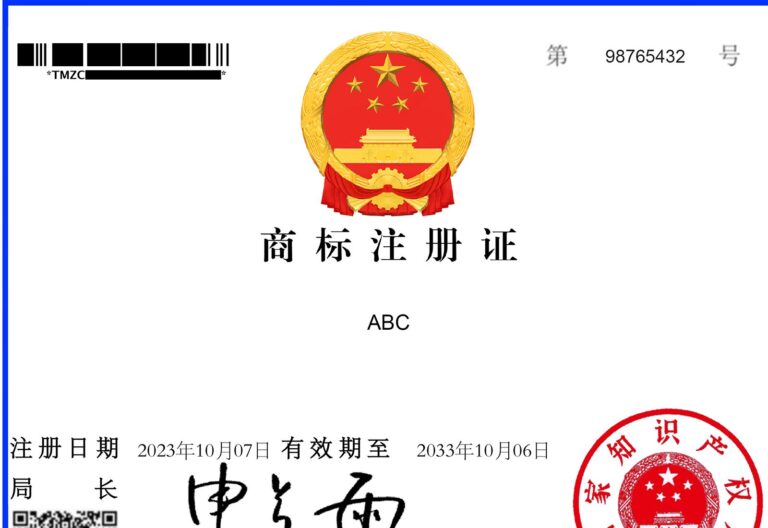
He never did. This is just a really interesting example, but we are definitely seeing more instances of employees (real employees, oftentimes those whose salaries have been cut) seeking to use their employers IP. If you want to protect your IP in China, do things legally. At minimum, register your business, use written contracts (in Chinese) with your employees that include trade secret protections, and register your IP.
When times are good, there is a much greater belief that loyalty will lead to long term reward. When times are bad, there is a much greater tendency for people to try to grab onto any potential short term rewards. For more on protecting your China IP, check out this article on China trademarks.
2. Disappearing Chinese companies. We got one this week and they are definitely becoming more common. Here is how they work. Chinese company on the verge of shutting down takes an order from Western company anyway. Chinese company then ships out the dredges of its product before shutting down for good. We have been called by American companies that essentially received dirty rags instead of shirts, that received bricks instead of fish (this actually was during the Asian crisis), and that had received what looked like sugar instead of candy. In all of these cases, the Chinese company had taken the money and had simply shut down, "leaving no solid clues nor trace, only a space...."
Does Chinese law allow for piercing the corporate veil to go after owners for fraud in these circumstances? Yes, the law allows it, but the Chinese lawyers with whom I have discussed this issue tell me most Chinese judges are neither terribly familiar with this concept nor terribly enamored with it. I am not saying that no such case should be pursued, but I am saying that one must think long and hard about whether pursuing such a case makes economic sense.
Now more than ever, you must make sure you know as much as possible about those with whom you have business dealings. You also should strive not to pay the entire cost in advance of the products you are buying. A year ago, most Chinese manufacturers were requiring full payment in advance. That has changed and many of our the contracts my firm is writing with Chinese manufacturers are now calling for anywhere from 0 to 50% payment upfront.
3. Joint Ventures Gone Bad. We are working on a number of failing joint ventures right now whose general scenario is that the joint venture has basically ceased providing financial reports and ceased remitting any profits back to the Western joint venture participant. Maybe these joint ventures are no longer even profitable, but our clients are entitled to determine this and if the joint venture should be shut down, our clients are also entitled to a share of the joint venture company's existing assets. For how to prevent/mitigate such problems, check out this article on China joint ventures.
4. Labor Laws Violations. I just received an email from co-blogger Steve Dickinson regarding China's labor laws and the belief among many foreign businesspeople that those laws are being relaxed to prop up the economy. Here's Steve's email:
I just sent you a copy of an article on the labor contract law. This is an important issue. I have been seeing statements on blogs and in the press that foreign companies no longer have to worry about Chinese labor law because the falling economy has led the Chinese government to basically abandon the law. This is untrue and it is a dangerous belief. What the government has been doing is working with large employers in negotiating mass layoffs and wage reductions. However, this process is part of the labor contract law, not a rejection of it. Moreover, all the other provisions of Chinese labor law, such as minimum wage, working hours and safety are being even more strongly enforced now than ever, particularly against foreign companies.I am in the process of reading the numerous policy documents coming out the the current National People's Congress. One thing that is being constantly stressed at the NPC is that China has no intention of responding to the world economic situation by turning back from the last 5 years of reform. Its intention is the opposite. China's leaders see the non-Chinese economies as even more unreliable and risky and they are pushing even harder to make China self reliant and thoroughly modern. They do not intend to allow the financial crisis to push back the recent trends of Chinese development. Two of those trends are to shift away from export led growth and to shift away from reliance on foreign direct investment. For exports, they want to move from being a foreign outsourcing center to a country that exports products of its own design. For FDI, they want to shift from quantity of FDI to quality of FDI. Many foreign observers thought (and still think) that China would turn away from these goals in the face of the financial crisis. Exactly the opposite is happening. China is reconfirming these goals in its search for economic stability.
When the Chinese government puts out a notice in English that it is going to strictly enforce a particular law, the only wise thing to do is to believe it.
What are you seeing out there?

Comments (11)
Read through and enter the discussion by using the form at the endAimee Barnes - March 10, 2009 9:24 AM
Hi Dan,
Very helpful article, although I must admit that it had me shaking in my boots. From what I have seen, there's been an influx of Chinese-owned companies interested in establishing a presence in the US and Europe and unfortunately, the rules aren't very clear. I focus on the "soft stuff"- copywriting, market and demographic research, and cross-cultural branding. Lately I've received inquiries to assist in the identification of potential partnerships, but I haven't explored that arena yet. On this side of the fence, the demand is definitely there but the guidebook is not (maybe we should write one). So, as a "new kid on the block," I find myself in a position where I must rely on the guidance of my peers while interacting with my partners in "good faith." It's an incredible risk, but what's the alternative?
This post is definitely food for thought.
Tom - March 11, 2009 6:03 AM
Dan:
Regarding IP, China had already paid or was forced to pay more than enough during two Opium wars, looted Summer Palace 100 years ago.
Jay - March 11, 2009 8:36 AM
After working in China for four years all I can say is that anyone that puts any assets here is a fool. Anyone that does so without an attorney is a double fool.
Empty - March 11, 2009 4:08 PM
Dan:
China also paid IP through hundreds of years of free using of Chinese inventions. For example, paper, gunpowder, credit banking, the compass and paper money, chinese madicine recipie etc..
... ...the basis of the mordern civilization.
Scott Loar - March 11, 2009 6:27 PM
As example: "We would send him $10,000 a month and he (Mr. Wang) would use that for everything he needed, including to pay the other employees."
Reading this exchange I have to say Him is just slap-the-forehead-and-hang-the-head stupid, but the company must consider Him criminally stupid and immediately fire his ass.
sdfgsdf - March 12, 2009 2:24 AM
@It's an incredible risk, but what's the alternative?
go to Thailand, India, East Europe, Phillipines and South Africa. But at best you produce inside of USA or EU.
robert - March 12, 2009 6:23 AM
Tom's comment may seem outlandish to a lot of you, but it's a very common justification that I've heard many times before.
Make sure you're registered, your employees are actually your employees, their contracts are in Chinese, and you've registered your IP. It's a lot easier to manage this on the front end than cleaning up the mess on the back end.
shenlawyer - March 12, 2009 7:49 AM
Yesterday, An American business man called me. He told me that had just bought a container of decoration tiles from China and found the goods totally different with the "samples" provided. He said that he would sue the manufacturer. But if he come to an experienced lawyer, his sad story can be stopped earlier.
Rhodo Zeb - March 12, 2009 11:31 AM
Dan, that is an extremely interesting situation that you describe in this conversation.
There might be ways to at least bring Mr. Wang back into the fold partially, by hampering his ability to freely sell the software, especially if it were the type of software that required regular support.
Depending on some different factors such as certain characteristics of the software and the legal relationship between the US company and Wang, some legal processes in China or the US plus other business pressures (such as warning potential clients of Wang of litigation risks they would incur if they do business with him), the company could recoup some of their losses.
This is similar to some other cases I am handling at present. Winning in court is not always the goal; putting pressure on the other side and forcing a settlement is often the real focus.
Anonymous - March 13, 2009 12:56 AM
Dan,
I think there is a disconnect between your assertions of Beijing interests in not turning back the clock and what is happening on the ground in terms of FDI. At the local levels, we are beginning to see a reverse on policies regarding quantity vs. quality that was introduced in late 2007/early 2008. Mid-Summer ’08 it was almost impossible to setup an export-oriented trading company within a 2nd/3rd tier development zones in the Yangzi River Delta Region, now many of these areas are beginning to introduce incentives to draw in new investment: including 2/3 tax holidays, subsidized rents, etc.
We are also beginning to see these incentives being offered in districts within Shanghai regardless of whether or not the entity has qualified for incentives underneath encouraged statuses.
Further, WSJ, just reported that Beijing is easing the registration process by allowing investments under US$100 million to seek approval from local commerce bureaus. It is not clear from the article if they mean local AIC’s; however, this could effectively take state-level interests out of the approval process and a reversion of the trend.
I would suggest, however, that in the long run you will be right as many of these local-level changes will fall on the wayside, but at least right now it looks like pre-’08 investment climate.
Tim
http://online.wsj.com/article/SB123685761921206681.html
uk visa lawyer - March 17, 2009 5:17 AM
Hi Dan
Just discovered your blog and thoroughly enjoyed reading this post.
Why is it that people think lawyers can be miracle workers after the event...