The WTO, China's Media, Copyrights And Other IP. It's A Control Thing.

By Steve Dickinson

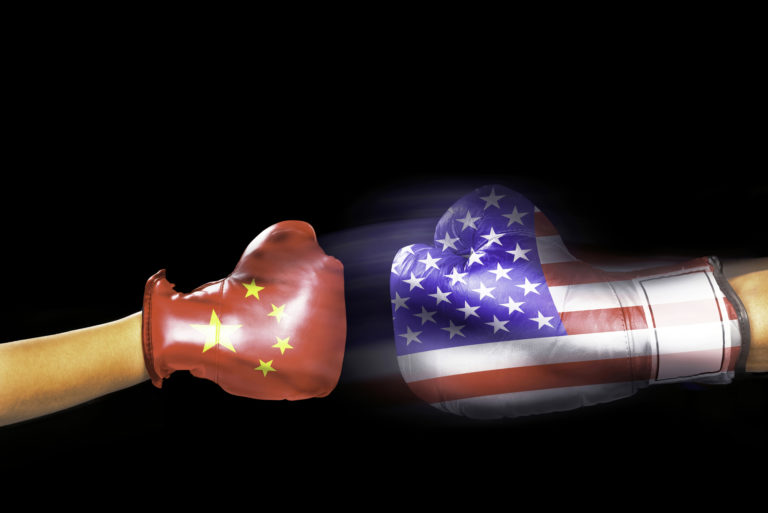
As we previously reported, the WTO decision in the copyright claim brought by the U.S. against China was recently released. As expected, the U.S. claims victory since it prevailed on two of three claims. However, careful review shows the U.S. lost. As usual, however, the WTO case was a part of a larger strategy, so the question of who won or lost is probably not relevant.

The U.S. WTO case had one serious issue: the argument that Chinese criminal sanctions are not severe enough to deter piracy. The other two issues were trivial and technical. The U.S. lost on the serious issue and won on the trivial issues. This means the U.S. lost the case. So we should just say that: the U.S. lost.

However, it was a foregone conclusion the U.S. would lose on the criminal sanctions issue. No WTO panel is going to tell a country how to organize its criminal system. The U.S. knew this from the start. So why did the U.S. bring the action at all since it knew it would lose? China has made enormous progress on IP protection since its accession to the WTO. China's reward: the U.S. brings an action with the WTO. On the surface, this was an entirely stupid thing to do. However, the U.S. does not bring these actions out of stupidity. Therefore, the useful question should be why did the U.S. bring this claim? What was the strategy?

I think there are two elements to the strategy. First, at the simplest level, the U.S. did this to appease U.S. media companies who want to see some action on the issue of market access (not piracy). This would explain why the case was so weak: it was not taken seriously by the people who brought it. Second, the whole process is part of a larger effort by U.S. media companies to "pry open" the Chinese market. The real problem in China for U.S. media companies is that the market is relatively closed. The U.S. approach to market opening is to batter down the door rather than negotiate. The U.S. approach to China on this matter has been consistent with its normal approach.

In my view, this attempt to open the market for media products will fail. The Chinese government does not see media and ideas and the rest as a "market". They see it differently. They see it as an impediment to government control. Accordingly, they have no intention of ever opening this "market". Consistent with this basic viewpoint, China makes no attempt to seriously protect its own media. Chinese film, TV, books, magazines, music, visual arts and the rest are routinely pirated and the associated businesses and artists are left undeveloped and in poverty. That is changing in small increments, but not in any serious way. Chinese film directors and actors, for example, have grown rich, but only from their earnings on foreign releases. They still complain that they make no money in China, primarily due to piracy. With that as a base, how can China protect foreigners? It simply cannot happen. If foreigners are protected, then China has to protect its own citizens first. In this area, a two tier system simply cannot work. So the whole discussion is pointless.

The fact that this is not a pure intellectual property issue can be seen by the alternative fate of patents, trademarks and trade secrets. Of course, piracy in these areas is rampant in China. However, both administrative and court based protections are also very effective in China. As I often say, the courts are good at these cases because they have so much practice. Protection of IP in this area is successful because the Chinese government views it as entirely a commercial matter. The attitude is not the same for media, with predictable results.

One area where there is real tension is copyright protection of software. Even where software is purely commercial (i.e. outside of the video game world), its protection falls entirely within the realm of copyright. It is in this area where the Chinese refusal to protect copyright is actually commercially quite damaging. China is responding not by increasing enforcement of copyright, but rather by attempting to create a special regime just for software protection. This regime will benefit both domestic and foreign software developers, so it does not fall into the trap of creating one system for domestic companies and another regime for foreign companies. Moreover, it appears that this sui generis approach to software protection may be successful.

Comments (10)

Read through and enter the discussion by using the form at the end
B - February 9, 2009 11:36 PM

What is this new regime called and how will it affect software developers? Any pointers or links would be great.

Greg - February 9, 2009 11:45 PM

Could part of the US's larger strategy be to poke holes in the WTO's structure, practice and rules interpretation? To disprove the WTO in its current form?

balasighamony devasekha - February 10, 2009 5:08 AM

the order of wto is a welcome step.every country has a sovereign right to its own criminal justice system--which no other country in the world has a right to comment.further the wto should put penal costs for frivolous litigations/proxy litigations to check them.so that countries are not compelled by proxy litigations.

Alex - February 10, 2009 7:23 AM

The US pokes holes in the WTO's structure by using the WTO dispute mechanism?

Twofish - February 10, 2009 11:48 AM

The problem is that if you have strong copyright protections you end up protecting media industries, but there are huge industries in China that benefit from weak copyright protections. There are a lot more bootleg CD peddlers than starving directors.

The Chinese government here doesn't have a preference for strong and weak copyrights. It's just that if you go to a bootleg DVD market and start seizing DVD's and arresting people, you will have a "mass incident."

Also, strong copyright protections generally do not help most artists and directors. The people that make the big money are distributors.

JD - February 10, 2009 5:53 PM

China has made enormous progress on IP protection, you claim.

That must mean that Chinese domestic production and exports of counterfeits are declining? Wow, great news.

So, show us the numbers which prove your oft-stated claim. To steal and old and tired phrase, where's the beef? The numbers will be comforting, as they will eliminate any suggestion that the assertion is intended to bolster your business model.

I don't believe that your position is driven by self interest, so please provide the proof so I can convince others to share my confidence.

ceh - February 11, 2009 8:28 AM

Strong copyright laws do help some artists and directors. While it's certainly true that the labels take a disproportionately large share of the proceeds, *ahem* talented people like Britney Spears (and her songwriters) will still be benefiting.

Copyright law is nonetheless rapidly becoming an obsolete paradigm, even in the U.S. The days of paying $20 for an album with 1 good song are long gone, and soon so will the days of paying 5 RMB.

Twofish - February 11, 2009 9:28 AM

ceh: Copyright law is nonetheless rapidly becoming an obsolete paradigm, even in the U.S. The days of paying $20 for an album with 1 good song are long gone, and soon so will the days of paying 5 RMB.

The "sell CD's" business model is dead, and part of the problem was that the recording industry was able to use copyright law in order to try to save a dead business model, but I think that copyright law will help recording companies stay in business using the new business models.

The new business model appears to involve high volume sales of cheap digital recordings. A record company can go to Apple, and offer them their entire catalog for 99 cents a track. A bootlegger can provide the raw digital records, but they can't provide value added services on those records, and they can't sell recordings for 99 cents a track.

FOARP - February 12, 2009 7:09 AM

On the money. Patents, Trademarks, Designs - all are getting better because it is easy for the government to see how they feed in to creating a stronger country. Media products don't fit the CCP's definition of 'stronger', and large parts of the government are deeply suspicious of them.

As for the WTO, the current sanctions regime makes no sense to me. The idea of enforcing the treaty by allowing state retaliation is clearly self-defeating. A system of state liability through national courts under the terms of the treaty would make much more sense, but whilst the nations of Europe already use such a system to safeguard the single market, other states (the US and the PRC being two) are not likely to allow such a system. Indeed, it is doubtful that a PRC court could ever award damages for non-compliance with the WTO treaty against the PRC government.

Christine Ngo - February 15, 2009 5:21 AM

Heterodox economists often consider the lacking of copyright protection a necessary mean for developing countries to catch up on advanced technology since it is impossible for these countries to pay the prime price for every single piece of software, hardware and innovation that they import. Here, the Korean ship-building industry is a great example. This is one of the reasons why China will not enforce it copyright commitment, which is mostly on papers, until it is forced to do so. Even when it does, as Steve nicely pointed out, the enforcement will come with careful and deliberate selection.

Post a comment

Fill out this form to add a comment to the discussion
I'd like to leave a comment. is
,
is
,
is
is