China SMEs -- Own If You Want To Own
In the song, "Positive Vibrations," Bob Marley sang, "Live if you want to live." On AmchamDaily's blog, Jeremy Goldkorn says if you want to own something in China, you have to make sure you own it. Marley and Goldkorn both speak great truths.
AmCham Daily is doing a series of posts on starting up and running a small business in China and the one that caught my eye first was an interview with Jeremy Goldkorn of Danwei, entitled, "Danwei to danwei: Get lost!" I hit upon that one because I know Jeremy and know he knows whereof he speaks. I also know Jeremy has been hugely successful with his small (but constantly growing) media business in Beijing.
Jeremy sets out three key lessons:
Lesson One: "Avoid the joint venture."
Jeremy rightly notes that it is never easy working with someone else and it is even more difficult when there are cultural differences. One need only look at the following posts to know I agree:
"China's Joint Venture Jeopardy" (this post is on an article I wrote for the Wall Street Journal on the same subject.
"China -- Damn The Joint Venture"
"Beware The China Joint Venture"
"Beware The China Joint Venture, But Do Not Ignore It Completely"
Lesson Two: "Court The WFOE."
“I don’t see anything wrong with a WFOE,” Goldkorn says. The only thing I find wrong with WFOEs is that they do cost money and they do bring attention from Chinese governmental authorities and they are sometimes not necessary. It is usually not necessary to have a company in China if all you are doing is purchasing Chinese product.
Lesson Three: "Find the workaround."
"Maybe you don’t need a company partner. Maybe you just need a good contract and can rely on another company to provide you with a needed service." This is almost verbatim what I tell clients who come to us for assistance in forming a Chinese joint venture. I usually start out asking why they are thinking of forming a joint venture. I then follow that up by asking if they would be entering into a joint venture if the facts were the same but the company with whom they want to do business were in the United States. The client virtually always answers "of course not." I think ask why then they are contemplating a joint venture in China. Their answers to this question are almost always either that they thought they "had to do a joint venture" or that the Chinese company had told them they had to do a joint venture. I then tell them that in most industries, China does not require joint ventures and everything they are seeking to accomplish can be accomplished via contract with less risk. Goldkorn apparently practices what we are preaching:
“I have worked usually with contract relationships with Chinese companies,” Mr. Goldkorn said.
In what should have been delineated as lesson four, because of its importance, Goldkorn states: "Just make sure you own what you need to critically own." He then talks about an "instance in which a foreign founder of a magazine was ousted by a Chinese partner:"
Although the businessman started the magazine, he didn’t actually own it. He owned a consulting company, his wife owned an advertising company, and they were in contractual relationships with a Chinese company, which owned the magazine license, Mr. Goldkorn noted. That was a critical piece of property, however, and not having it eventually ended the businessman’s career with the magazine, according to Mr. Goldkorn.
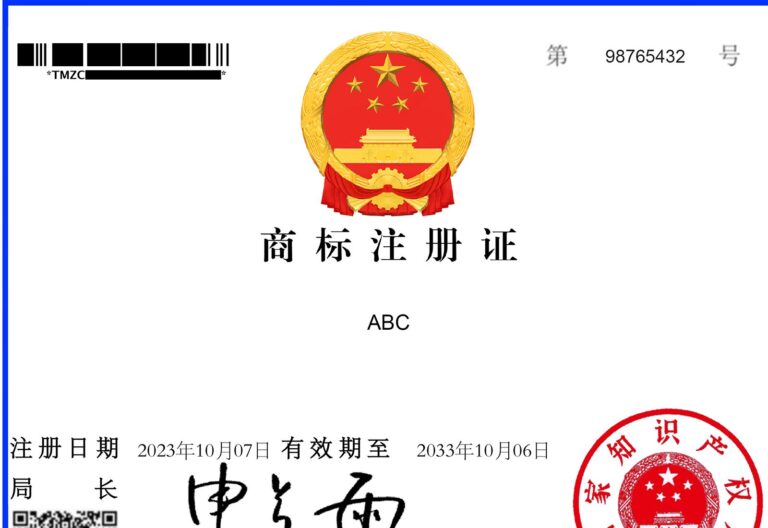
Not sure if he is talking about Mark Kitto, but I suspect so. I cannot tell you the number of times companies have come to us seeking their assistance in recovering "their property" in China, only to learn it does not belong to them. We most commonly see this with product molds, with trademarks, and with real estate.
Good advice for SMEs and I will no doubt be posting more on this AmCham Daily series.
http://www.chinalawblog.com/cgi-bin/mt/mt-t.cgi/2387
» Let's Rag Some More On China Joint Ventures China Law Blog
As regular readers of this blog know, we are not big fans of Chinese joint ventures. Yes, sometimes they are necessary, and yes, sometimes they even make sense. But most of the time, a strong contract can achieve the same thing with far less potential ... []


Comments
Interesting you mention "product molds" at the end of this discussion. An old friend in the UK recently contacted me asking if I would help recover a mold he had "bought" (but never seen) from his supplier in Ningbo.
Me: You paid how much for the mold?! You never got a receipt? Have you ever actually seen it? And so on....needless to say said supplier had never bought a mold, the factory did not exist. My friend was being supplied through a series of third parties etc. (he had also never been here but sourced this over the internet) and you can guess the rest.
I pointed him in the direction of China Law Blog. He is now franticly reading through your article archive to get up to speed on China sourcing.
Posted by: Alex | January 20, 2008 10:03 PM
Alex,
Ah, the old China mold issue, but this time coupled with a third party string of brokers, which presents its own problems. Your guy almost certainly needs to do more than just read this blog; he needs either real help or he needs to get out.
Posted by: China Law Blog | January 26, 2008 7:22 AM