Danone and China's Wahaha: A Lecture on How (Not) to Make Allies Enemies
You are going to have to trust me on this. Lawyer's instinct. I know the Danone Wahaha dispute is going to be a watershed event in Chinese law and business for foreign companies, though have no evidence to back this up.
Yet.
In the meantime, please excuse my obsession with this dispute, but since it contains just has about every issue with which foreign companies must deal in China and because both parties have enough money and legal talent to fight it out on every one of those issues, I just cannot help it. Since the opposing sides come from such very different backgrounds, have such very different training, and such very different strengths and weaknesses we can expect them to employ very different tacts. That too should (and already is) prove very interesting.
This case is going to influence Chinese/foreign corporate litigation, for years to come. This dispute is going to influence the future of China business for foreigners, I am telling you ....
Anyway, for a history of the dispute, check out my original post (and do read the comments), entitled, "Danone v. Wahaha -- Which Of Us Is The Most China Rookie?" You also should check out "China Litigation: You Want Government With That?"
The big news in the war this week is that Danone has sued various Wahaha linked entities in California State court. I am in the process of securing the complaint in that action, but I think I already have some idea of Danone's strategy and I think it is a good one. Danone is trying to nullify Wahaha's home court advantage in China by seeking to force at least part of the fight to occur on more neutral turf.
But my reason for writing this post now is to inform everyone that Professor Teng Bisheng of the Cheung Kong Graduate School of Business will be giving a lecture at The Portman Ritz-Carlton in Shanghai on Wednesday, June 13, 2007 from 6:30 pm - 8:30 pm. Admission is free, but registration is required.
I am going to try to get one of our Shanghai people to go to this lecture and report back to the blog on it.
http://www.chinalawblog.com/cgi-bin/mt/mt-t.cgi/1983
Danone and China's Wahaha: A Lecture on How (Not) to Make Allies Enemies:
» New York Times And Steve Dickinson On The Danone Wahaha China Dispute And On Avoiding Your Own China Law Blog
David Barboza, who has been doing a great job covering the Danone-Wahaha dispute (see his New York Times article, Rancor Level Rises in Rift Over Danone China Venture), just came out with a new story on the dispute in the International Herald Tribune a... []
» China's Joint Venture Jeopardy China Law Blog
The Wall Street Journal just ran an article I wrote, entitled, "Joint Venture Jeopardy". It is on the Danone-Wahaha dispute and it gives a few basics for avoiding joint venture problems. For those of you coming here for the first ... []
» Danone Wahaha: An Update China Law Blog
The China Business Law Blog has a nice update on the Danone Wahaha litigation around the world. The sense is Danone is winning in court and I cannot help but wonder if it is because it is spending more on lawyers. I do not know this to be the case,... []
» China's Danone-Wahaha Fight -- The Law Journal Version China Law Blog
Regular readers of this blog know the Danone-Wahaha battle to be one of our favorite topics, mostly because of the myriad lessons it teaches. I wrote an op-ed for the Wall Street Journal on it and Steve Dickinson was quoted on it in the the New York Ti... []
» New York Times And Steve Dickinson On The Danone Wahaha China Dispute And On Avoiding Your Own China Law Blog
David Barboza, who has been doing a great job covering the Danone-Wahaha dispute (see his New York Times article, "Rancor Level Rises in Rift Over Danone China Venture"), just came out with a new story on the dispute in the International Hera... []


Comments
Hello Dan,
Already a few weeks, I haven't comment on your blog.
I agree on all your points that this feud between Danone and Zong Qing Hou will have a deep impact on future relations between Foreign companies, Chinese companies and Chinese governement at all levels (Business, political, legal). There is somehow a twist in this sour story, Zong Qing Hou called for help from the Chinese government for reason of "patriotism" but it remains silent until now. The reason: even if Zong Qing Hou has always been seen as a successful Chinese entrepreneur, local governements are also shareholders in the venture between Wahaha and Danone. Themselves, they have been defrauded (if proven guilty!) by Zong Qing Hou of hundred of millions of RMB.
Posted by: Romain Guerel (French working in Beijing) | June 11, 2007 2:10 AM
Big news also presumably that Mr Zong has resigned as chairman of the two's joint ventures, opening up another front in the war as Wahaha has rejected Danone's nominee to replace him.
Posted by: Duncan | June 11, 2007 2:30 AM
Romain Guerel --
Wow, will the twists on this ever end? That is a great explanation for the muted response and one I did not know. Thanks much for bringing that up.
Posted by: China Law Blog | June 11, 2007 7:11 AM
Duncan --
Yes, it is big news, but I have no idea yet as to how that will fit into the big picture.
Posted by: China Law Blog | June 11, 2007 7:12 AM
Dan,
I have also been following this on All Roads, and Zong's departure could potentially really complicate the situation as Danone has already offered their own replacement and been turned down.... just imagine what is going to happen when they execute their right to purchase the remaining 49%.
My theory, backed up by a few birdies, is that while the government wants to support Zong's position.. they can't as they will be supporting the side that broke the agreement.
If Danone wants to execute on the remaining 49%, they will need to how what Zong did undermined Wahaha and lined his own pockets.
Otherwise, Danone is going to have a difficult time no matter if they are right or wrong.
Posted by: All Roads | June 11, 2007 7:53 AM
My money is on Danone getting some sort of "consultative" seat in the selection process but not having an actual vote in return Danone will give up some IP for Wahaha to sell under its own name.
I also think that events like this and the destruction of US imports are just the beginning of unofficial official retaliation for the US and Europe blocking food imports from China.
And again, why the hell is the overfed US and EU importing food from China? We have so much the stuff rots in storage.
Posted by: nanheyangrouchuan | June 11, 2007 7:42 PM
Dan,
What is the jurisdictional hook for the suit in CA state court?
Posted by: Ben | June 11, 2007 9:52 PM
All Roads --
I have the sense you have something important to say on this issue, but I need you to clear up what you meant in this sentence as something is clearly missing: "If Danone wants to execute on the remaining 49%, they will need to how what Zong did undermined Wahaha and lined his own pockets."
Thanks.
Posted by: China Law Blog | June 12, 2007 12:00 AM
nh --
We import because it is cheap.
I do not see this as government inspired. I see this as a two party dispute and at this point I cannot see the parties reconciling.
Posted by: China Law Blog | June 12, 2007 12:02 AM
Ben --
That is the million dollar question and that is why I cannot wait to get my hands on the complaint? Can anyone e-mail it to me? Please?
Posted by: China Law Blog | June 12, 2007 12:02 AM
Dan,
First "how" should be "show"... spell check didn't pick that up.
Using a wider lens... Zong played the PR card well, and at this point any attempt Danone makes to buy the 49% will meet stiff resistance (that was proven when Wahaha pushed back on Danone's choice for Zong's replacement).
For me, Zong's swan song was the PR campaign of a few weeks ago. He threw down his last card when he tried to stir up nationalist sentiments, and it was quite effective at the start.
However everyone should have noticed that he had not said much between the time this initially hit the media to the time he resigned.... and it is my conclusion (backed up by third party hearsay) is that Danone presented him with their evidence..
so, if they want to win back the public, my feeling is that they will need to show some evidence in the public space or risk meeting ongoing internal (Wahaha) and external (consumer) push back.
Posted by: All Roads | June 12, 2007 12:43 AM
All Roads --
Who risks "meeting ongoing internal (Wahaha) and external (consumer) push back? I think you are saying Wahaha, due to its lack of evidence, correct?
Are you saying that the truth/evidence is going to trump nationalism here? Or are you saying that nationalism isn't such a great card because so much of what Wahaha did appears to have been done through offshore companies and nationalism can only go so far when applied to the self interest of someone as rich as Zong?
Please do tell us more.
Posted by: China Law Blog | June 12, 2007 12:54 AM
Am I being cross examined?
Danone is the one at risk of internal and external pushback. They need to show that Zong's actions were ripping off the partnership, and its employees, and that Danone is doing nothing more than standing up for Wahaha's brand, employees, etc.
It will take a pubic outing of the facts though to get there in my opinion.
Posted by: All Roads | June 12, 2007 7:53 AM
We import basic food stuffs because it is cheaper?
I think someone is playing accounting tricks to make it appear cheaper, I'd go so far as to suggest that the US is floating China's agricultural community as yet another favor to the CCP.
Yes, this is off-topic (to a point) but this is a serious discussion, our food production has been 100 years of hard work and R&D in the making now we are letting it go to rot to appease an openly hostile gov't and its MNC friends. THis is a national security issue as well. Think about this next time you go to the supermarket. Juice cans, etc have the country of origin printed on them and I make it a point to buy absolutely no food made in China. Lawn furniture is one thing, food is something else.
Posted by: nanheyangrouchuan | June 12, 2007 9:24 AM
All Roads --
Yes.
Posted by: China Law Blog | June 13, 2007 6:55 AM
nh --
I seriously doubt the US government is encouraging the import of Chinese food to subsidize Chinese farmers. The reality is that certain Chinese foods dominate the world market. Garlic is one example. I also know that a number of fishing companies here in Washington and in Alaska are taking their fish over to China for processing and then shipping it BACK to the US for consumption and saving considerable money by doing so. I have a client who consults with companies on this very thing.
Not to say I too do not share some of your concerns about buying Chinese food . . . .
Posted by: China Law Blog | June 13, 2007 6:58 AM
There ought to be more stringent guidelines that require "place of processing" to be shown on containers and at restaurants.
Posted by: nanheyangrouchuan | June 13, 2007 11:57 AM
By the way, you all can read Steve Dickinson in today's NY Times commenting on this matter.
Lovely.
Posted by: Law Office of Todd L. Platek | June 13, 2007 7:57 PM
nh --
Did you mean to leave this comment here?
Posted by: China Law Blog | June 13, 2007 11:14 PM
Todd Platek --
Yes, a bit of good PR there, I must say. I will be doing a post on that.
Posted by: China Law Blog | June 13, 2007 11:15 PM
yes Dan, I did.
And I've been actively looking at food packing to see where it comes from. I love apple juice, but have had to refuse it because most of the juice I buy when I'm not at an organic store comes from China.
Posted by: nanheyangrouchuan | June 14, 2007 9:10 AM
nh --
I am certainly not opposed to requiring country of origin going on food, as a means of further educating the consumer. Which also goes to show I am not against all government intervention, particularly when it improves choice, rather than limiting choice.
Posted by: China Law Blog | June 16, 2007 11:35 AM
Contract details aside, one has to ask the following questions:
1) As a full-time excutive chairman and CEO of the Danone-Wahaha joint venture group, Zong Qinghou had set up numerous "private" companies(regardless whether in competition or not with the JV) for his own personal benefit. This is in clear violation of any basic terms of fiduciary responsibility of employment (even in the absence of an employment contract) on non-compete and conflict of interest. It is "comical" that Zong had set up these numerous private companies using the name "Wahaha" with some even selling the JV's products which is tentamount to siphoning off the JV's profits while at the same time selling products that are in direct competition against the JV.
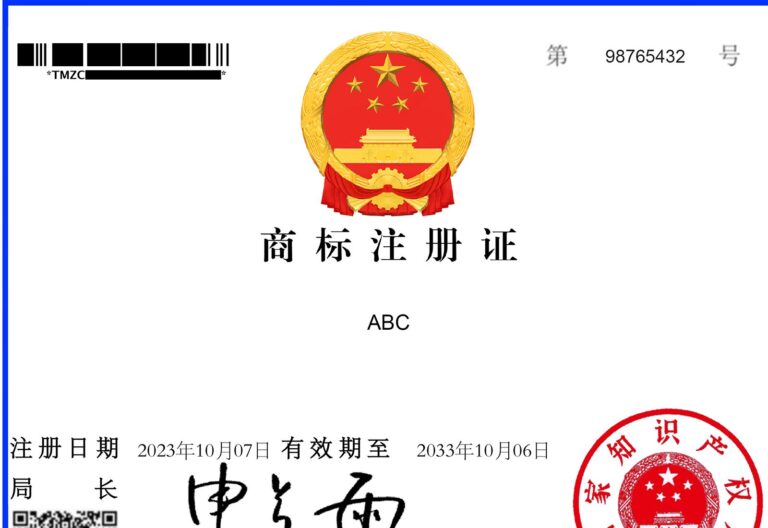
2) The fact that there was an licensing agreement for the transfer of the trademark to the JV which required registration with(and approval of) the Trademark Bureau for which Zong failed to execute (now claiming that the Trademark Bureau failed to act or reply, and therefore the trademark transfer is invalid) was derelcit of Zong's duty as the General Manager for which he should be held responsible.
3) One has to wonder in the privatization of the JV in 2000 Zong had to pay the State Rmb 150 million for his share of the equity in the JV that where and how Zong got the capital (if such had actually been paid).
4) The fact that Danone had "allowed" Zong to carry out his own private businesses for so many year was clearly "management negligence" on the part of Danone. However, it does not nullify Danone's right to litigate against Zong.
5) Danone has the legal right to seek damages from Zong and to require Zong's private companies to cease using the trademark
"Wahaha". However, Danone has no legal right to
"force" Zong (and his other stakeholders) to sell the non-JV companies to Danone; such being
a commercial transaction between the relevant parties.
6) Whether the terms of the original JV agreement between Danone and Zong was unfair is irrelevant as it was a commercial contract validly entered into by two willing (presumably) parties.
7) The dispute crystalizes many loopholes and imperfactions of China's commercial and company laws; especially in the context of 1996 when many foreign JVs were formed on the back of "standard boiler-plate" JV agreements
and M&AA when numerous essential protective covenants for both JV parties were absent.
8) While there was no documented restriction of the JV agreement that Danone was prohibited to invest and acquire other businesses in direct competition against the JV, Danone was
"negligent" in allowing the same executive to be appointed to the board of directors of the JVs and Danone's other non-Wahaha investees.
What is at stake is China's reputation of "free" market in attracting direct foreign
investment raising the level of "political" risks as assessed by the prospective foreign investors.
Posted by: xu xiao ye | July 10, 2007 10:17 PM