Five Tips For Doing Business In China And No Guanxi
In a post entitled, "So you want to move to China," over at the Silk Road International blog, David Dayton sets out five good tips for doing business in China. The post starts out with Dayton talking about having attended a U.S. wedding where "just about everyone" asked him if they "should move their business into China for sales, production or both." Dayton professes not to have a clue if they should move their businesses to China or not as "that's really not a decision that should be made over appetizers at a wedding reception." But, like any good blogger, he offers us all a "quick and dirty" list of the basics he has culled from 15 years in China spent in schools, factories and government offices, blissfully free of anything about "guanxi, Chinese language or strange food." It's a good list and here goes:
- You will get out of China what you expect to get. "If you hate China, complain about the dirt, the problems and the lack of QC, etc., etc., that's what you'll see everyday and that's what you'll take home. This doesn't mean you have to be Pollyanna and only see the sun that shines through the outhouse window; some things here really, really stink. But it does mean that if you expect to be disappointed or plan to fight for everything you"ll do just that. Do your homework and know what you"re getting into before you come over."
- Practical experience will do you more good than any degree, guide or guanxi. This means knowing your industry and standing firm on your established standards and experiences. This also means spending enough time in China to understand how your industry works over here. "If this means that you fly over four or five or ten times before you close any deal, so be it. Get into factories more than once and more than for the guided tour."
- Invest in your supplier and supply chain. Spend the time and money to teach multiple levels of your supply chain what you expect and why you expect it.
- Be willing to learn from the factories and people in China. Due to "technology, logistics, politics and even weather," you may have to alter your standard production processes. This does not mean you need to sacrifice your standards, but it does mean you have to be open to learning something from China.
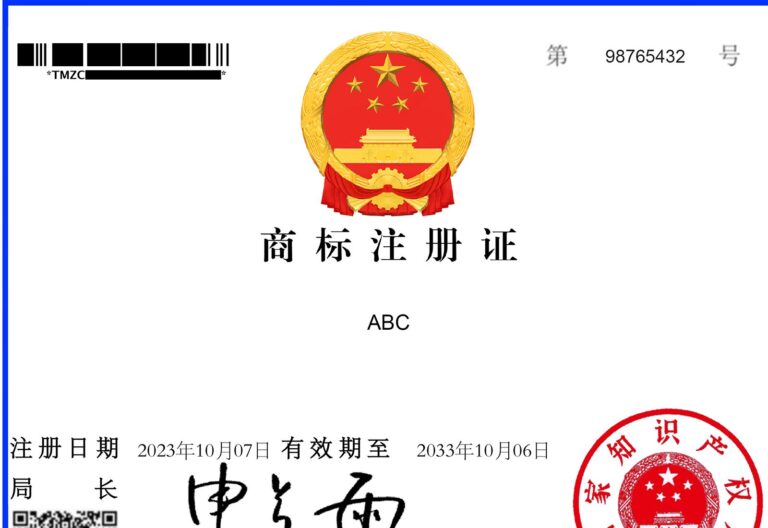
- If you expect your suppliers to follow their contracts and respect your intellectual property (IP), you had better do the same. "If you bust your supplier"s butt over IP violations and then have the factory driver take you to the local knock-off golf or DVD shop, what message are you giving to the factory?! Yea, what you do personally does influence how you are seen by your Chinese supplier. Make sure all your legal issues are taken care of in China (and back home) so that the law is always on your side, just in case. Get the right visa, file copyright and trademark applications both at home and in China, and if you are going to get an office here in China, do it right.
I like them all, particularly the one on IP, as I have more than once been asked my opinion by obviusly scornful Chinese lawyers of foreigners who complain about the lack of enforcement of IP laws in China and then a few hours later ask where they can pick up a particular fake product. I also particularly like his advice to learn from China because so often we Westerners tend to assume that if things are different in China, they must be worse, when in reality, China's different way of doing something may actually be the best way to do it in China.
TrackBack
TrackBack URL for this entry:
http://www.chinalawblog.com/cgi-bin/mt/mt-tb.cgi/1938
Listed below are links to weblogs that reference Five Tips For Doing Business In China And No Guanxi:


Comments
This is great advice and I also appreciate the variation in perspective and absence of certain China buzzwords. I particularly like points #1 and #4. Living in another country is just plain hard sometimes. A lot of people have an idea of what it is going to be like, but you never really know how it's going to be until you do it. The right attitude is essential. A good friend of mine who has spent years in China and is working on his PhD in Chinese language helped me make sense of it by suggesting that it's a process of coming full circle with a place. You arrive and have your expectations, high hopes, and preconceived ideas about how great things will be. Months into it, when things have become routine--the differences that you didn't appreciate that were once subtle, are now very apparent and are starting to wear on you. You may even feel you really hate the place at times. Finally, after spending enough time--perhaps at least a year or more, you begin to come to terms with those things and take the good with the bad. It's not "life in China" anymore, it's just "life".
In terms of #4, I always feel like I am learning from our suppliers there. It's a give and take relationship and usually there are suppliers who really know their stuff and it behooves us to listen.
Posted by: audall | May 18, 2007 9:47 AM
I would've thought this was common sense for those business types, but then again, I've seen enough of our fellow Westerners and their antics in China to know common sense isn't necessarily very common.
Posted by: chriswaugh_bj | May 18, 2007 8:08 PM
Audall --
I actually think #4 is the most important for international lawyers. I went to a US law school and worked on strictly domestic matters for the first few years of my practice and it was pretty jarring to realize that not everybody does things the same way we do and, surprise, surprise, our way is not necessarily the best either. The interesting thing about law is that there are usually going to be tradeoffs and different countries choose where on the tradeoff spectrum they want to be. Best example is that the US likes long, drawn out litigation, where the right result is usually reached. China prefers speed. Which is better?
Posted by: China Law Blog | May 21, 2007 3:54 PM
chriswaugh_bj --
A lot of this is pretty much just common sense, but it is amazing how many times smart businesspeople check their brains at the gate when they are forced to engage in business in completely unfamiliar surroundings.
Posted by: China Law Blog | May 21, 2007 3:56 PM