China Medical Testing Redux: P. Diddy Checks Back In

A few weeks ago, I did a post, entitled, "China's Service Sectors Will Reign, Part IX -- World's Best for Medical Testing," touting China as the place for offshore clinical testing.  A couple of readers left comments raising ethical issues arising from medical testing in China.  These issues are of such importance, I am responding to them here in this post, rather than in the comments.   

Davesgonechina checked in first with this comment: 

Clinical trials anywhere in the developing world, as you are no doubt aware, can be quite controversial. There's been some coverage (in the journal Nature, and some links at SciDev.net below) about the lack of a good medical ethics structure in China for trials, and the possibility of lack of consent by informed patients. I realize your clients are not looking to subvert international or Chinese standards, but the system is fraught with flaws.

I knew a researcher in China who studied blood supply management that included Hepatitis testing. He discovered a nightmare - mislabeled or unlabeled samples in unorganized collections, no standard practice on informing patients (you'll be told of your test results by phone, by mail, come to the office in two weeks, results will be in a brown paper bag behind a steampipe at the KTV at 3 am Friday morning - some patients were never told they were even being tested, let alone told if they were positive). If problems like these exist, clinical trials will no doubt sometimes be carried out with similar deficiencies.

I also taught at a medical university, and I routinely heard of students and professors falsifying data to achieve desired results. There was no disincentive or watchdog mechanism to prevent this.

If one day it is revealed that your clients had contracted out trials to a Chinese hospital that failed to inform patients properly or misrepresented data, what actions would you advise them to take? What precautions do they take now?

The second post, from nanheyangrouchuan, was a bit more tongue in cheek:

The "human rights" dragon raises its head again. China has a vast pool of patients and even more importantly, desperately poor who will put themselves through anything just to make a yuan. Just like "compliant" Chinese factories geared for outsourcing, any inspectors from Western pharma companies will at best get a dog a pony show while the meat grinder in the back room works its magic on its victims. And Western pharma companies can claim complete ignorance!

Yeah, QC in china is a big problem, look at the cars. And you will trust a drug tested in China coursing through your veins? It's a perfect storm for more thalydamide babies: western companies wanting inexpensive and sort of reliable testing and the Chinese testing companies want to maximize profits and increase their western pharm customers with "perfect results".

I'll be shifting my healthcare plan to holistic healers, native American medicine men and power crystals. Much safer.

Clinical testing on humans (and animals) will always be fraught with ethical issues and this blog is not the place for big ethical discussions because I lack both the background and the inclination. One of the best professors I have ever had, Roger Dworkin, is a world leader in medical ethics, and knowing how much he knows in this area tells me my knowledge is but a grain of sand

But at the same time, I cannot help but wonder whether the ethical issues of medical testing in China are any different from anywhere else.  Since medical testing is nearly always done on the poor (or the young),I am not convinced the ethical issues in China are any different in theory, though they certainly are in application.  I do not doubt that China is rife with nightmares of testing, but unless that means proper testing in China is an impossibility, that should, at least in theory, not impact the ethical issues involved.   

As for how an American company can prevent the big problems of medical testing in China, my answer is pretty much what I would give to any company doing business in China.  I actually touched on this a bit in my first post on testing in China, "China Medical Testing Gone Bad.  In that post, I talked about an American company that conducted medical testing in China in reliance on a Chinese hospital's assurances that everything was being done according to Chinese law.  In that post, I set forth the following three rules (the first two having come from a previous post, entitled, "Free China Legal Advice: Do Not Sign A Contract You Do Not Understand" dealing with Chinese contracts in general):

Rule Number One for doing business in China:  do not sign a contract in Chinese unless you know exactly what it says as you will be bound by that contract.

Rule Number Two for doing business in China:  the last person you want to be your translator on a contract is the person with whom you are contracting.  If you do not know Chinese, bring on someone you trust completely to translate for you.  Better yet, hire a lawyer fluent in Chinese.

I am adding a third one:

Rule Number Three for doing business in China:  Do not use anyone as your lawyer except your own lawyer. 

The gist of the list I gave of major problems to avoid when doing business in China (cribbed from the U.S. Government) in my post on P. Diddy's China fur problems, "P. Diddy Does Not Know Diddly About China," also, for the most part, makes sense here as well:

  • Inadequate vetting and due diligence of Chinese partners, distributors and suppliers.
  • Giving away too much in joint ventures.
  • Absence of contract clauses guaranteeing licensing compliance spot checks.
  • Lack of appreciation of what differentiates a commission from a kickback in the Chinese context.
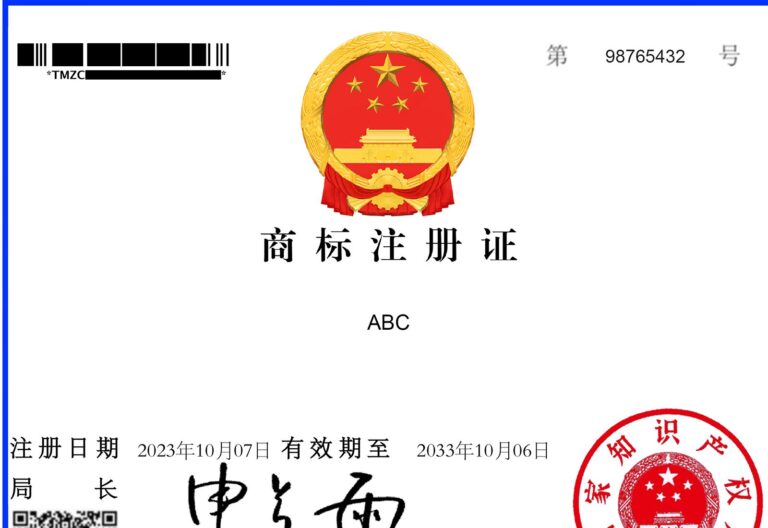
  • Failure to register your IP (patents, trademarks and copyrights) 'in a timely fashion.'
  • Failure to keep a detailed eye on the always changing legal and regulatory environment in China.

Like all companies doing business in China, medical testing companies must conduct due diligence on the parties with whom they are dealing, they must have contractual provisions providing for spot checking on the testing, and they must conduct those spot checks.  Medical testing companies in China must also "appreciate" what differentiates China (and its medical testing) from that of their home country.  Even more so than is the case with most other companies, they must keep a constant eye on the legal and regulatory environment surrounding China testing and constantly make sure they are following all applicable laws. 

I cannot answer davesgonechina's question regarding the recommendations I would give to a Western medical testing company encountering legal problems in China because any such recommendations would be so closely tied to the specific legal problem.  However, I can say that due to the sensitive nature of the likely problems, it likely would make sense for the medical company encountering legal problems to bring in an experienced crisis management team to deal with the likely public relations fallout. 

Comments (3)

Read through and enter the discussion by using the form at the end
nanheyangrouchuan - January 15, 2007 11:22 PM

I'll bring up the newest issue of The Economist and its discussion of accounting with chinese characteristics as an example of the type of medical testing that will be done in China.

Oh, yeah, this is the country that farms prisoners' organs for well heeled foreigners.

China Law Blog - January 16, 2007 12:29 AM

nanheyangrouchuan --

You are way off base here. Certainly one can find countless Chinese companies (and I am quite sure in the medical testing field as well) that are completely sloppy, dishonest, etc. But one can also find Chinese companies that are willing to abide by the standards set for them by foreign companies and when push comes to shove, it is the responsibility of the foreign company to make sure everything goes off correctly. There are plenty of foreign companies operating in China with very high legal and moral standards and there is no reason to think this is also not true in the medical testing arena.

John Carrigg - December 29, 2009 8:20 PM

How does someone get a decent background check on someone? How do you know you got everything on the person?

Post a comment

Fill out this form to add a comment to the discussion
I'd like to leave a comment. is
,
is
,
is
is